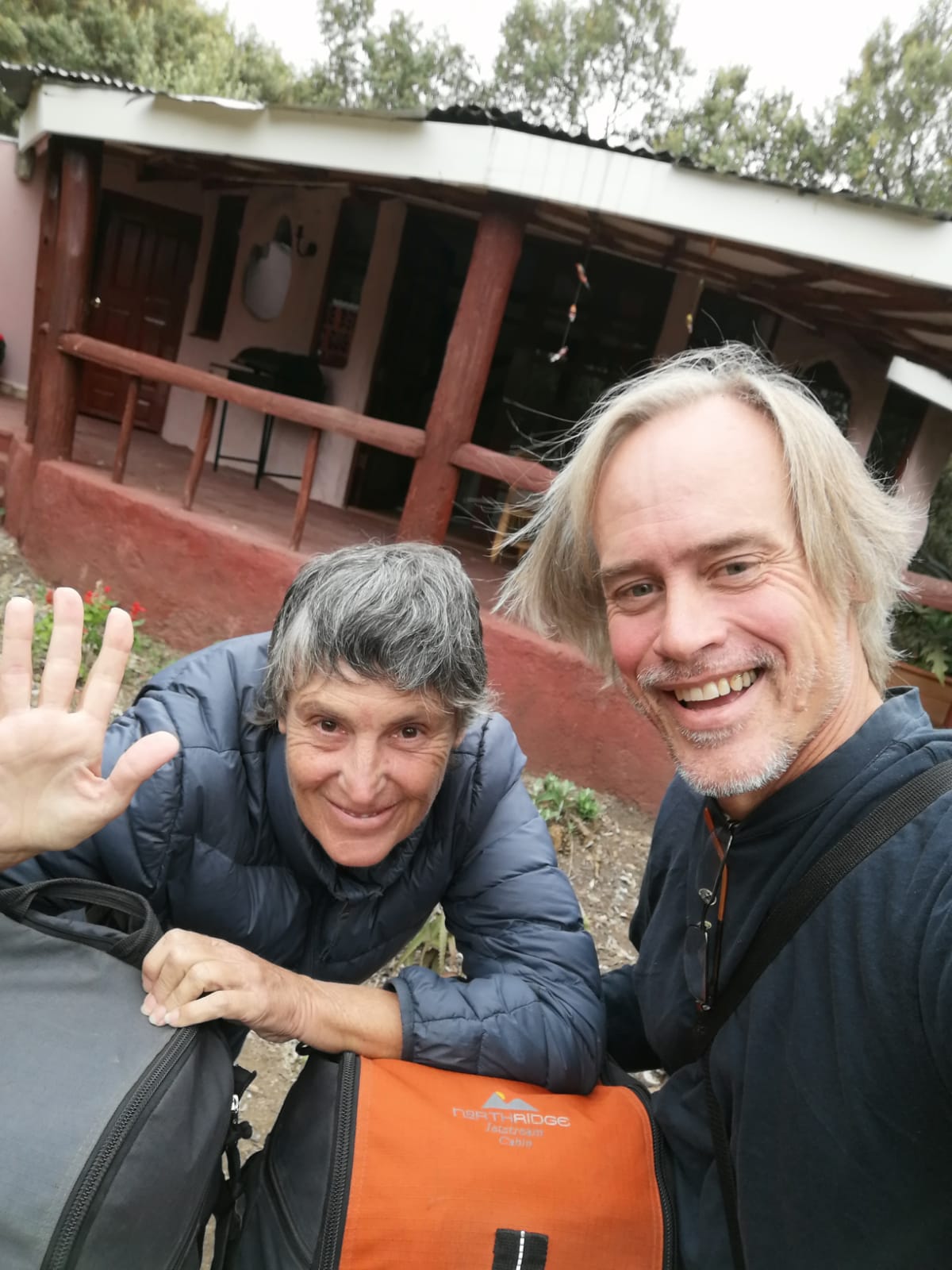

Day 1: (23 April 2025)
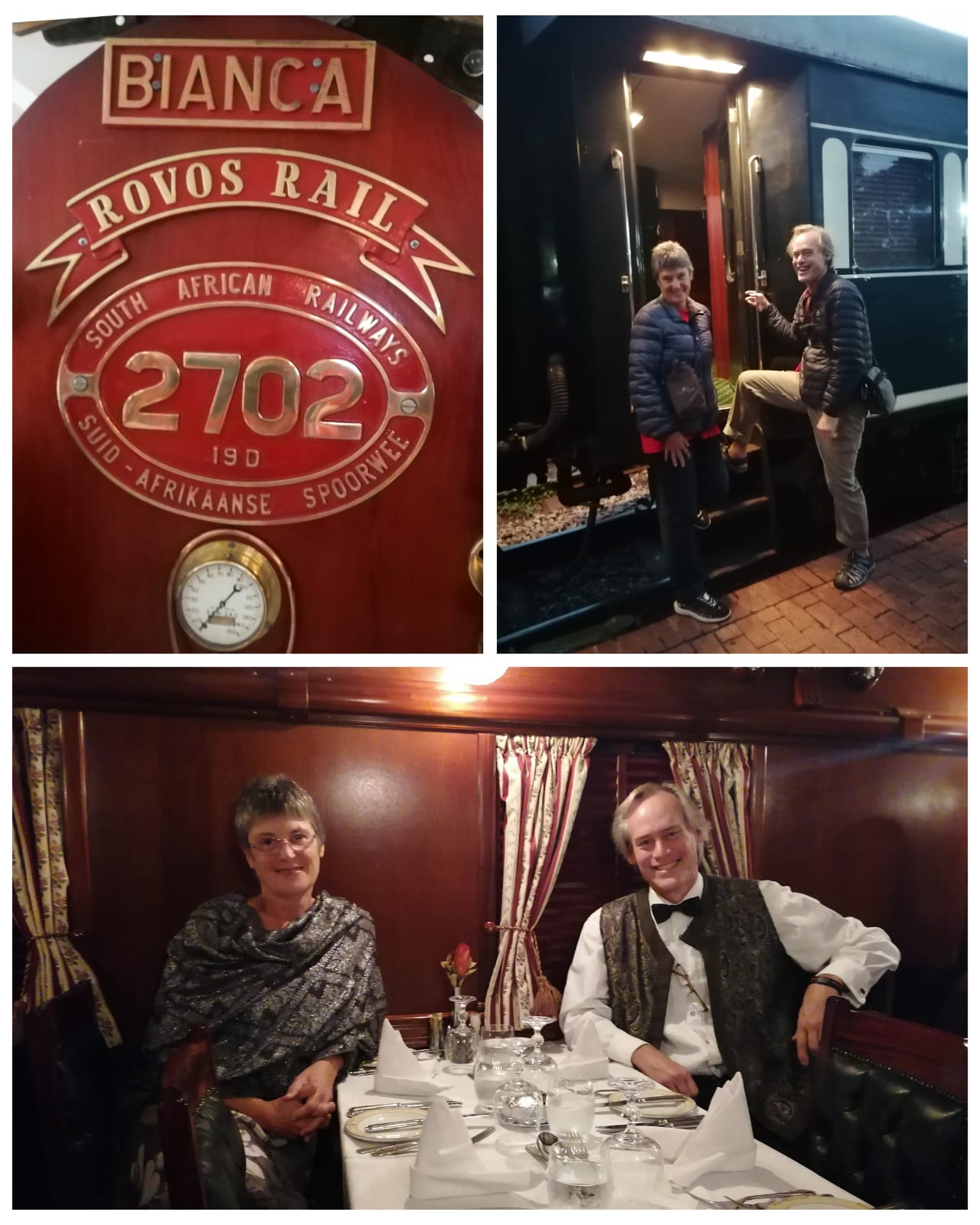
SOUTH AFRICA | PRETORIA: One man’s family holiday plan hatched 40 years ago has become an iconic South African experience employing 500 people. Rovos Rail, named after its founder, Rohan Vos, restores train travel to its former glory. Surrounded by wood panelling handcrafted on site from West African mahogany, a two-stroke diesel locomotive propels us – and 53 other passengers – through the night towards Polokwane at a top speed of 60 kilometres an hour, burning 8.5 litres of diesel and 1/4 litre of oil per kilometre.
Day 2: (24 April 2025)
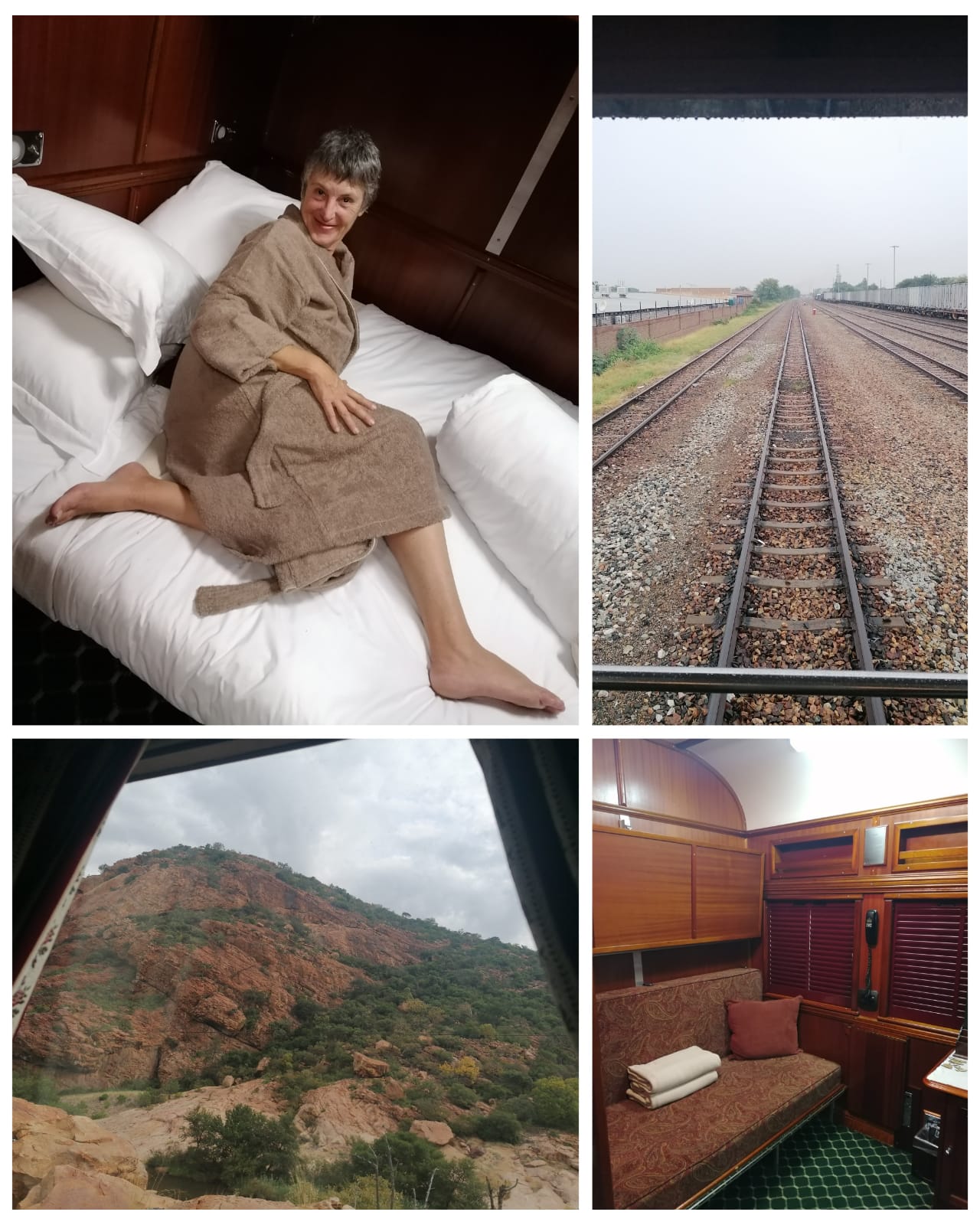
SOUTH AFRICA | POLOKWANE: Our departure from our overnight stop at Polokwane was delayed by a water outage caused by branches damaging external water pipes. Meanwhile Laurianne was suffering from an upset tummy – probably from Pretoria’s tap water rather than the 5-star, 4-course, food and wine pairings (lunch and dinner). She spent the day recovering in cotton-rich comfort watching South Africa slide by: derelict trains, station ruins and abandoned sidings, threadbare smallholdings and the occasional prosperous farm powered by solar panels. Cutting through the Soutpansberg, the boulder-topped hills loom above the placid brown river and baobabs shake their roots at the sky. Game farms give way to the border post at Musina at 16:30. We wine and dine while Rovos staff deal with our visas. We’re still waiting on the Zimbabwean side at Beitbridge at 23:00.
Day 3: (25 April 2025)

ZIMBABWE | BULAWAYO: We rolled into Bulawayo during lunch, dining on salmon and sipping Riesling, while weed-choked rusting rail cars bore silent witness to the state of the nation, frozen in time. We left the train for the ‘bald-headed hills’ of the Matobo National Park for a brief sample of the attractions of this oldest of Zimbabwe’s national parks: 3,000 documented rock art sites, Cecil Rhodes’ grave and World’s View at sunset.
Day 4: (26 April 2025)
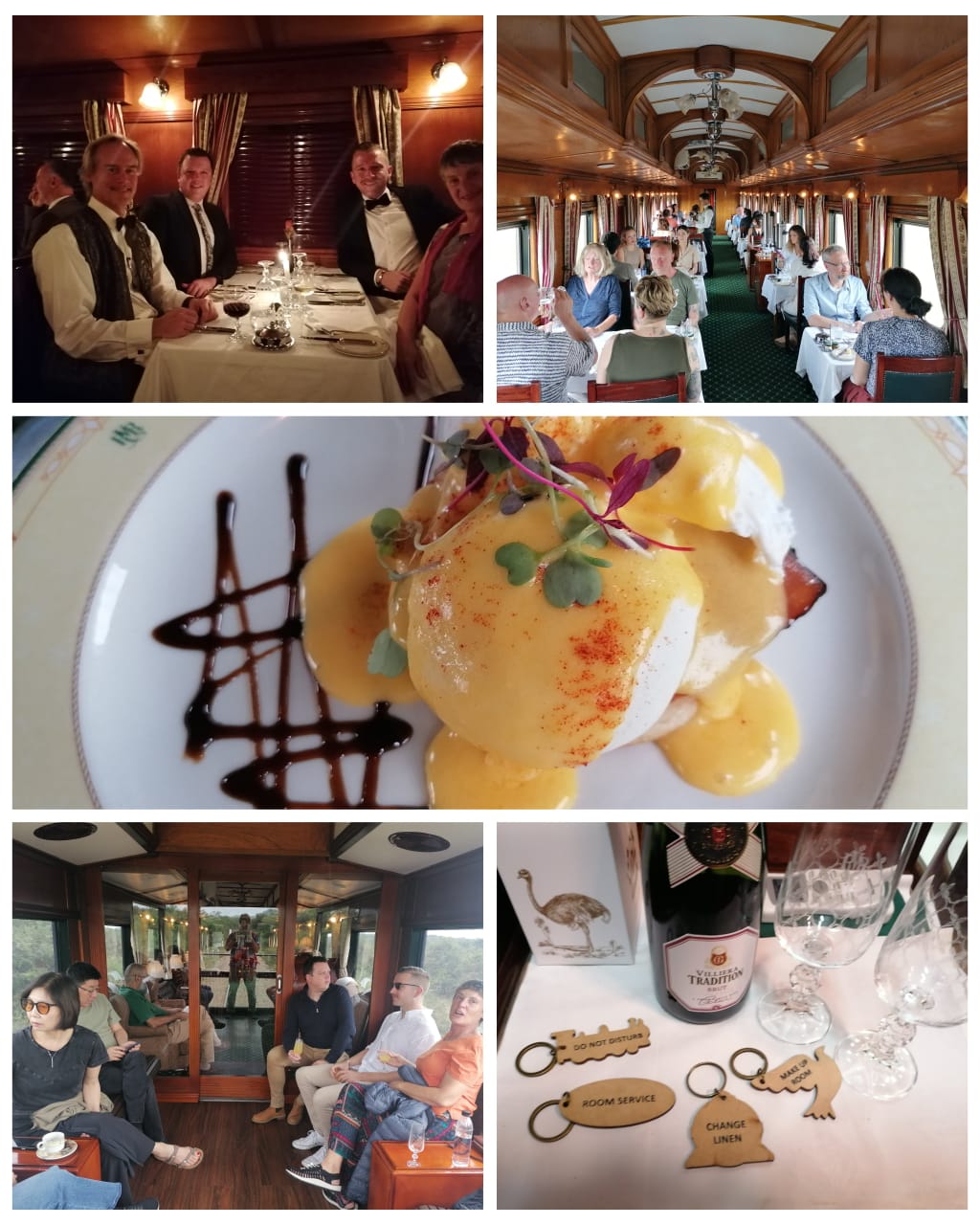
ZIMBABWE | HWANGE: Train life. We arrived at the border of Hwange National Park to be greeted by rhinos in a compound protected by gun-toting soldiers, zebra, impala, hippo, blue wildebeest, and warthog. Our afternoon excursion yielded many birds, elephant, steenbok, baboons, giraffe, and kudu. We had margaritas for sundowners in the drizzle around camp fires before boarding the train for a candlelight last dinner with train staff in bow ties and jackets. 55 passengers, 33 staff, 21 carriages, 2 locomotives, 1,400 kilometres travelled and untold centimetres added to the waistline.
Day 5: (27 April 2025)
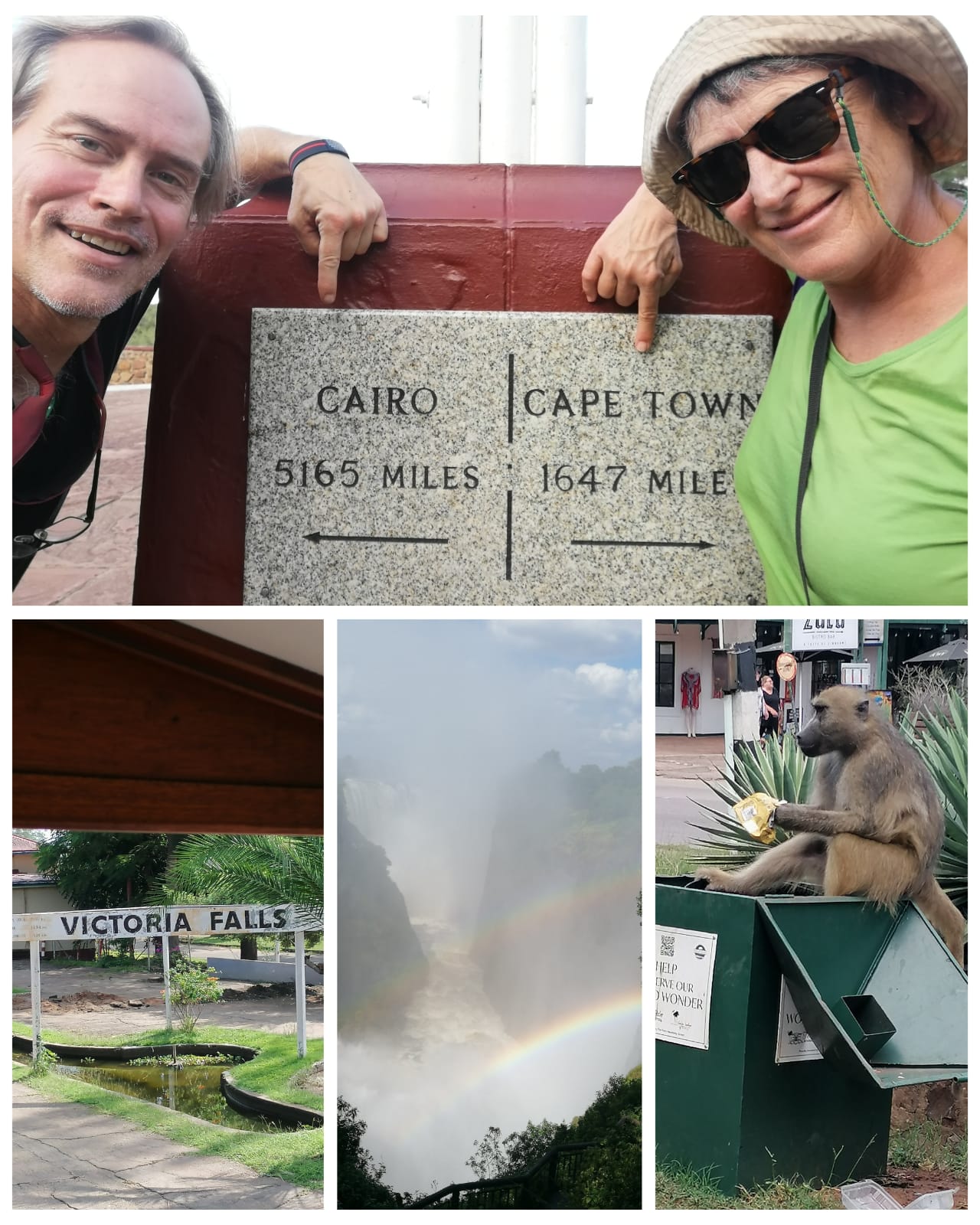
ZIMBABWE | VICTORIA FALLS: After an out-of-this-world experience on Rovos Rail, we are back to earth. Superficially, little has changed since Laurianne was last at Victoria Falls 35 years ago other than the interminable drone of the sightseeing helicopters and the prices – $30 for SADC entry into the Falls National Park, $54 for an en suite double room and $10 for a burger and chips at the backpackers where we are staying. 1,647 miles down, 5,165 to go.
Day 6: (28 April 2025)
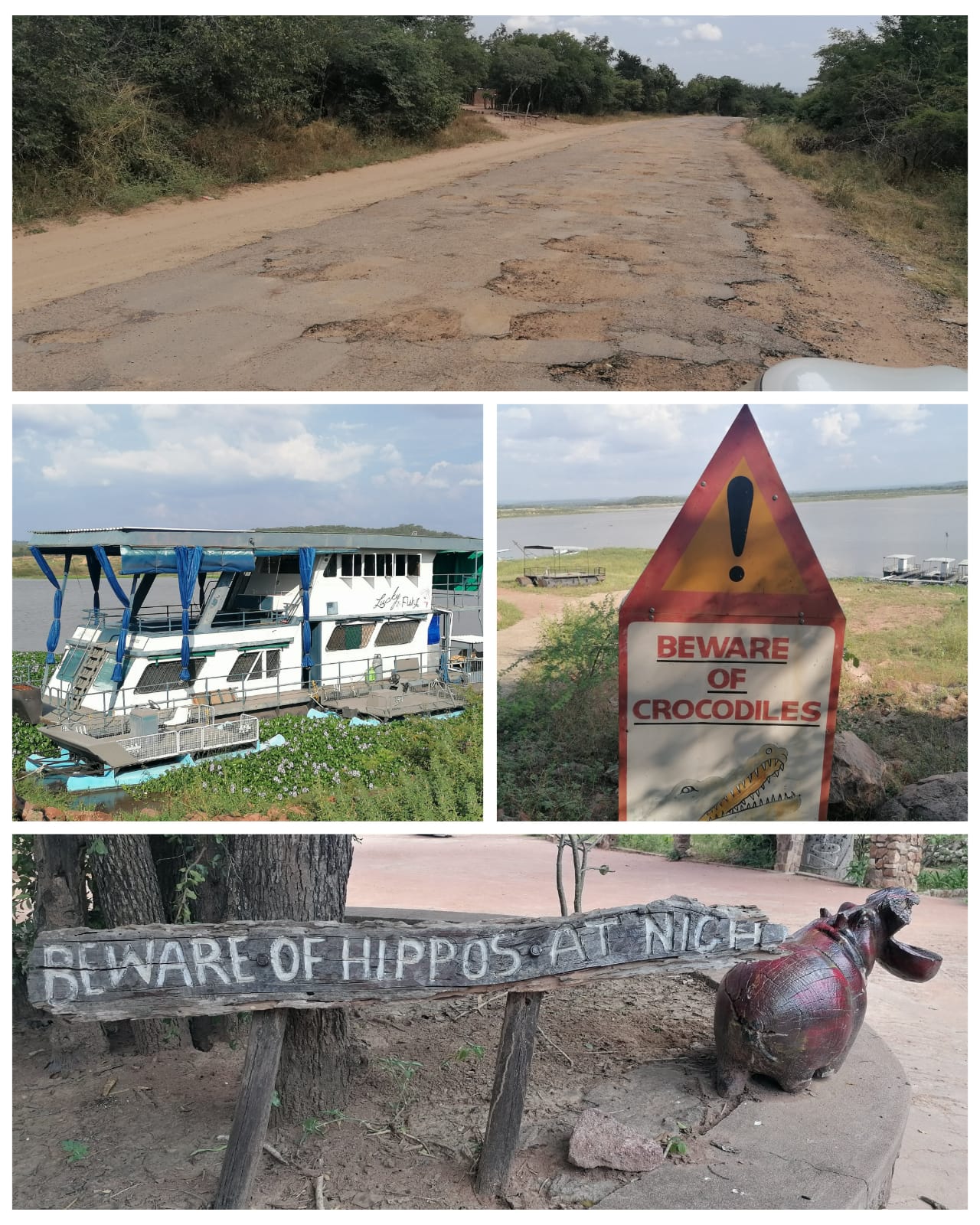
ZIMBABWE | MILIBIZI: With no public transport plying the route, we coughed up $400 (+$3 toll fee) for an air-conditioned Fortuner with driver. We covered 255 kilometres in 4.5 hours. Kids with spades and wheelbarrows fill the potholes in the crumbling roads. Their parents offer ground nuts, bread fruit and cream of tartar (the fruit of the baobab tree) for sale on the side of the road. Meanwhile the Chinese, with their own labor, extract Zimbabwe’s mineral wealth, mining tin and coal, in return for buses and a token 450MW power plant.
At the river, the Mlibizi Hotel has no water in the swimming pool, no beer in the bar and no menu for the restaurant. The only lunch option was fish and chips for $12 (R240). Good thing we opted for the self-catering option at the Mlibizi Zambezi Resort next door – where there is water in both swimming pools.

Day 7: (29 April 2025)
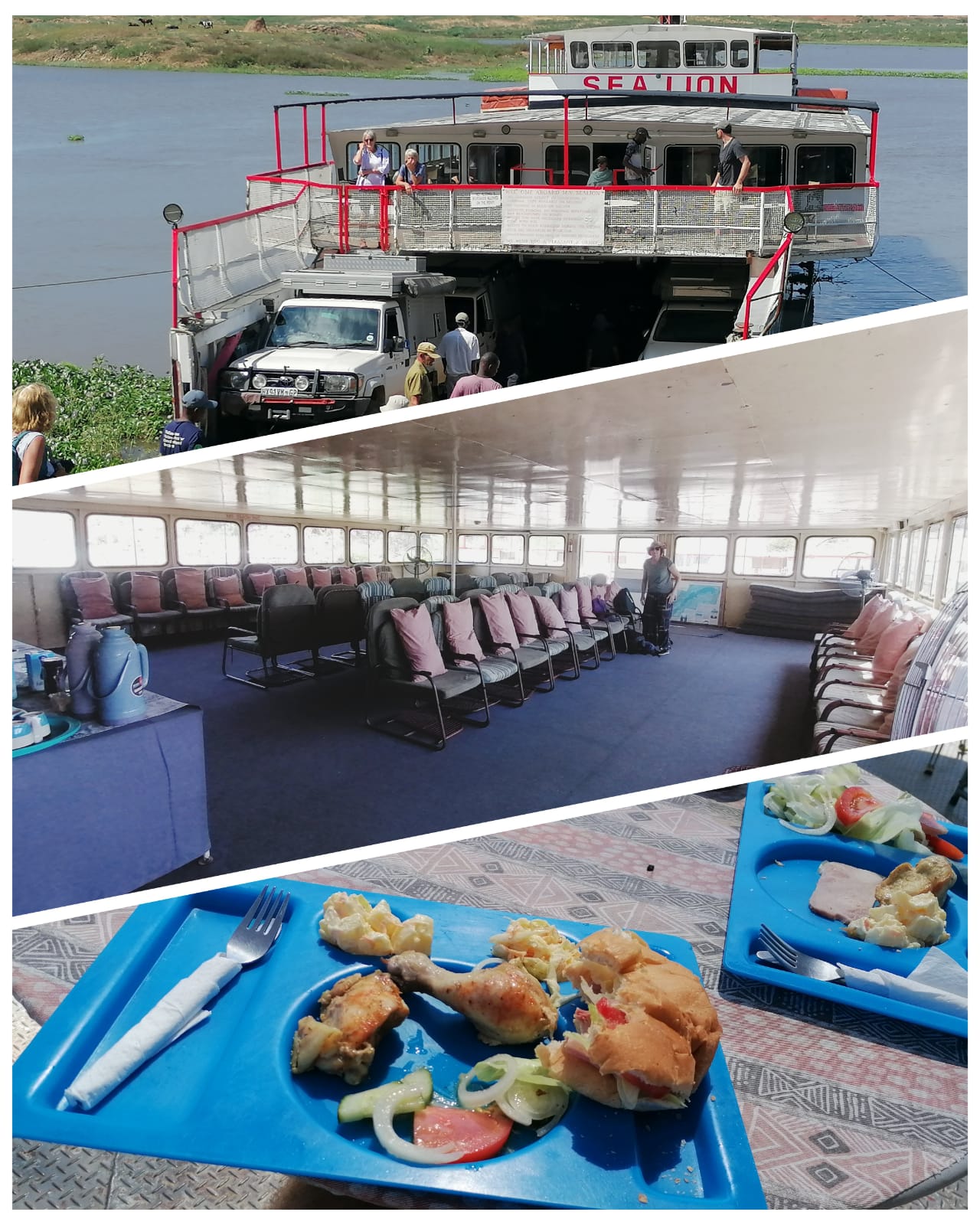
ZIMBABWE | LAKE KARIBA: We are coming to you live from the Sea Lion ferry on Lake Kariba courtesy of Elon Musk and a fellow traveller who is sharing his Starlink connection. The Zambezi River is Africa’s fourth longest after the Nile, Congo and Niger. The river was dammed in 1959 to make one of the largest man-made lakes in the world. It stretches 282 kilometres in length, a distance we will cover overnight on the ferry. Launched in July 1973, the ferry remains unchanged as Laurianne, who was on it as a child in the 1970s, and again in 1990, can attest. Due to the poor road conditions, the ferry is less popular than it was in the past and we are only 7 passengers on board and 9 staff.
Day 8: (30 April 2025)
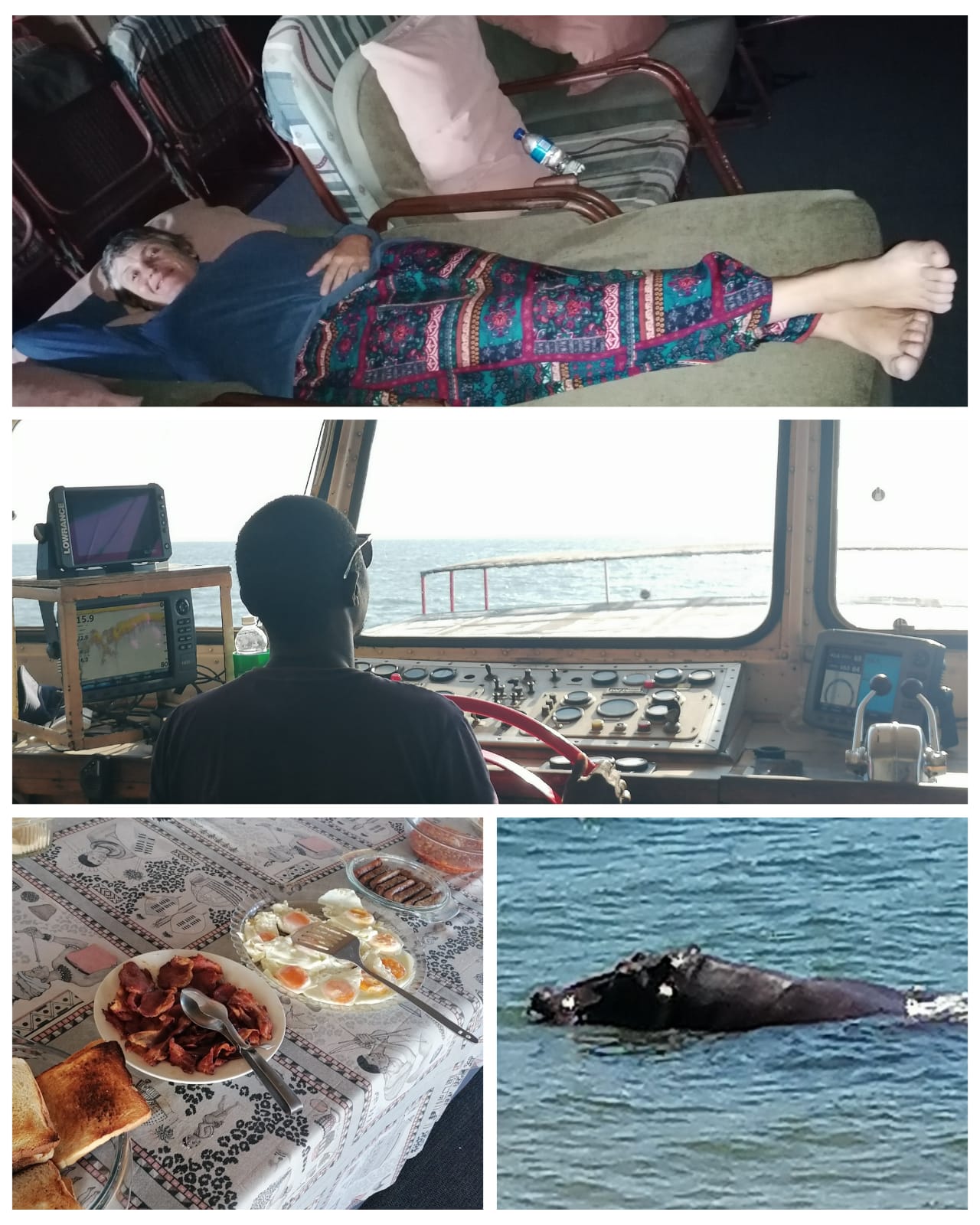
ZIMBABWE | KARIBA: We breezed into Kariba after 23 hours at an average speed of 10.5 kilometres an hour and waddled off the ferry after three hearty meals: roast beef with all the trimmings, malva pudding with ice cream, and cheese and crackers for dinner followed by a full English breakfast this morning. At $150 p/p, excluding drinks and snacks, it was an experience worth the price tag. We were welcomed by a pod of hippos as the ferry manager regaled us with tales of the family home in Kariba, built in 1959; they watched the dammed Zambezi waters rise to become Lake Kariba.
Day 9: (1 May 2025)
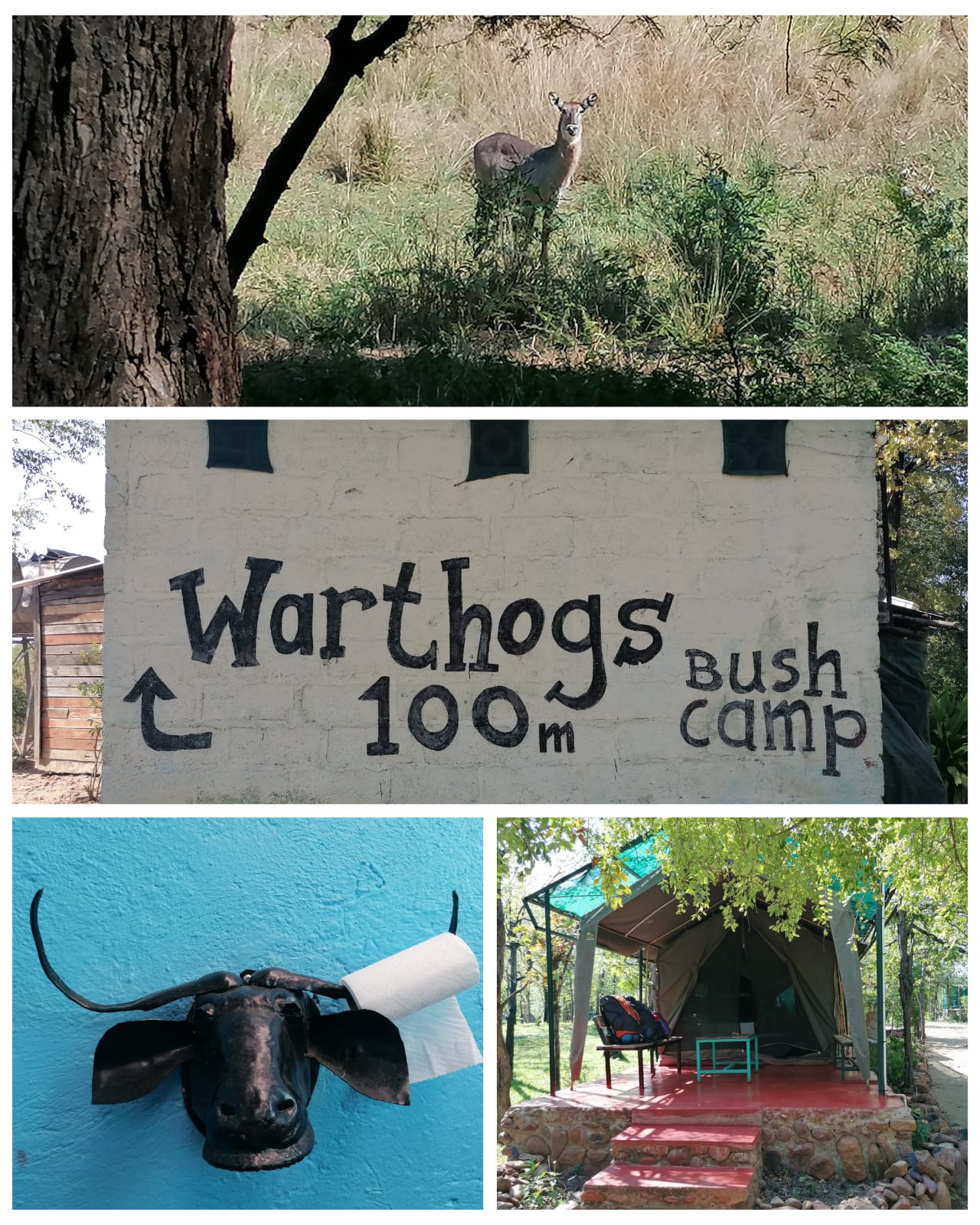
ZIMBABWE | KARIBA: We arrived at Warthogs Bush Camp yesterday to be greeted by zebra, water buck and bushbuck. Our en suite tent (Nyathi – ‘Buffalo’) overlooks the distant lake through woodland trees that hum with birds. Hippos crop the grass at night. After a family reunion at the fishing camp on an island (currently a wooded knoll) that LA’s cousins secured on a 99-year lease back in the 1960s, we drove back in the dark, our headlights illuminating hyena and elephant. A lazy day today … LA took a stroll down memory lane as we explored the abandoned Mopani Bay Rest Camp where LA camped as a backpacking student in 1990. Zebras browse among the ruins.
Day 10: (2 May 2025)

ZIMBABWE | KARIBA: Kariba kitsch. Courtesy of the cousin’s pick-up, we explored the lake shore and the heights. While no longer the tourist mecca it once was, Kariba’s natural beauty remains unspoiled.
Day 11: (3 May 2025)
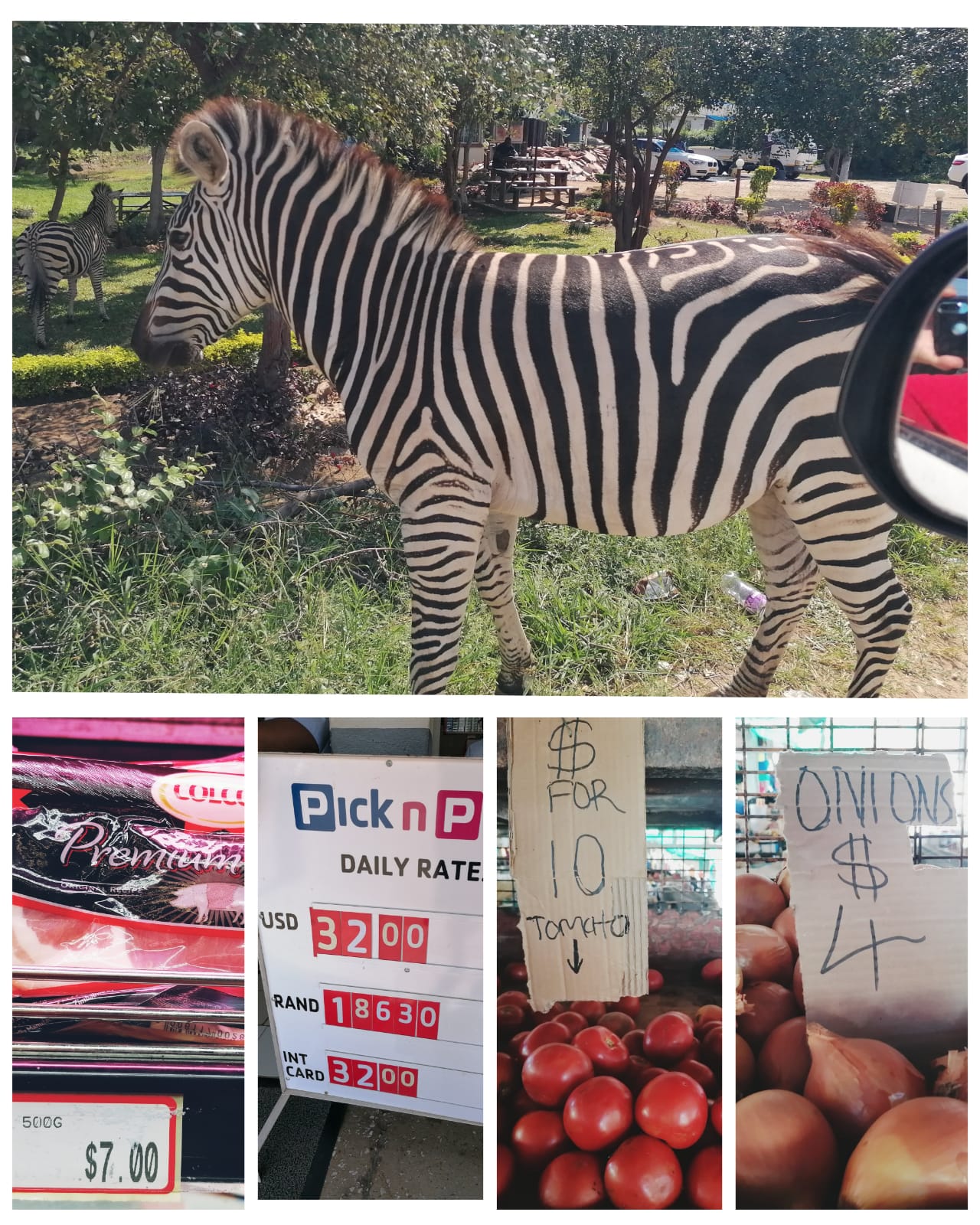
ZIMBABWE | KARIBA: We almost sideswiped a zebra on our way out of the local township having stopped to shop at the local market and supermarket. Outside the market, a boy throws rocks to keep the baboons at bay. The market is well stocked with cheap Chinese clothes, shoes and local produce. We pay $1 for 2 fat, ripe avocados. At the supermarket, the local beer is also cheap at $1.35 for a Castle quart while Lucky Strike cigarettes are $1 for a pack of 20. Everything else is exorbitant. A block of cheddar cheese and a bottle of South African wine will set you back R600. Some items are priced in Zim currency (ZIG); others in US dollars. There are no coins. Change in restaurants and bars is given in 500ml bottles of water (50¢), which cost 15¢ in the supermarket. We had to take two small packets of crisps instead of 95¢ in change.
Day 12: (4 May 2025)
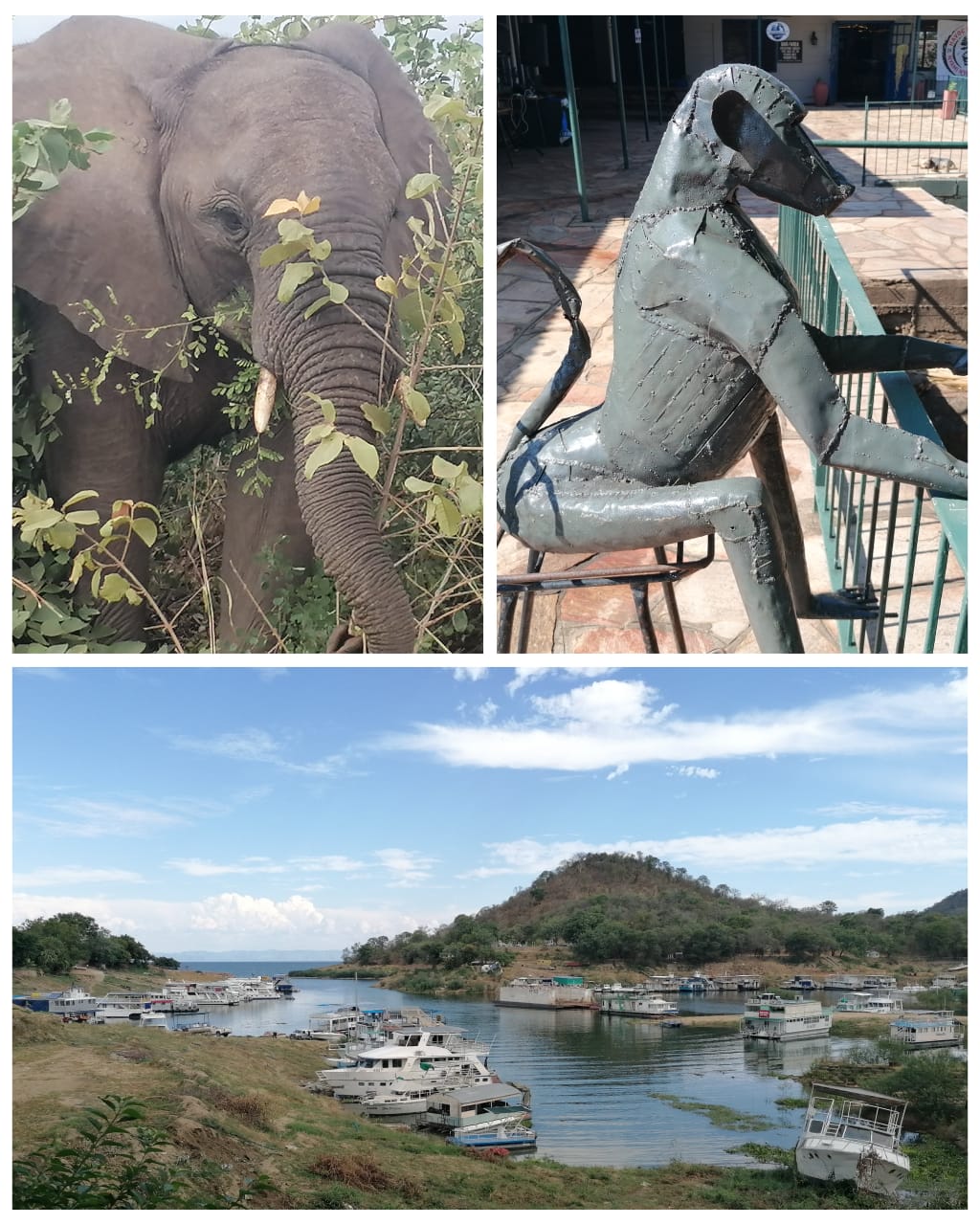
ZIMBABWE | KARIBA: Our last day in Zimbabwe began with a herd of 15 elephants and ended with a hippo on our doorstep. We had thought that after our soft landing, the hard yards were to begin tomorrow as we cross into Zambia. However, a fortuitous introduction to a Lusaka couple saved us from a nine-hour bus ride. They delayed their departure by a day to give us a lift. As the baboons scale the heights to roost in the pylons, night falls.
💲 Travel Tally: Zimbabwe
Average expenses (for 2) over 12 nights: (ZAR to USD =R18 to $1)
● Accommodation (Double en suite): $28 (R504)/day
● Food & drink: $35 (R630)/day
● Transport: $59 (R1,062)/day
● Activities: $5 (R90)/day
● Daily average: $129 (R2,322)/day
Day 13: (5 May 2025)
ZAMBIA | LUSAKA: A quick and effortless border crossing into Zambia and 3.5 hours on good roads brought us to Lusaka courtesy of Shane and Annie Meyer who have also fed us and put us up for the night, in the same neighbourhood in which we camped when last in Lusaka in 2003. While Zimbabwe is on its knees, Zambia is on the up and up. Building blocks and paving yards line the busy streets next to gleaming showrooms filled with Japanese cars, tractors and trucks. Sourdough pizzerias and patisseries dot the malls emblazoned with South African brands. Prices, too, are on par with South Africa. Outside the capital, the landscape, populated by the ubiquitous charcoal sellers, ox carts, goats and cows, is unchanged.
Day 14: (6 May 2025)
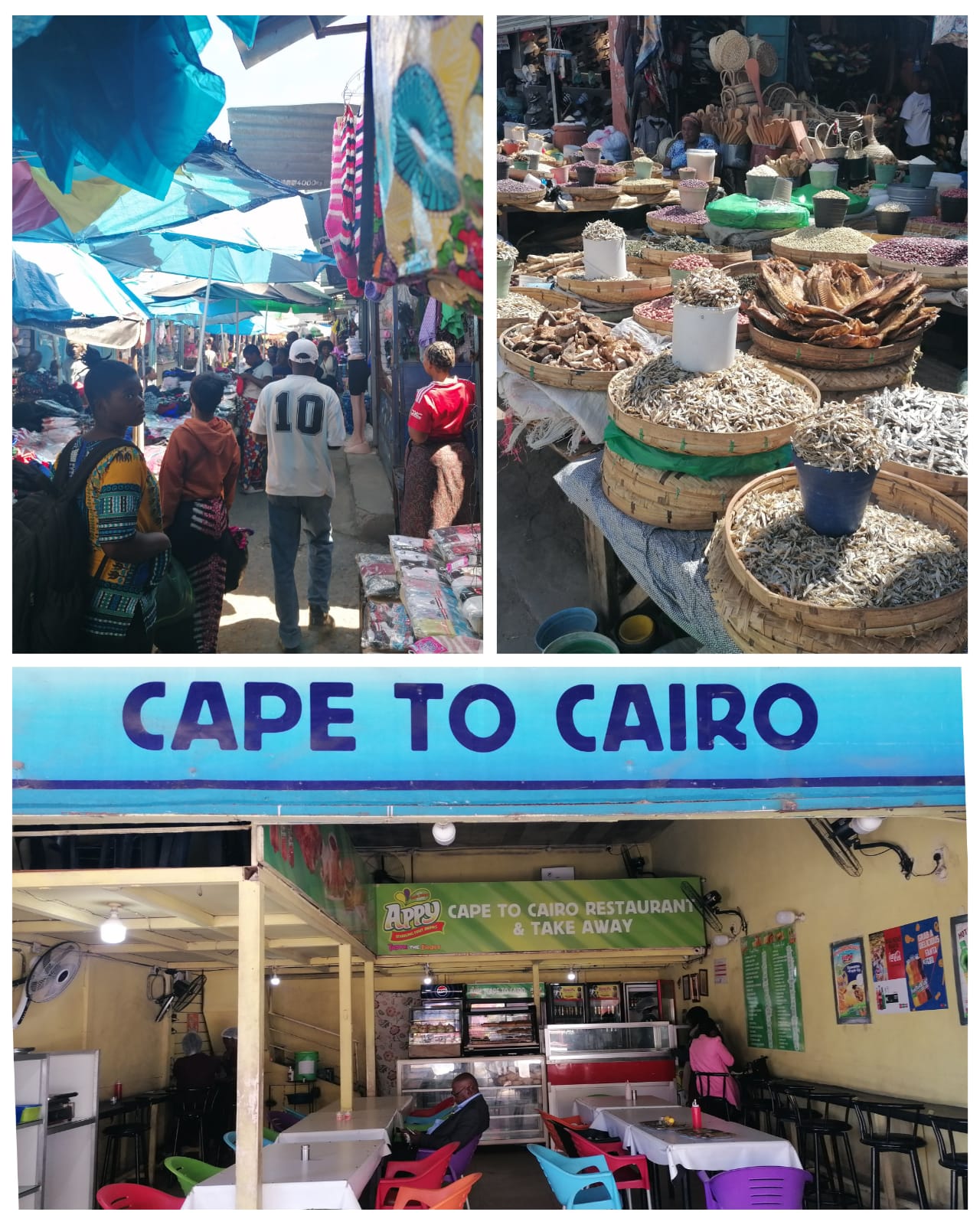
ZAMBIA | LUSAKA: Where there was bush 22 years ago, now there are shopping malls and housing estates, wellness centres, gyms and saunas, and a plethora of petrol stations – apparently a Tanzanian money-laundering scheme – despite only 5 hours of electricity a day. Lusaka’s central market is a bustling, hustling warren filled with Chinese goods while dim sum, egg fried rice and chow mein feature on the menus of the suburban eateries. Our lunch of steak and chips and pork dumplings, washed down with two big Mosi lagers ran us K435 (R330) at the official rate of R1.30 to the Kwacha.
Day 15: (7 May 2025)
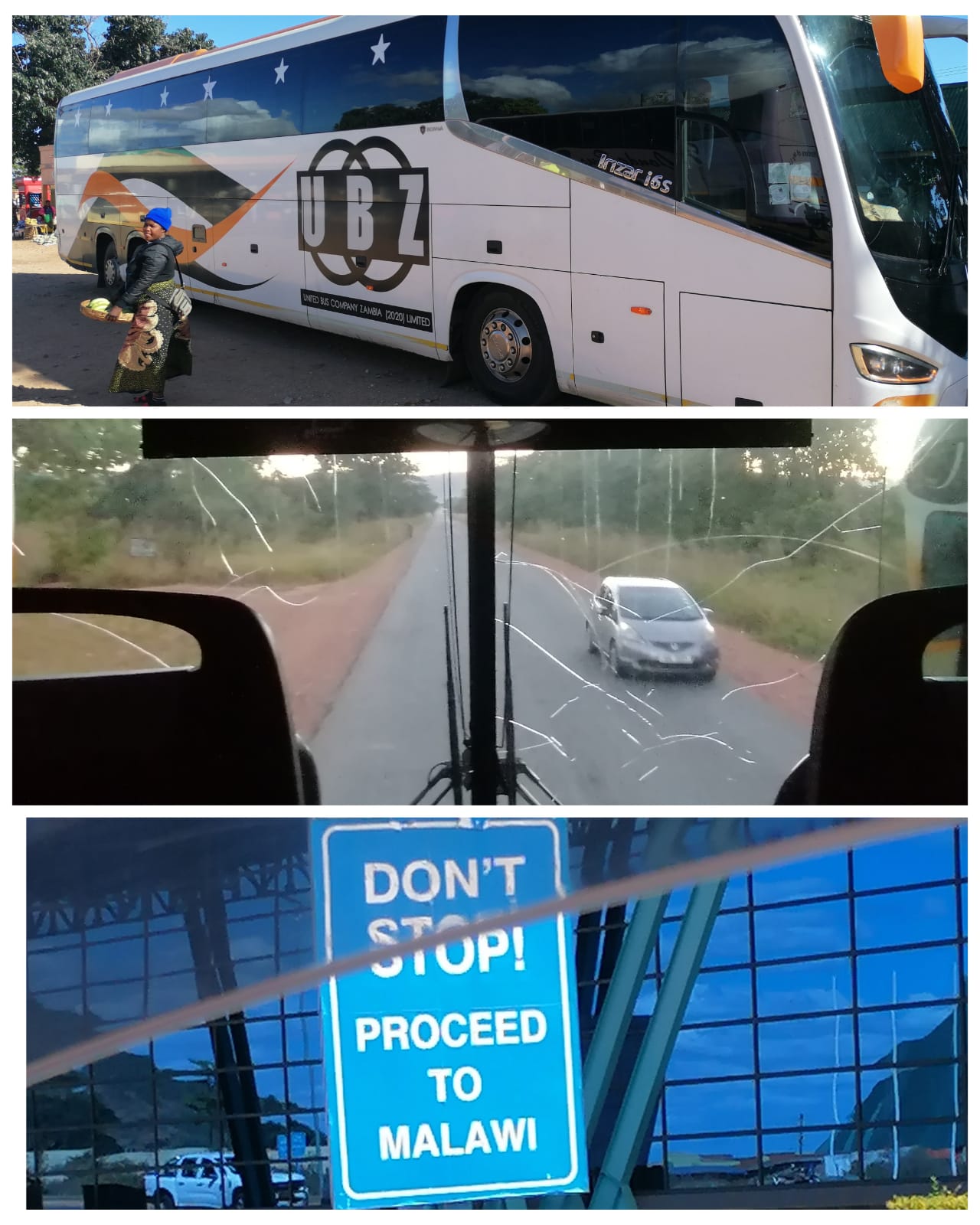
MALAWI | LILONGWE: Border crossing today. Up at 02:30 to take a taxi to catch a 04:00 luxury Chinese bus to Chipata, on the Great East Road, 22 kilometres from the Malawian border. Tickets cost R350 p/p. After a briefly bumpy start, nine hours followed – of air-conditioned comfort on good tar, complete with drver in white shirt and gold epaulettes and a conductor that mopped the floor between pit stops. Thanks once again to Kariba contacts (👍🏼 Barbs and Ross), we were met at the bus station, shepherded through the shiny new shared border post at Mchinji and taxied to Lilongwe in a brand new car, arriving 14 hours after leaving Lusaka, having covered 722 kilometres.
Day 16: (8 May 2025)

MALAWI | LILONGWE: Today’s mission was to obtain Malawian Kwacha via mobile money transfer, having prearranged this with our neighbour who works in Malawi. The official exchange rate is half that of the black market ($1,940 to $3,700 / R100 to R200). We taxied along a new highway lined in solar-powered street lights daubed with stickers reading ‘China Aid for Shared Future’. En route to Malawi’s largest mall – on par with Pofadder Plaza – we passed long queues for fuel, a common occurrence in a country that ranks 172 out of 193 in the UN’s Human Development Index. Food Lovers’ Market, the flagship tenant at the Gateway Mall stood vacant, its contents auctioned in April by order of the sheriff.
Day 17: (9 May 2025)

MALAWI | LILONGWE: The sprawling city of 1,3 million people is a construction site with the Chinese – and the Japanese – busily building roads and bridges. The Lilongwe Nature Sanctuary is a green oasis in the concrete jungle, harbouring spotted hyena, genet, civet, bush pig and duiker. We saw our first crocodile of the trip sunning itself on the river bank with the hum of traffic in the background. We chalked up a couple of new birds, including Schalow’s Turaco, at the edge of its distribution range, and the vervet monkeys stole LA’s lunch off her plate.
Day 18: (10 May 2025)
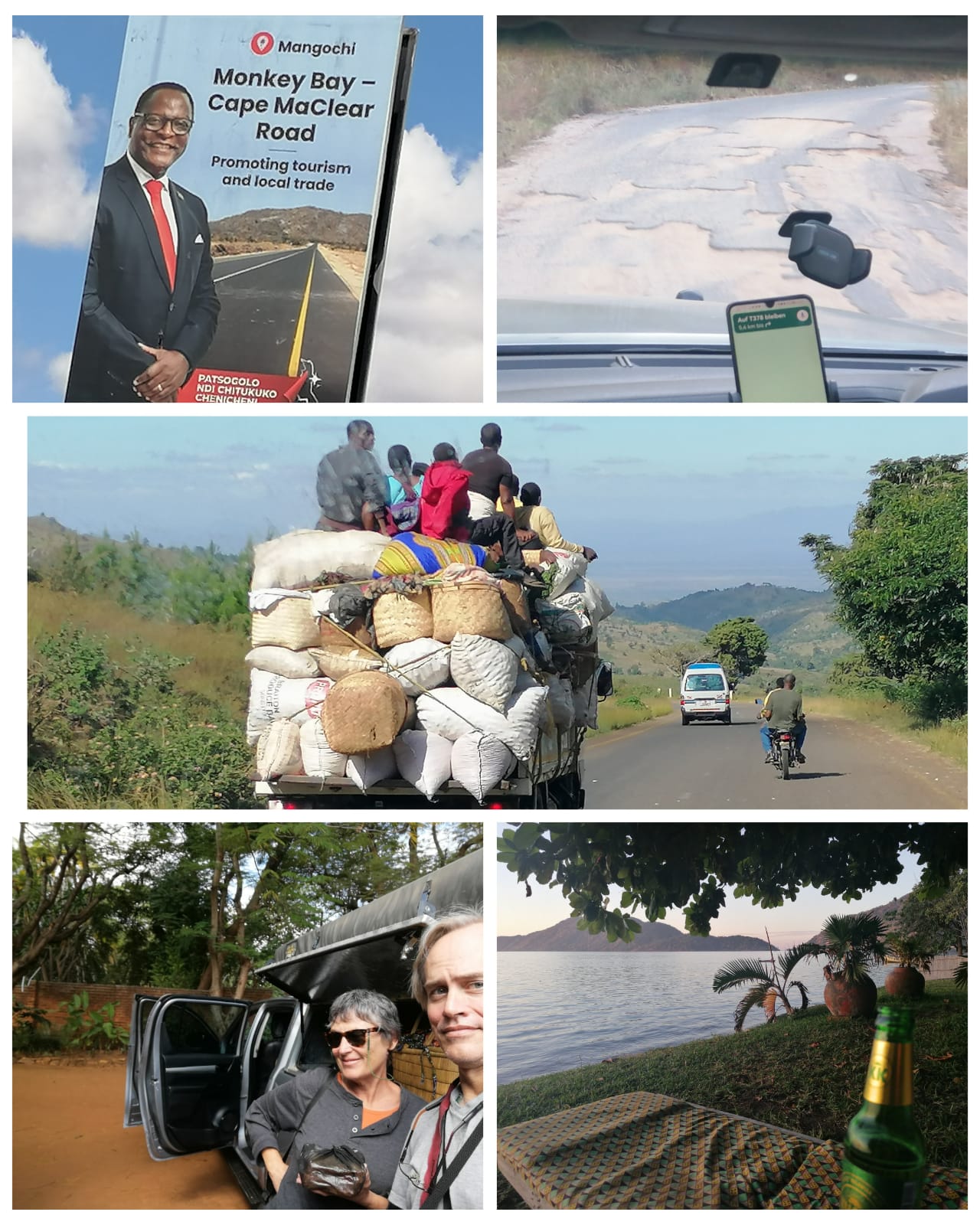
MALAWI | CAPE MACLEAR: Good Samaritans from Bavaria delivered us this morning from the long and bumpy road on public transport to Lake Malawi. It took us 5.5 hours – averaging 40 kilometres an hour – to get to the lake in their Toyota Hilux, double cab 4×4 rental, just in time for sunset. Despite His Excellency, the President’s self-congratulatory posters in an election year, the Cape Maclear road was marginally less potholed than the 100 kilometre-stretch from the bottom of the escarpment to Monkey Bay.
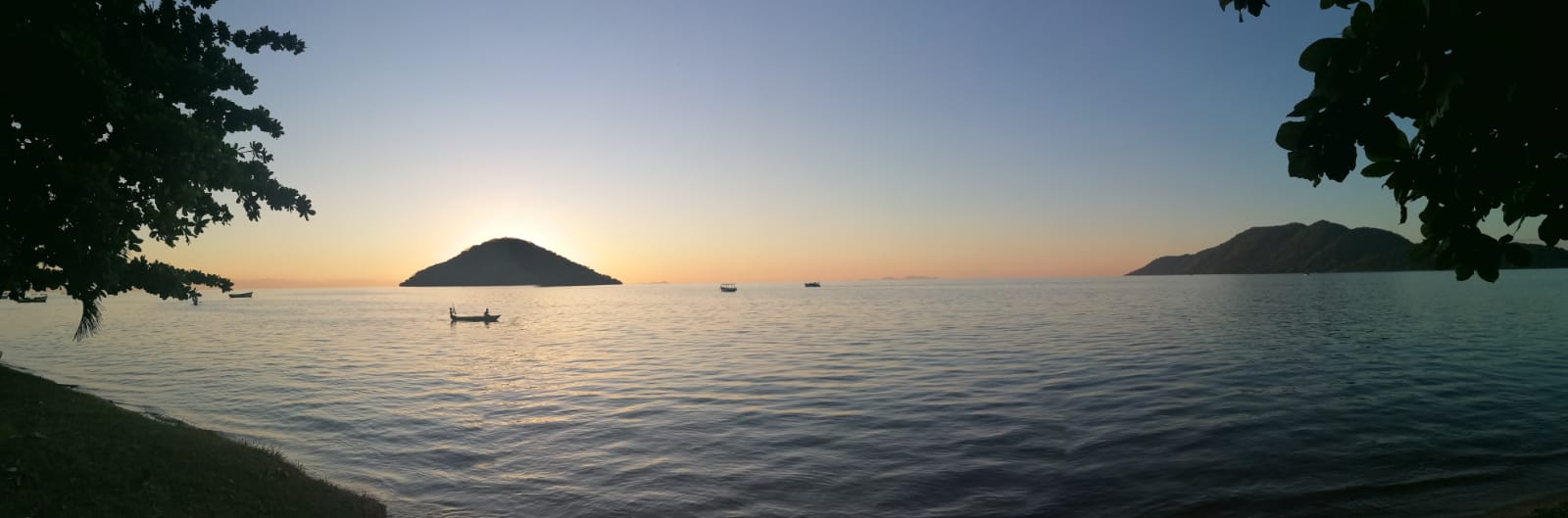
Day 19: (11 May 2025)
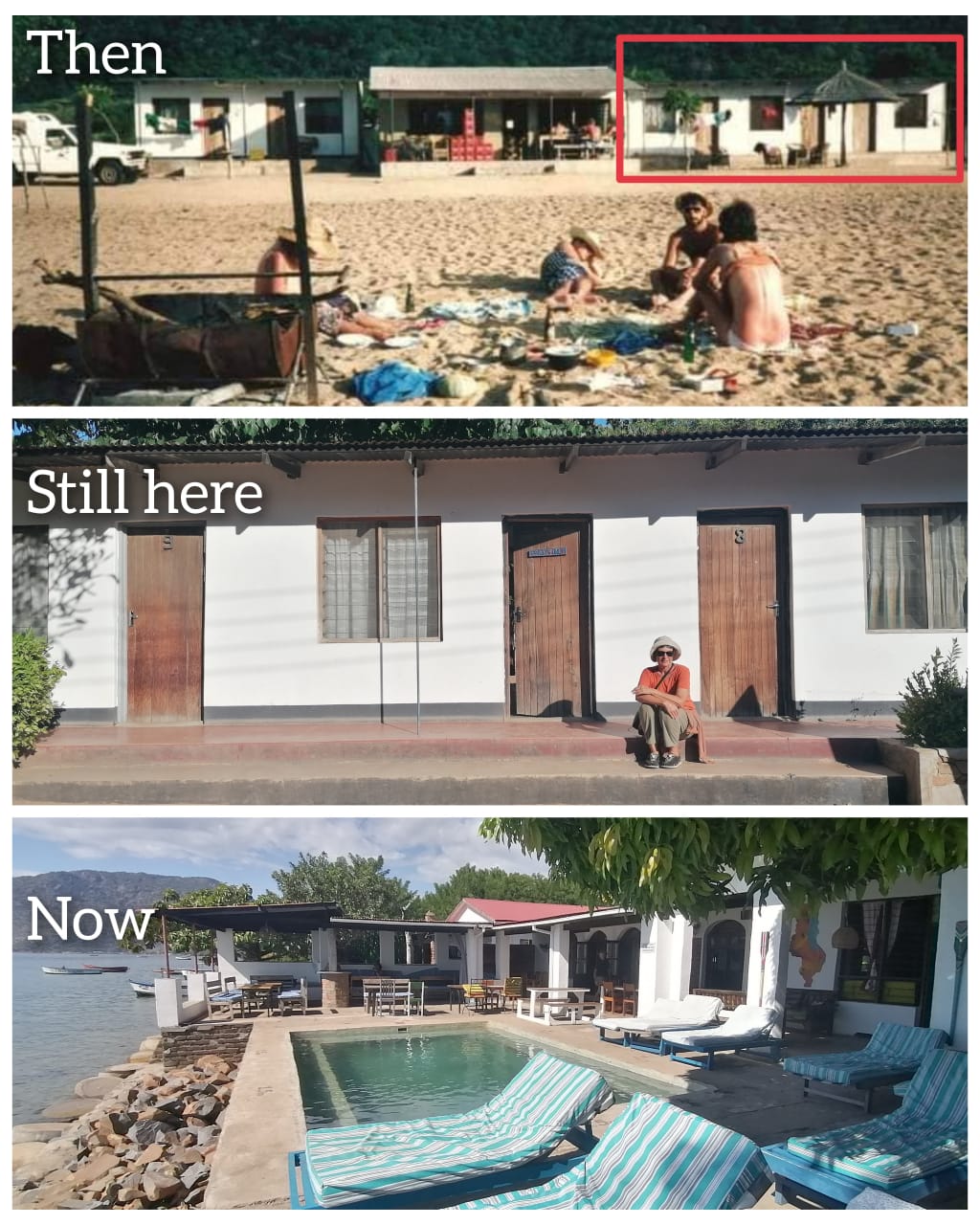
MALAWI | CAPE MACLEAR: Laurianne was here in 1989 and 1991 as a student when the only accommodation was Mr Stevens’ place – a couple of rooms and a restaurant serving cold Carlsberg beer and chicken or fish with chips. The backpackers grew into a lodge and other operators followed, many of them South African, including the lodge where we are staying – which explains last night’s dinner special – slow-roasted lamb with a red wine jus. Mr Stevens finally handed over the reins in 2012 to South Africans from Centurion. As the pioneer of tourism in the village, he passed away a few years later, a legend in his lifetime.
Day 20: (12 May 2025)
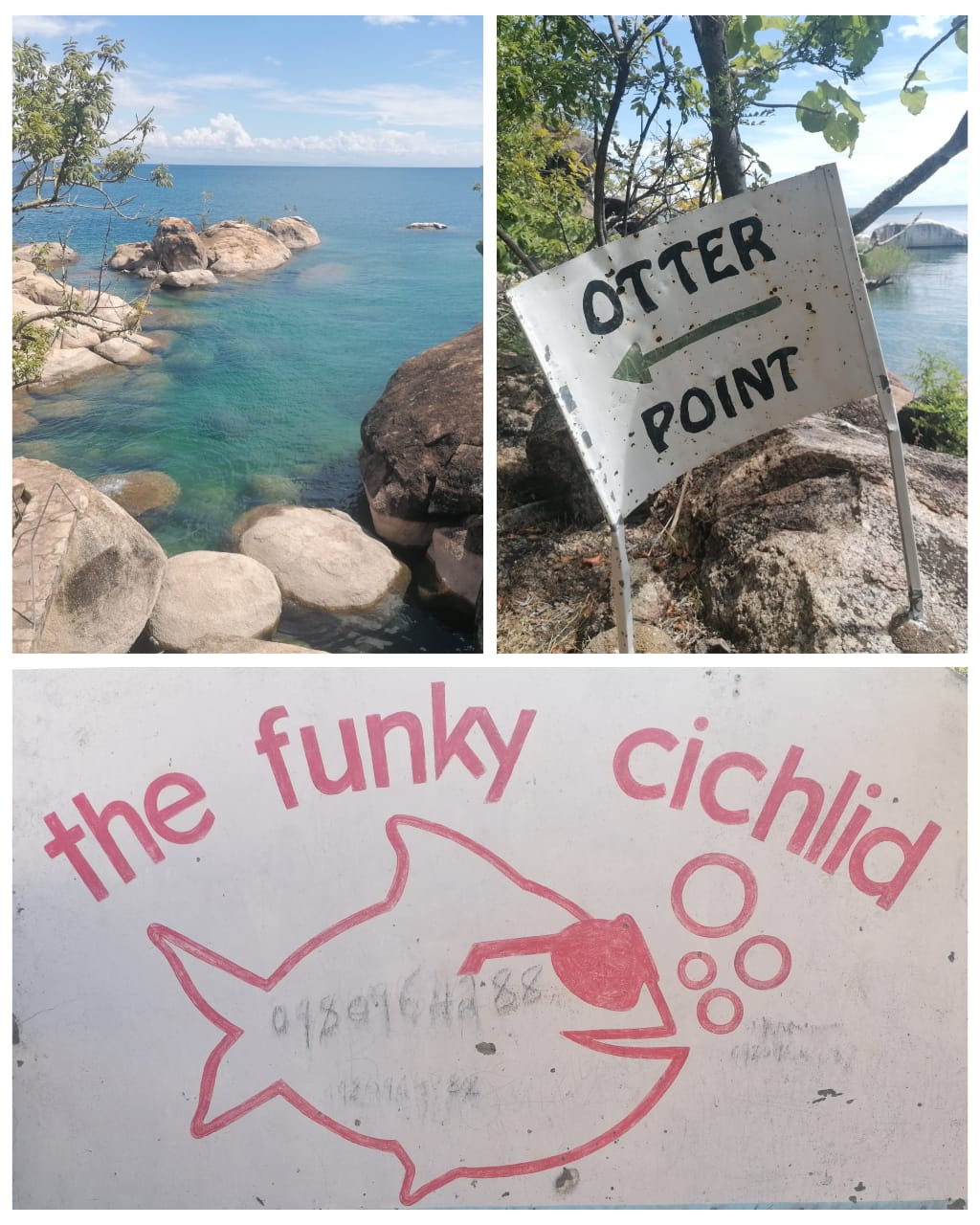
MALAWI | CAPE MACLEAR: A vast, inland, freshwater sea, Lake Malawi is the ninth largest lake in the world and one of the clearest. At 472 metres above sea level, it is 600 kilometres long, 50 kilometres wide on average and 700 metres at its deepest. It is home to ~1,000 species of colourful freshwater fish called cichlids; some of which are thought to be ~2 million years old. In contrast to Lake Kariba, which is at 10% of its capacity, Lake Malawi is full to the brim, thanks to Cyclone Freddy (2023) and, speculatively, an upwelling from the tectonic East African Rift which gave rise to the lake some 8.6 metres years ago. Apparently, some lakeside lodges have lost their beaches and thus their livelihoods. We got up close and personal with the cichlids in the National Park, the first freshwater national park in the world, and a World Heritage Site.
Day 21: (13 May 2025)
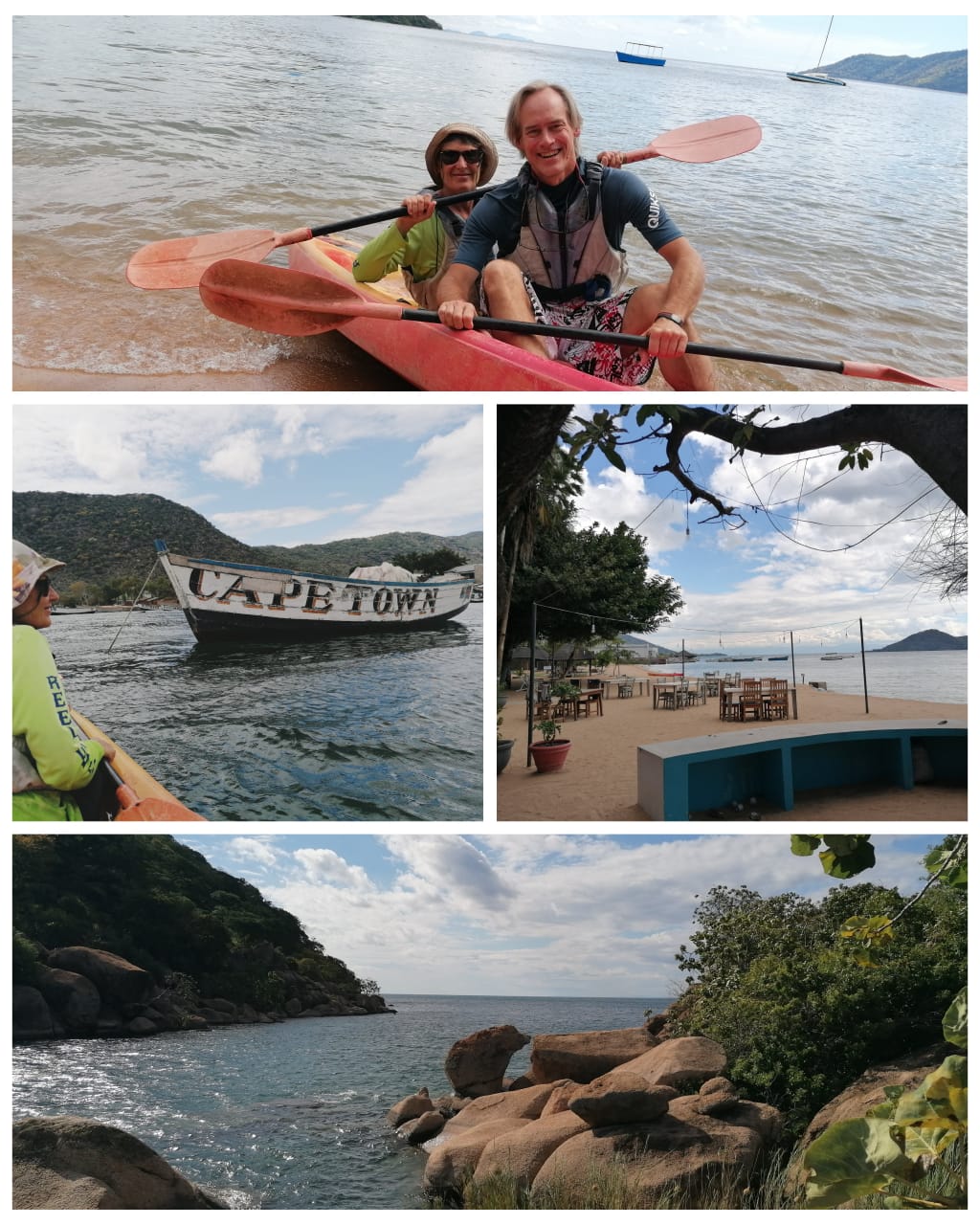
MALAWI | CAPE MACLEAR: Mozambique is ~50 kilometres east through the Ilala Gap that separates Domwe Island from the mainland. We rented a kayak and under cloud cover with a westerly wind to push us, we hugged the shore, past Chembe fishing village, to the Gap, accompanied by hamerkops, fish eagles, and pied kingfishers. Pots, pans, cutlery, clothing, bedding and bodies were all being washed in the lake. Fishing boats, named Covenant, Deliverance, Mphuno Salata (Salty Nose), Cape Town and Pretoria – thanks to remittances from the Malawian diaspora in South Africa – were tethered, as net mending rather than fishing was the order of the day, given the weather. Elevated lake levels have resulted in flooded lodges, optimistic sandbag defenses and limited beach space for drying fish.
Day 22: (14 May 2025)
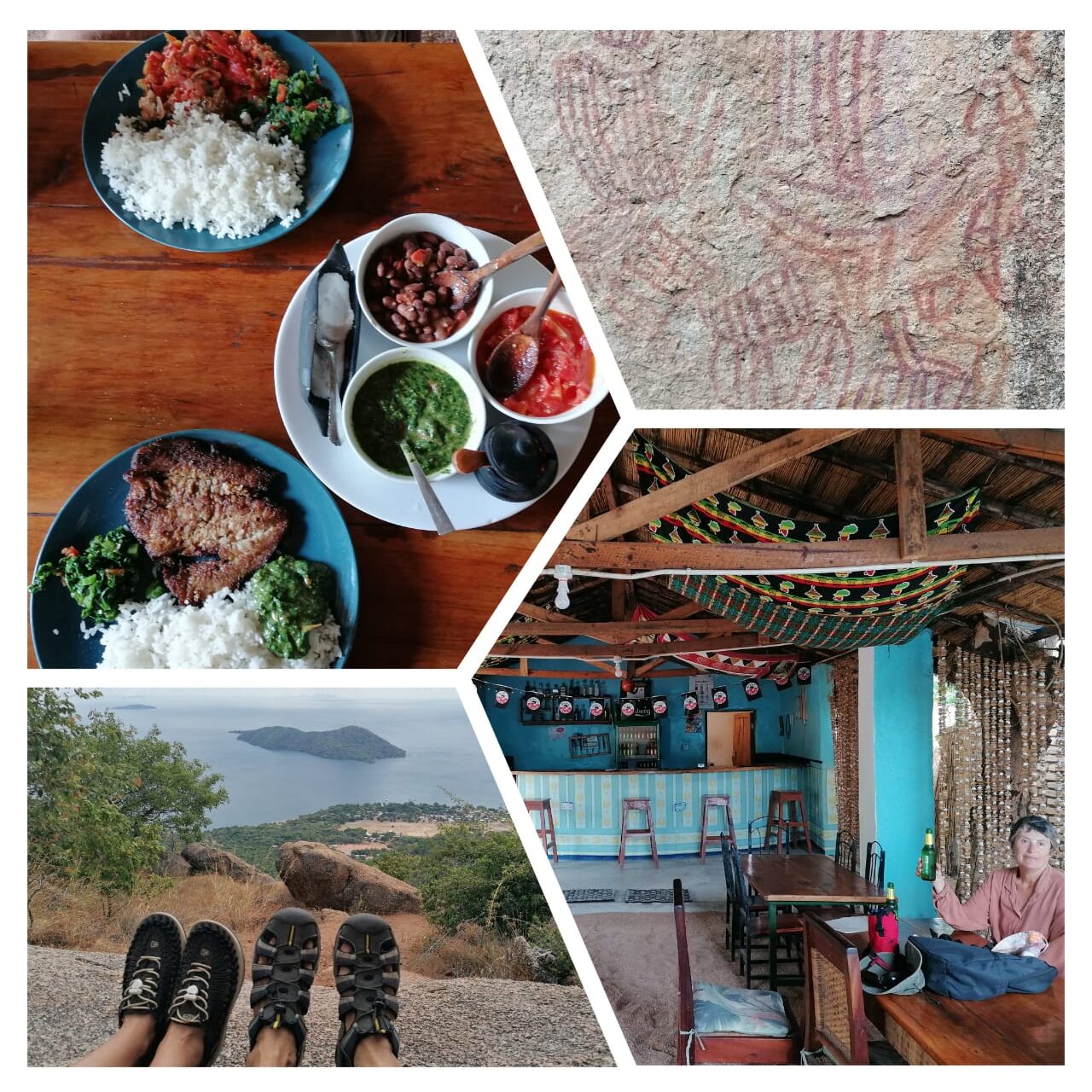
MALAWI | CAPE MACLEAR: The petrol shortage – not diesel – continues. The small tanker that arrived at the Monkey Bay crossroads was soon depleted by motorcycles and jerry-can stockpilers. We patted ourselves on the back for deciding not to self-drive and set off for Chembe View Point on foot. Ascending some 350 metres through pristine, boulder-studded, miombo woodland, we came upon an unexpected rock art site – our first in Malawi, which is apparently a Central African treasure trove, although undeveloped. Lunch at Zathu community restaurant was fried catfish (bombe) and goat stew with mustard greens, tomato-and-onion relish, creamed moringa spinach and beans, washed down by two frosty local brews – all for R100.
Day 23: (15 May 2025)

MALAWI | CAPE MACLEAR: We canoed to Thumbi Island for a final snorkel. The sun broke through the clouds, illuminating the cichlids that throng the submerged boulders of the Aquarium and Flat Rock.
Part of the cichlids’ evolutionary success is that some are mouth brooders – the mother keeps the hatchlings safe in her mouth, impairing her own breathing and feeding. As a result, some long-suffering moms consume their young. For example, Burton’s mouth brooder (Astatotilapia burtoni) may ingest more than three-quarters of their own eggs and baby fish. Then, there’s the kiss-of-death cichlid that sucks the young out of the mouth of other breeding cichlids. It’s a jungle down there.
Day 24: (16 May 2025)
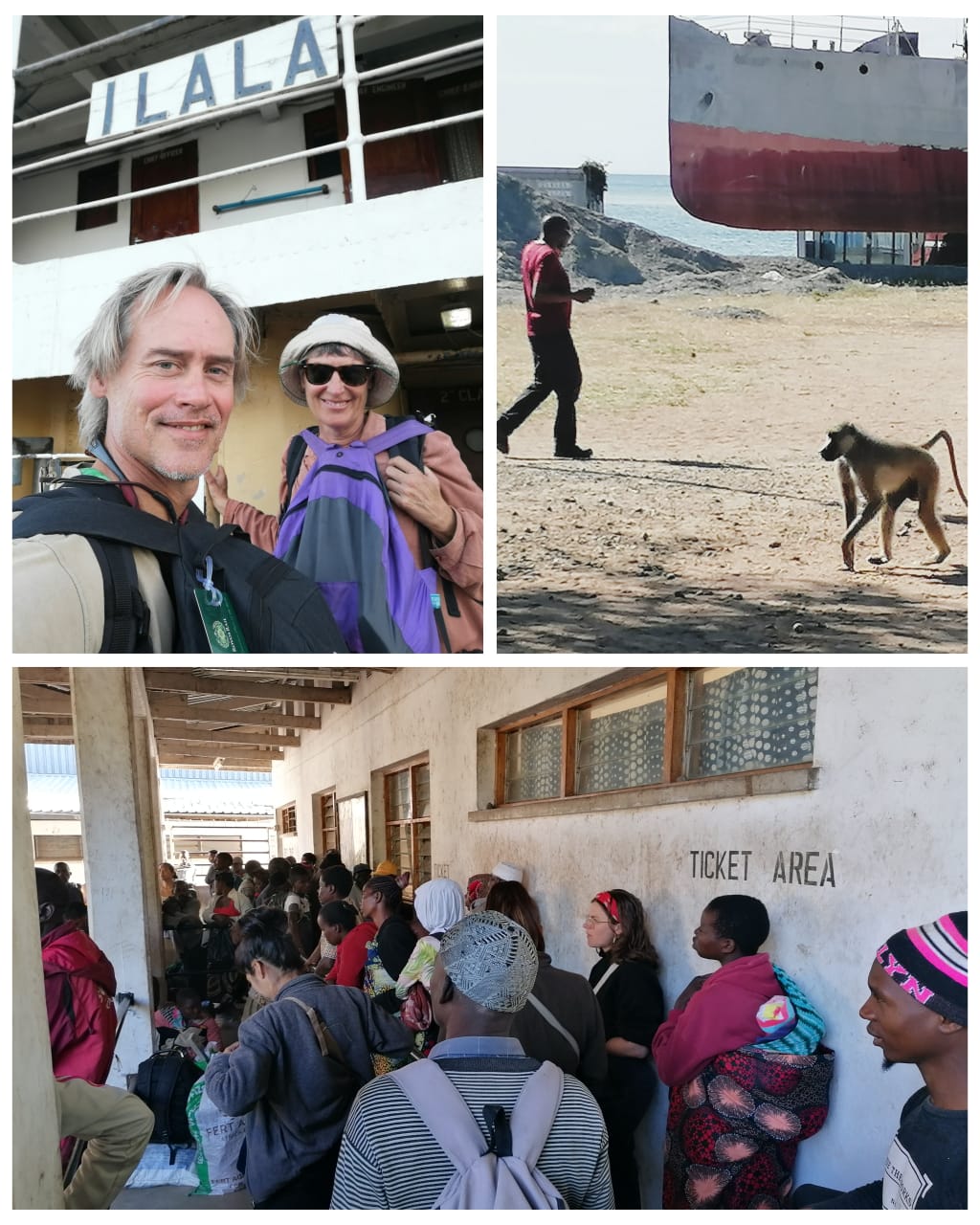
MALAWI | MONKEY BAY: Many years ago, Laurianne was waiting for a bus in a small, remote village in Malawi. After waiting several hours, she asked the locals when the bus would arrive. They said, “Automatically, the bus, she will arrive.” Several hours later, the bus automatically arrived. The Ilala ferry was due to leave at 08:00 this morning. We spent the day at Monkey Bay, watching baboons and vervet monkeys, playing backgammon and receiving sparse updates about our delayed departure – apparently there was anchor trouble. The Ilala hasn’t left yet, but automatically, she will.
Day 25: (17 May 2025)
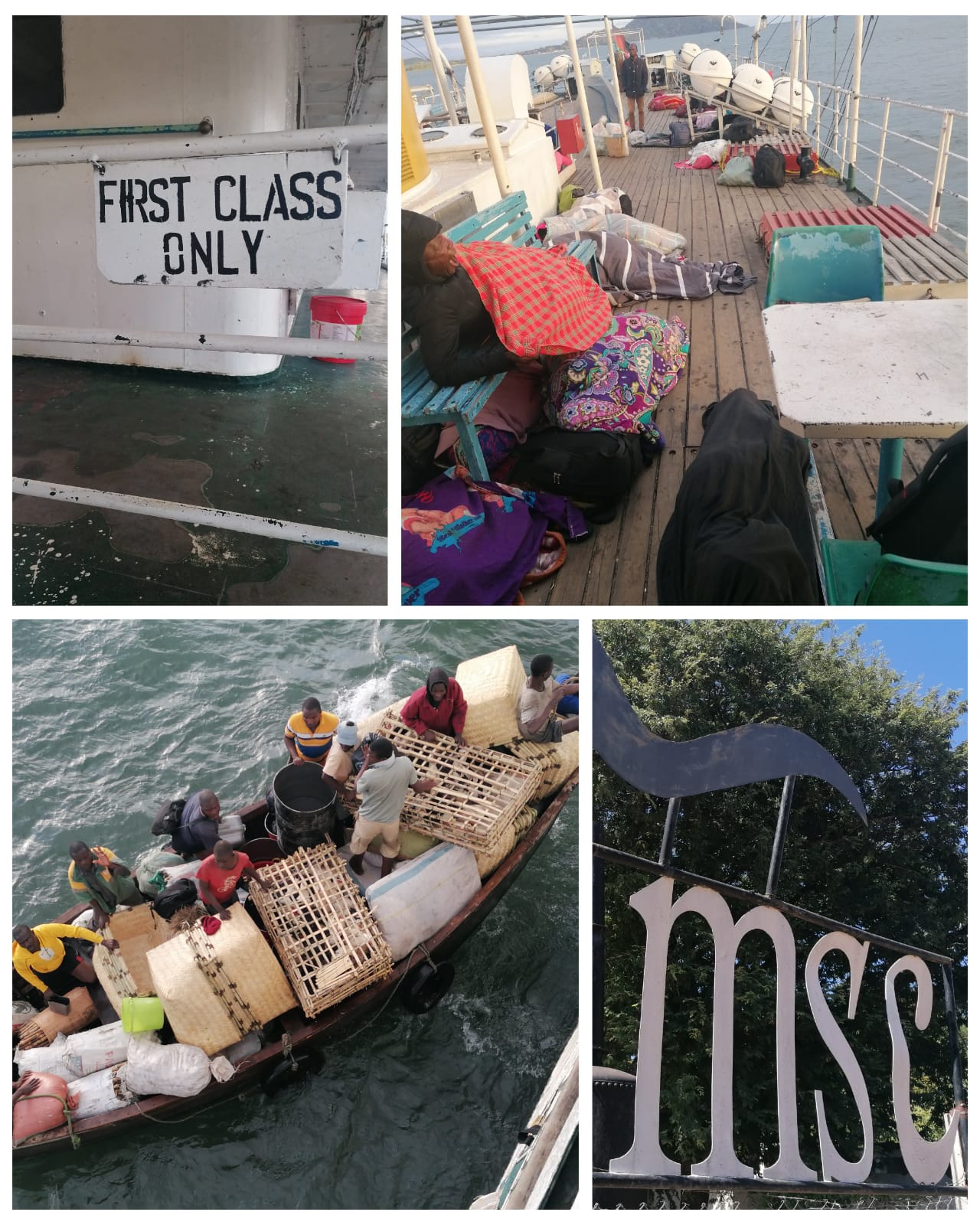
MALAWI | NKHOTAKOTA: The Ilala hasn’t changed much since Laurianne last took the ferry 34 years ago; it is just older, grimier and more battle worn – unsurprisingly, since it was built in 1949, capable of carrying 100 tonnes of cargo and 500 people. After a chilly night sleeping on benches on deck, we found we had only travelled 110 kilometres since leaving Monkey Bay at 19:00, 11 hours after its scheduled departure. A few stops – without docks – have been added, which has made the slow boat even slower as cargo and passengers are loaded aboard from boats. At the first stop at Senga Bay, it took 5.5 hours to load, in the dark, all the drums, buckets, baskets, mats, bales of coal, grain and sugar cane and at least two wicker cages crammed with geese.
First-class tickets cost R130 and buy you a little more breathing and sleeping room on the upper deck, where cold beers flow from the bar and dinner, bed and breakfast is served in the saloon. Chicken and chips, beef stew and shakshuka for breakfast all earned a thumbs up.
We finally puttered into Nkhotakota after 20 hours – an MSC cruise like none other.
Day 26: (18 May 2025)
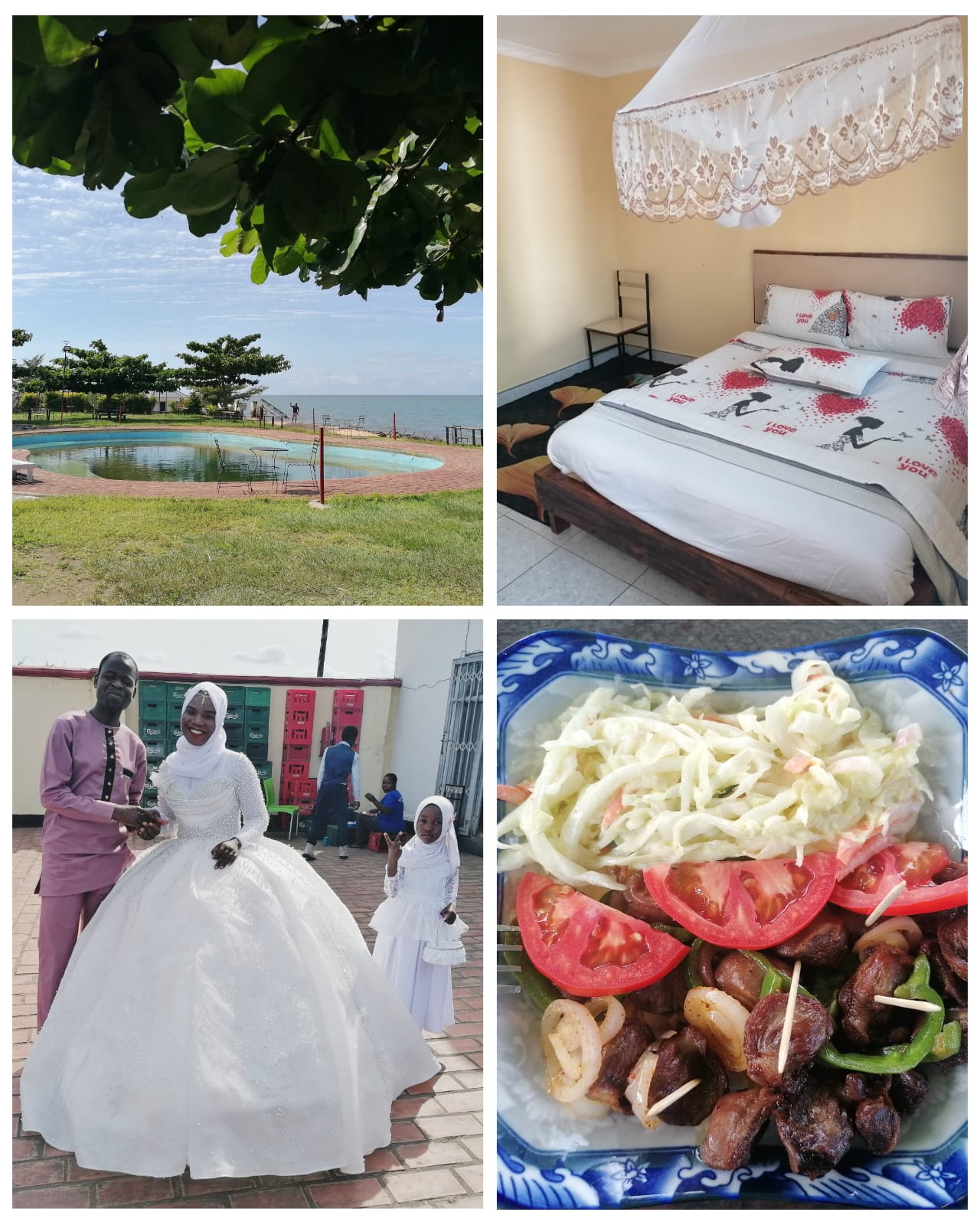
MALAWI | NKHOTAKOTA: Rest day today. Laundry, nail clipping and chilling at the Kaliba Beach Resort –popular for wedding photos – where the beach has been swallowed by the lake, the pool is a pond for platannas, the shower is hot, the beers are cold, the food tasty and the locals cheery – not bad for R150 a night for a double en suite room with one free breakfast of sausage, chips, boiled egg, peanut butter bread and tea/cocoa.
Day 27: (19 May 2025)
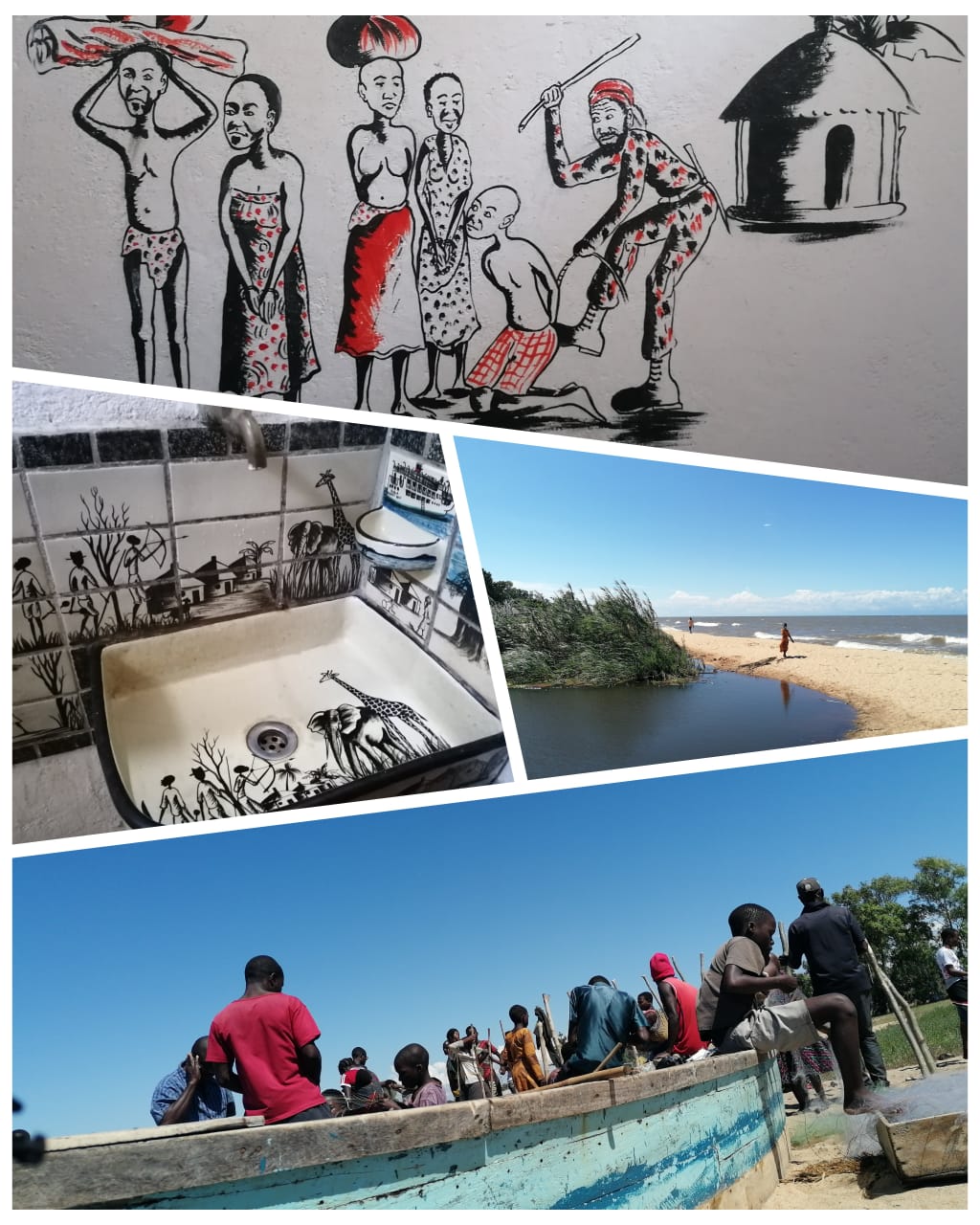
MALAWI | NKHOTAKOTA: The rocky, baobab-studded islands and clear waters of southern Lake Malawi are supplanted in the central region by low-lying swamps, sandy beaches and muddy surf. Nkhotakota was a major slave-trading hub in the 19th century and this historical link with the Arab traders may account for the Islamic culture that prevails here today. A motorcycle taxi ride brought us 20 kilometres south to explore the beaches, fishing villages and lodges – some that would not look out of place in the Seychelles, and others abandoned decades ago. Many of the lodges along the lake’s expanse are South African run, on terms negotiated with the local chief. The Malawians are talented artists in a variety of mediums, as showcased in the mid-range Nkhotakota Pottery Lodge where we had lunch overlooking the windswept waves: homegrown aubergine casserole with rice and butter fish (mcheni) washed down with a couple of local Kuche Kuche beers, all for the princely sum of R186.50.
Day 28: (20 May 2025)
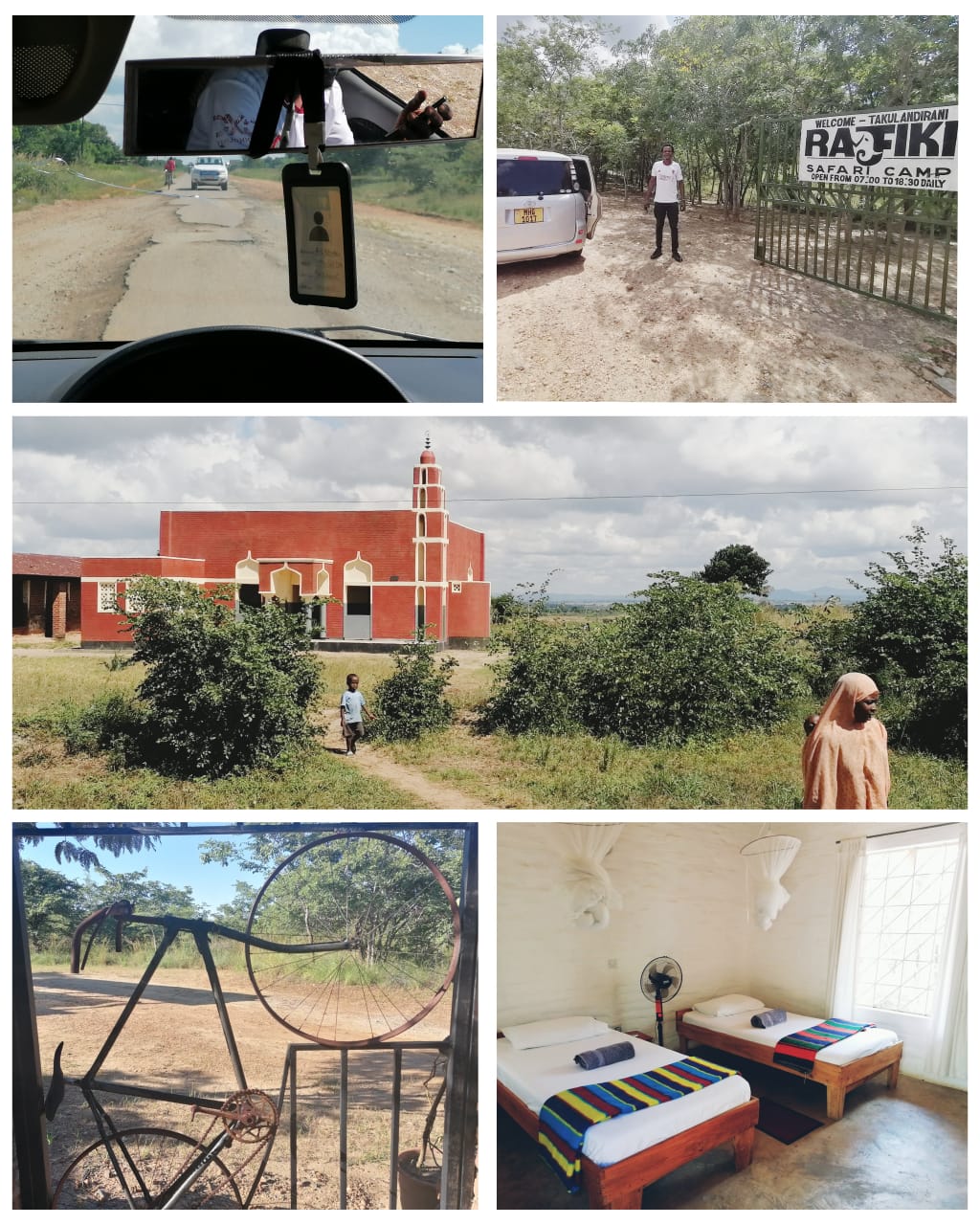
MALAWI | LOZI, RAFIKI SAFARI CAMP: From the water to the wild via the main lake road: a single strip of rutted tar shared by pedestrians, bicycles, motorcycles, the occasional car and a steady stream of trucks carrying sugar from the Illovo factory at Dwangwa. A private taxi deposited us at Rafiki Safari Camp, which borders the Nkhotakota Wildlife Reserve. Carved out of this small country of subsistence farmers and fishermen, the reserve is the biggest and oldest national park in Malawi, spanning over 1,800 square kilometres. Three major rivers flow through the canopy woodland, sustaining 500 elephant and 2,000 other animals, reintroduced in 2016/2017 after poaching emptied the park. Rafiki’s owners, Sandi and Chris Webb, are more connections from Kariba (👍🏼 Barbs). At the moment, with impeccable timing, we’re their only guests.
Day 29: (21 May 2025)

MALAWI | LOZI, RAFIKI SAFARI CAMP: While the $10 entry fee for Nkhotakota Wildlife Reserve is a bargain, the grass is high, the trees thick and green after a wetter-than-normal May so game viewing is a bust. Instead, we explored some of Rafiki’s 16 hectares of woodland and riverine forest that fringes the Bua River where people illegally pan for gold although the river is flanked by National Park land. The gold is apparently bought by the Malawi Reserve Bank, which has devalued the kwacha three times since 2012, most recently in 2022 and 2023, plunging one of the poorest countries in Africa into a downward spiral of inflation. Little wonder that desperate people are looking for the end of the rainbow.
Day 30: (22 May 2025)
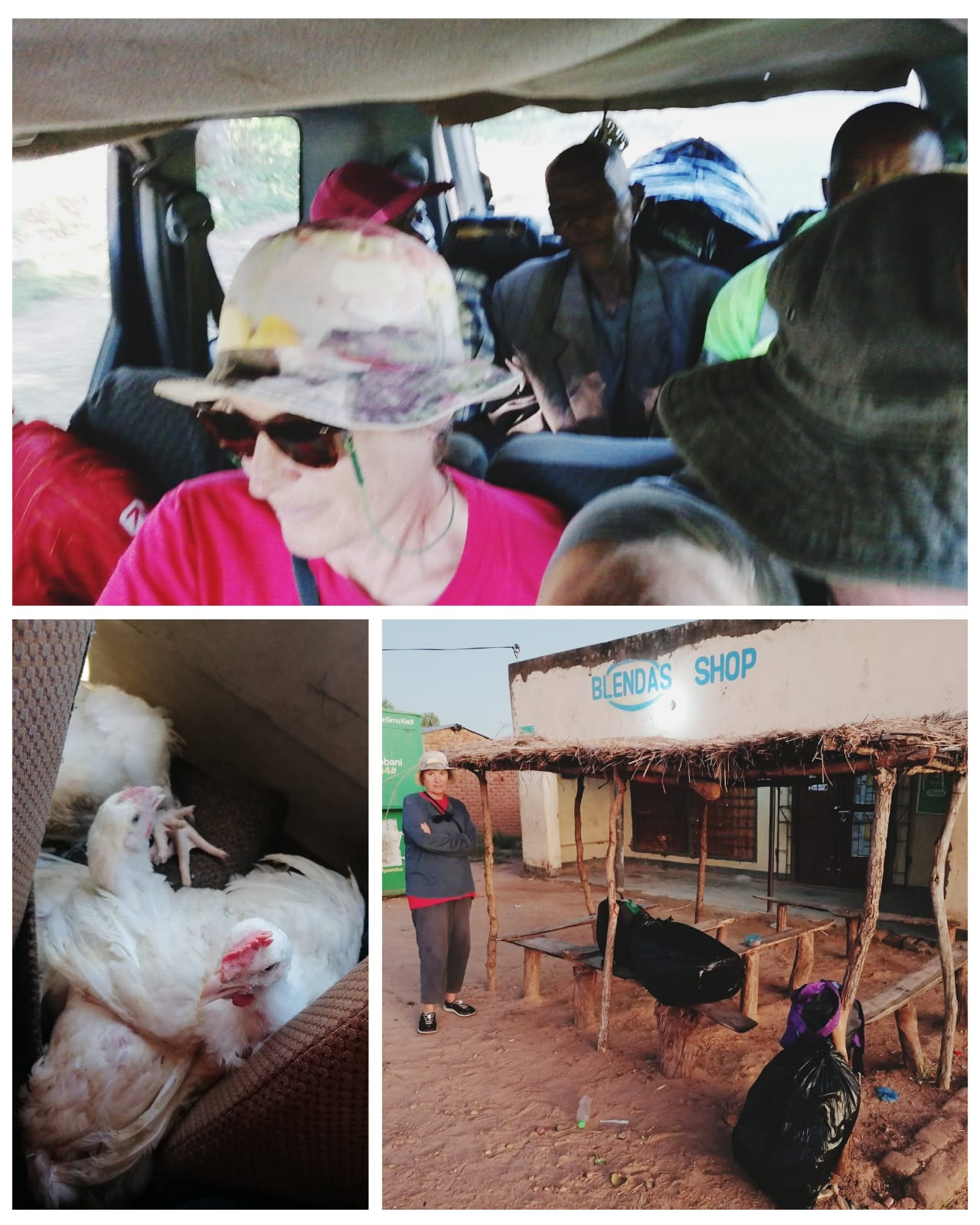
MALAWI | NKHATA BAY: From the bush to the bay. A 05:00 start to catch the ‘automatic’ bus to Nkhata Bay didn’t work out. Instead, it took us 2 overflowing car taxis – built for 7 and carrying, at times, 11, including a ward councillor and his 3 chickens – followed by a motorcycle taxi, to arrive, 180 kilometres and 4.5 hours later, at Nkhata Bay. The lake shore road improved greatly after Dwangwa, the home of Illovo Sugar – their southbound trucks are wreaking havoc on what’s left of the road. The marshy flatlands of the central lake districts have given way to leafy hills, and we sleep tonight perched on a cliff under the tree canopy with the waves lapping below us.
Day 31: (23 May 2025)
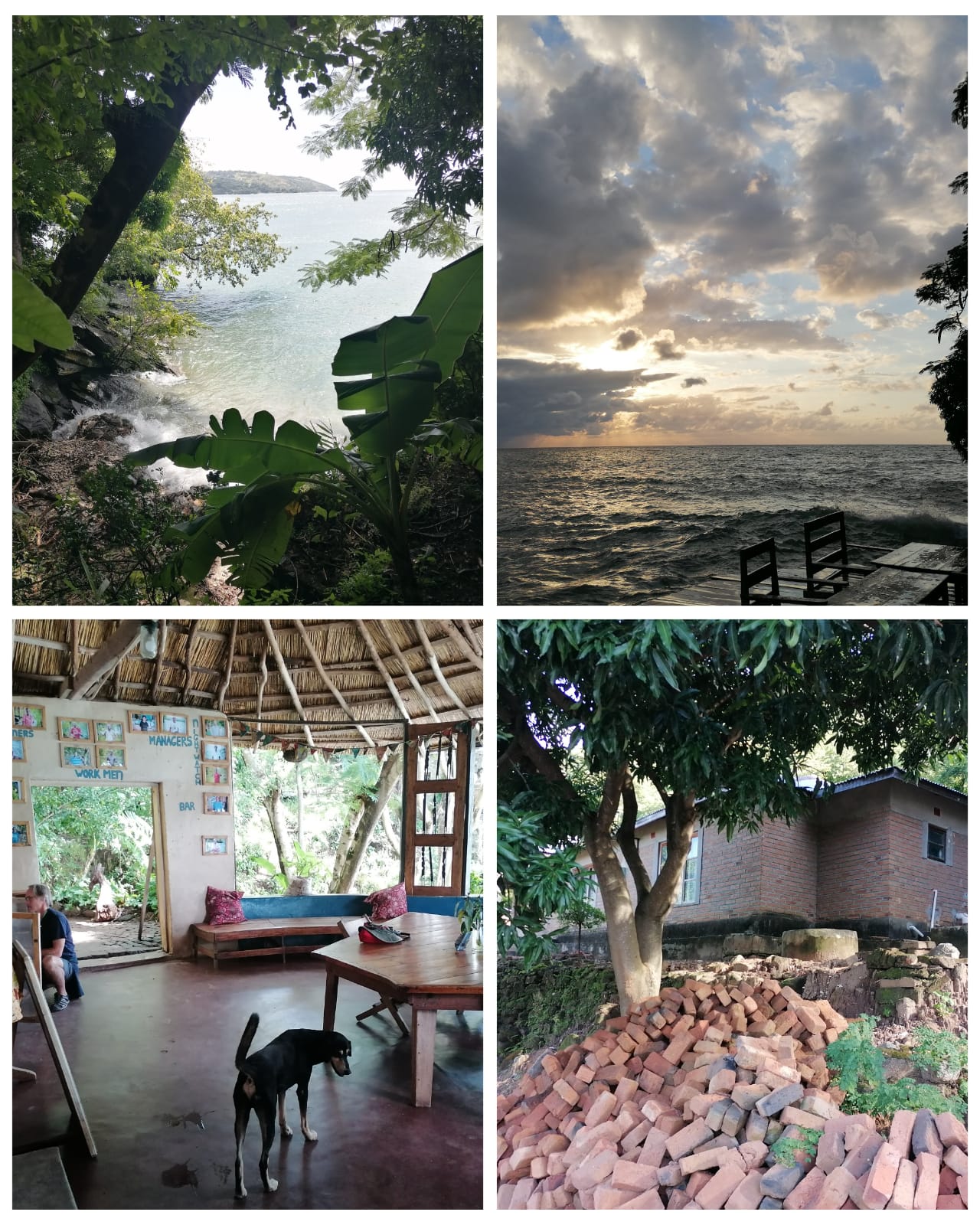
MALAWI | NKHATA BAY: A lake of many moods. We arrived at Butterfly Space Eco Lodge yesterday afternoon in sunshine. Set on the cliffs among mature forest, the stone and wood chalets are all but invisible. Compost toilets ensure that the clarity of the lake water stays that way. Reports of recent crocodile sightings did not deter us from snorkeling with the cichlids again just off the deck of the bar. By this morning, blue sky had given way to clouds and rain while the placid waters had turned into pounding waves due to a ‘middle wind’ – wind in the middle of the lake although unfelt by us on the northern shores. Suburban villas, funded by the Malawian diaspora in South Africa, are being carved out of the hillsides.
Day 32: (24 May 2025)
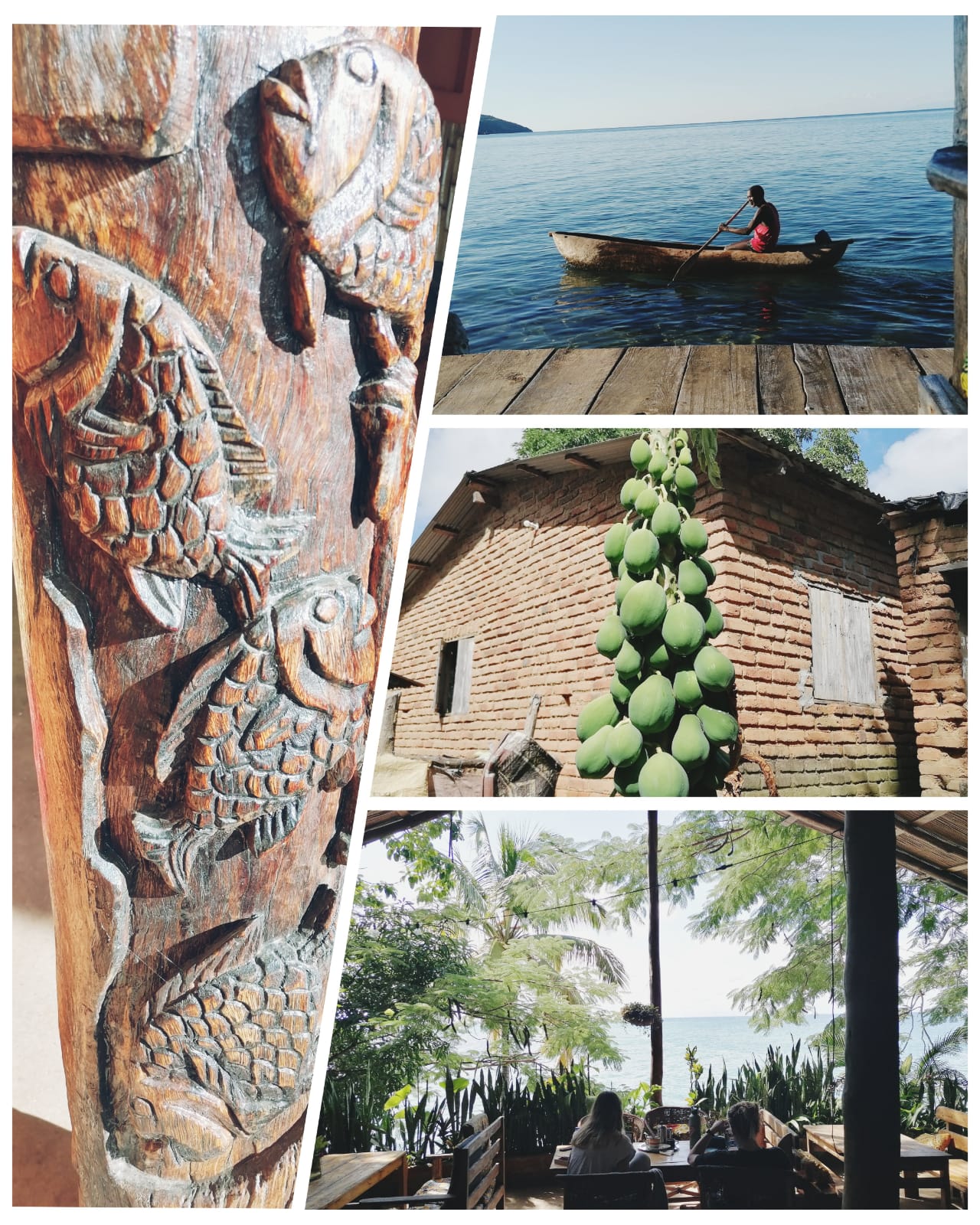
MALAWI | NKHATA BAY: The beginning of our second month on the road. Yesterday’s cool, rainy weather provided the perfect excuse for a massage, by a local mother and daughter team who worked out the backpack kinks with vim, verve and vigour – excellent value at R100 for 40 minutes. Today, the inclement weather continued, so trip research for our imminent departure from Malawi was the order of the day. The skies cleared in time for sunset but the swell has not abated.
Day 33: (25 May 2025)

MALAWI | MZUZU: A short hop by shared taxi to the cool, green highlands today on good road. Our staging post for our next border crossing, Mzuzu is the third largest Malawian city by population and the capital of the North. This is coffee country.
An Italian restaurant provides a welcome respite from chambo (fish) or chicken and chips. Over lunch, we met a UK engineer who is working on some 400 kilometres of the main road from Lilongwe to Jenda. The project is being financed by an EU loan, which this impoverished country will never be able to repay. Of the four contractors involved, two are Chinese.
During a Sunday afternoon stroll, we met a local preacher who proved to be a Mormon. ‘Very palatable,’ he remarked, as we paused to identify some mousebirds in a tree. The locals set traps for them in the maize patches, which may go some way to explain the paucity of bird life, although habitat loss is the primary cause.
Day 34: (26 May 2025)
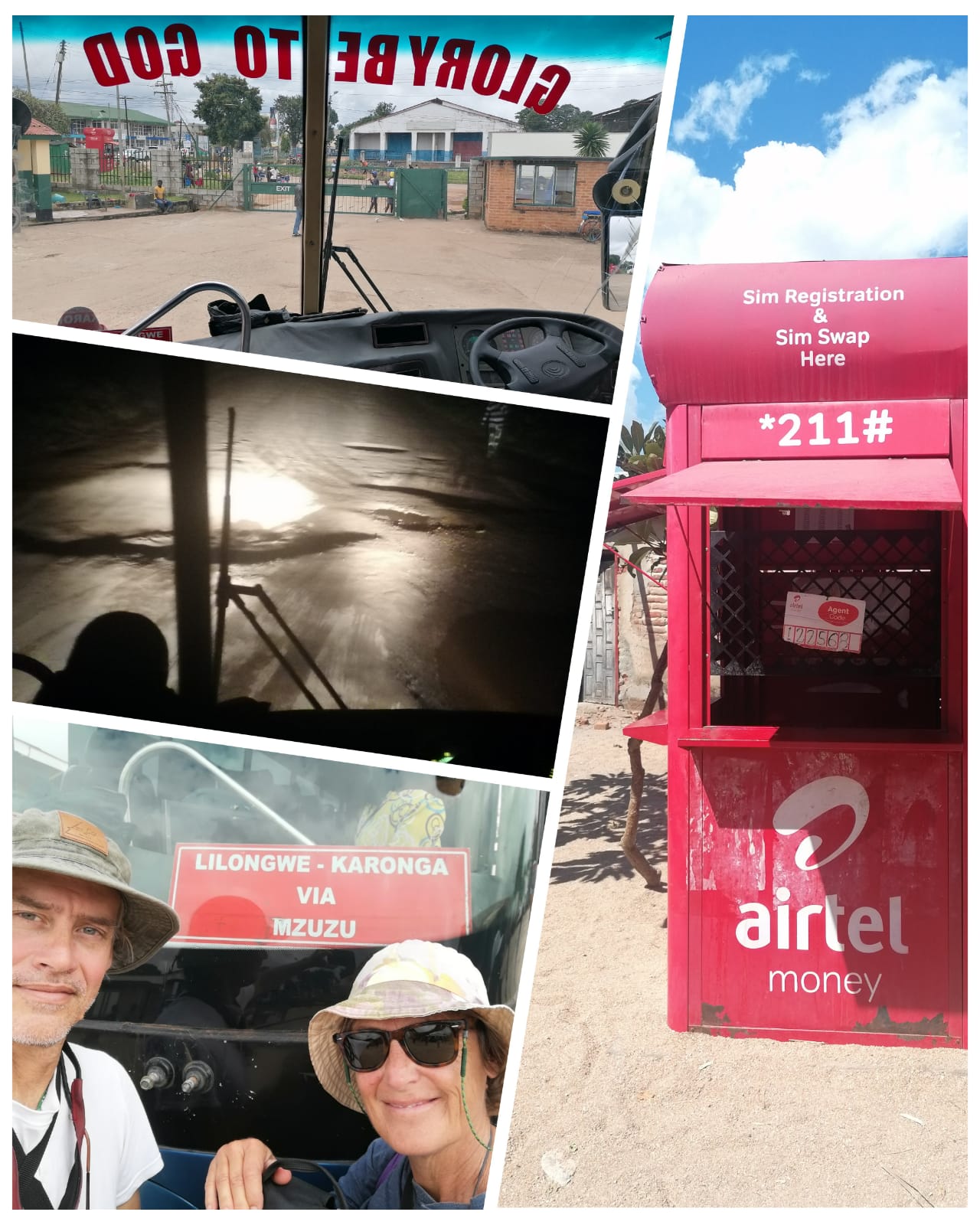
MALAWI | KARONGA: While little has changed in the 34 years since LA was last in Malawi, dirt-cheap data and mobile money (underpinned by cash rather than card) are game changers. From the comfort of our lakeside lodge, we paid MWK60,000 (R300) + a transaction fee of MWK2,300 (R11.50) for our ‘express’ bus coach to the northern lakeside town of Karonga, our seats reserved via WhatsApp.
In the past, a mobile bank visited the rural districts once a week. As a tourist, if you missed the bank, you could not change your travellers cheques. Now, it seems that every second person is an Airtel agent and Airtel Money offices abound, doling out cash like banks, but with no security – a testimony to the honesty of the good-natured Malawian people who embody the ‘warm heart of Africa’ despite their daily struggles for survival.
It takes almost 7 hours to cover the 222 kilometres north to Karonga. The main M1 two-lane road is a crazy paving of patched tar, muddy crater lakes, potholed gravel pock-marked like the surface of the moon and new tar under construction. The M1 climbs through the Viphya Highlands, the thickly wooded peaks thinned by slash and burn clearing for crops and charcoal. Fuel trucks stream in from Tanzania; the purported trade spat between Malawi and its neighbour is obviously over. Goods trucks, container trucks, timber trucks, road construction vehicles, motorcycles and minibus taxis dodge the potholes and each other. A coal truck lies toppled on the side of the road; a rental 4×4 is being towed by a minibus taxi; angle grinding repairs to an 18-wheeler rig are underway on the side of the road. Descending the escarpment, the road, wave-like, mimics the undulations of the lake along which it runs. We touched down at 20:45 and got the last room at the second place we tried. It’s a busy Monday in Karonga.
Day 35: (27 May 2025)
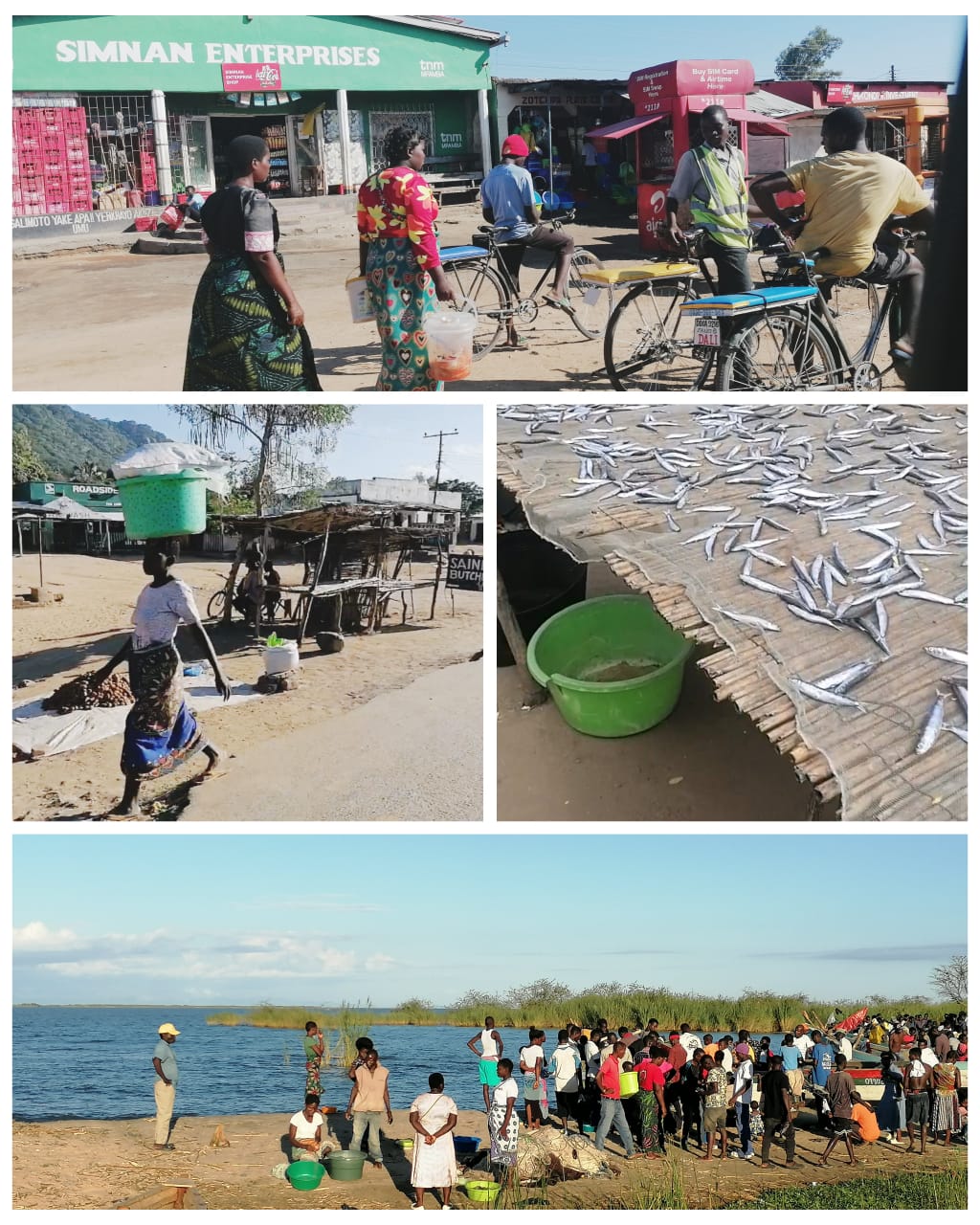
TANZANIA | MBEYA: We leave Malawi today by shared taxi and motorbike taxi, covering 184 kilometres in nine hours. After 20 nights in the country, here’s a breakdown of what we spent. Taking public transport, which was cheap, allowed us to splash out a little on accommodation so we had our own bathroom. Even budget accommodation, which cost R100 to R150/night, came with hot showers, fans and mosquito nets. Staying in tourist accommodation cost between R450 and R1,200 for mostly the same facilities. Our average accommodation spend reflects this variety.
💲 Travel Tally: Malawi
Average expenses (for 2) over 20 nights:
● Accommodation (Double en suite): $34 (R680)/day
● Food & drink: $22 (R440)/day
● Transport: $7 (R140)/day
● Daily average: $65 (R1,170)/day
Day 36: (28 May 2025)

TANZANIA | MBEYA: Yesterday, we breezed through the Songwe border, visa-free, in less than 30 minutes, and hopped on a dala-dala, the larger, roomier Tanzanian version of SA’s minibus taxis for the three-hour, stop-start trip to Mbeya. The thickly wooded hills on both sides of the good tar road were soon replaced with bananas, maize, cabbages and commercial tea estates. Coffee and honey is also produced in this picturesque region. Villagers sell bundles of firewood on the side of the road as the deforestation seen in Malawi continues. Malawi is Tanzania’s poor country cousin. Tanzania is ranked 165 out of 193 on the Human Development Index, compared to Malawi (172). South Africa is 106.
While most Malawians speak fluent English, we got lost in translation before we even arrived at our first night’s accommodation. We had booked a double en suite room at the Peace of Mind Hotel via WhatsApp and our ‘Welcome Sweet’ was confirmed. Charmed by the name of the room, we arrived to find ourselves booked into a suite with pool and mountain views, complete with sitting room, bar fridge, bathroom and separate loo – the most expensive room in the place at the princely sum of 85,000 Tanzanian shillings (R600) with a buffet breakfast included. Welcome (karibu) to Tanzania.

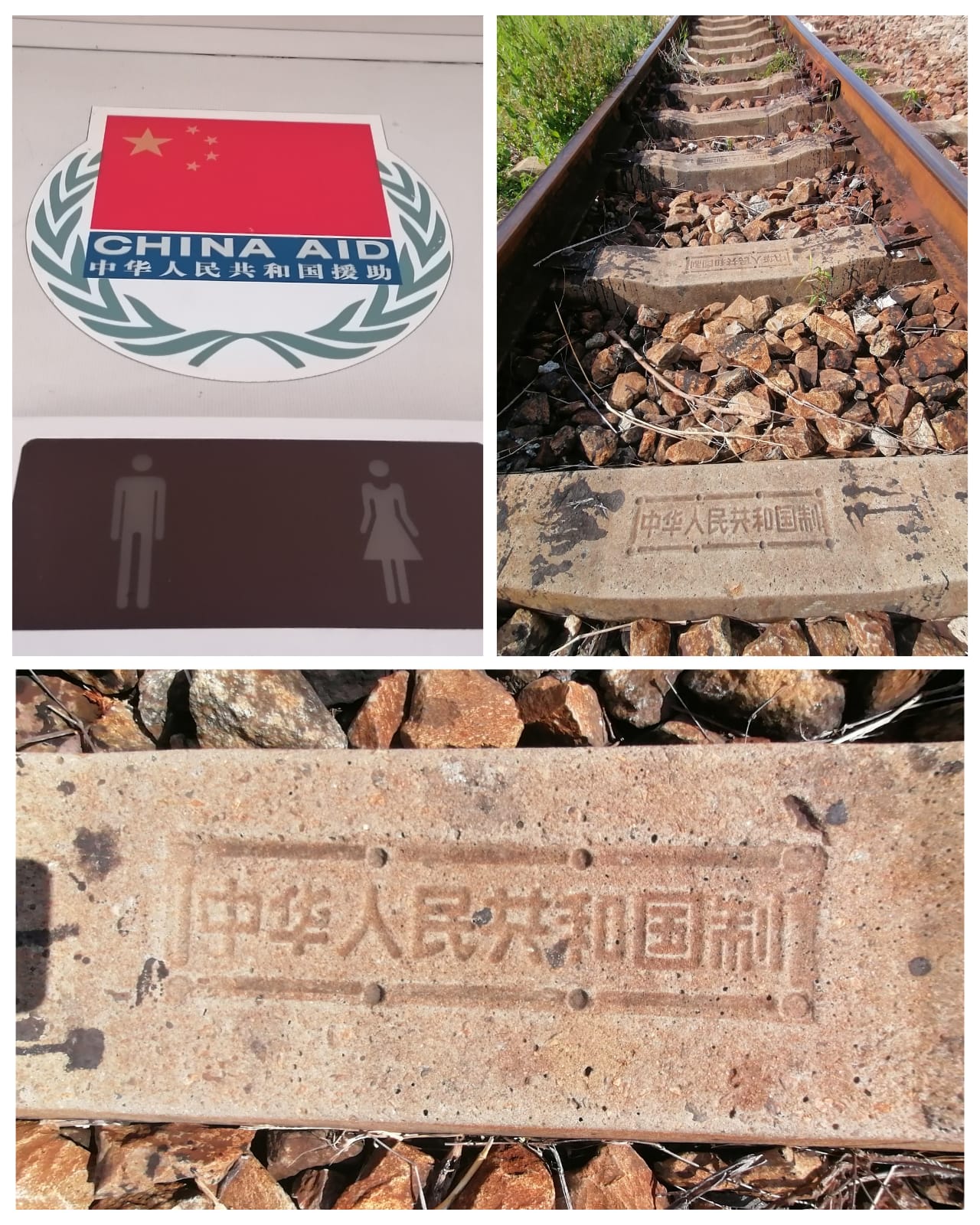
Our good fortune continued today. We had cut short our stay in Malawi to catch the train to Dar es Salaam. The TAZARA railway from Zambia to Tanzania was built by the Chinese in the 1970s, their first ‘overseas’ railway. In its glory days, a train departed from each end of the 1,860 kilometre route between Zambia and Dar es Salaam daily. Now it runs twice a week from either direction. The Makubu ‘Express’ Train leaves Kapiri Mposhi on a Tuesday and is scheduled to depart Mbeya at 14:30 on Wednesday. We had pre-booked an entire 4-berth compartment to ensure that we could sleep in the same space, as men and women are separated on the train. Prepared for lengthy delays, we arrived at the train station at 13:45 as instructed only to discover that the train was delayed until 04:00 the next morning. Undeterred, we purchased our tickets – TZS53,000 (R375) for a first-class berth – and resolved to return to our hotel. However, the station policeman, Mr Mialla, took us under his wing. We were installed in a nearby, new, modern hotel under police escort, and Mr Mialla even accompanied Lee to procure a SIM card, which requires registration rivaling passport applications. This attempt failed so we will try again in Dar. Expect radio silence. This 859 kilometre-leg may take a few days.
Day 37: (29 May 2025)
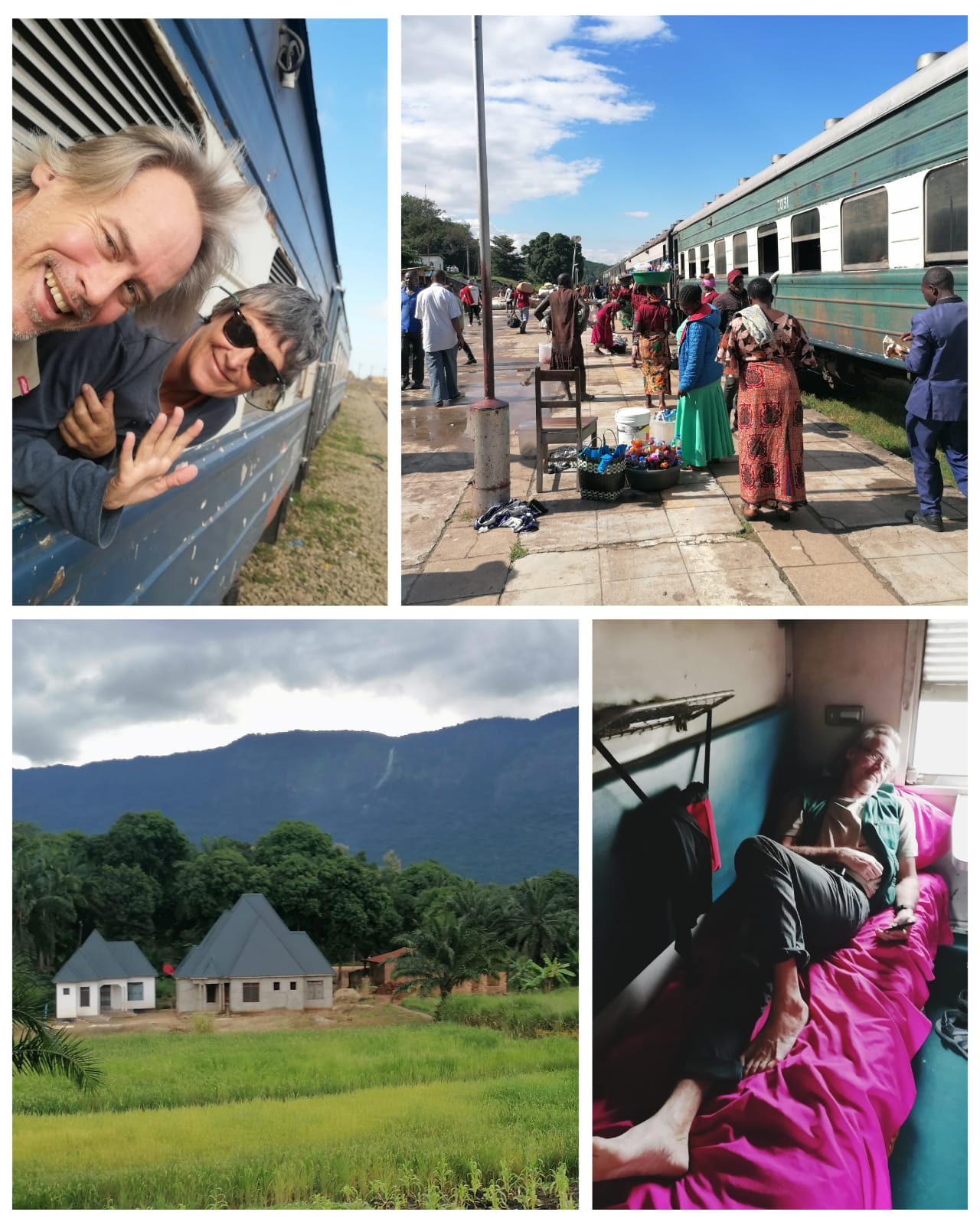
TANZANIA | SOMEWHERE BETWEEN MBEYA AND DAR ES SALAAM: The Mukuba Express Train left Mbeya station at 04:15, some 14 hours later than scheduled. Rovos Rail it ain’t (although Rovos uses the same line to Dar) but the bedding is clean, as are the squat loos, the beers are cold and the food is simple, ample and cheap. When in motion, you sweep past the baobabs and euphorbias, the ox carts and the muddy rivers, the forested hills and cultivated valleys in bouncy, noisy, clanging comfort. When pulled into a station, sometimes for an hour or more, Tanzania comes to you – in technicolour with surround sound. As dusk falls over the rice paddies, the purple peaks of the Udzwunga Mountains are silvered with waterfalls. And the train hurtles on into the starry night.
In September 2024, a Memorandum of Understanding was signed between Zambia, Tanzania and the lead company appointed by the Chinese government, China Civil Engineering and Construction Corporation (CCECC), who was involved in the original build in the 1970s. In exchange for a 30-year concession, China will invest $1 billion in the rehabilitation of tracks, bridges, tunnels, engineering workshops, quarries, concrete sleeper plants and stations as well as the purchase of new locomotives and wagons. The port at Dar stands to earn $128 million annually when the three-year build is complete. China will operate freight; Tazara will operate passenger trains, with China assisting in the repair and maintenance of the passenger locomotives and conducting major overhauls every 10 years. After 27 years, all assets will be handed back to TAZARA.
Day 38: (30 May 2025)

TANZANIA | DAR ES SALAAM, KIGAMBONI: We are coming to you tonight from our bungalow (banda) on a beach called Butterfly (Kipepeo), eight kilometres south of Dar. We clattered into the TAZARA station at 06:45 this morning, after 28 hours in transit. On the train, we had met Mr Anyambilile, who works for the Ministry of Home Affairs. He ordered us a Bolt! and we cruised through Friday morning traffic past the petrol tankers lined up outside the port to land up on a palm-fringed piece of paradise. Asante Sana (👍🏼 thank you very much) Sandi and Chris, for the recommendation.
Day 39: (31 May 2025)
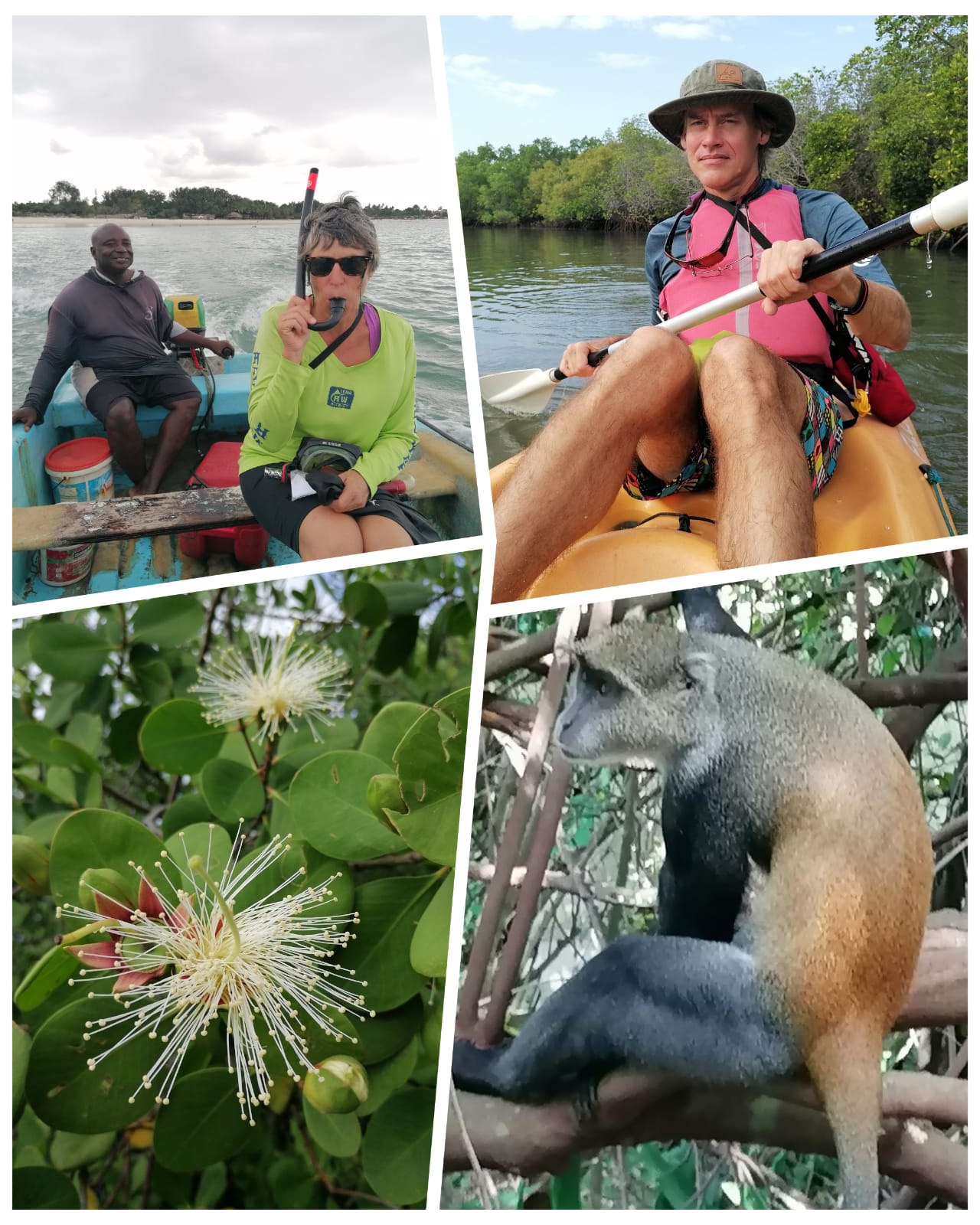
TANZANIA | DAR ES SALAAM, KIGAMBONI: An early morning kayak up a mangrove creek in flower was followed by an afternoon boat ride to snorkel a battered and denuded reef in swell under cloudy skies, but the water was warm and the city skyline scenic. A pair of Samango monkeys, a Burchell’s coucal and a scarlet-chested sunbird played starring roles. Saturday evening brought the locals: wannabe Premier League footballers, Instagram poseurs, homemade salted crisp vendors, kids splashing about in rented tubes, and men watching local league in beachside bars, all set to a musical score of competing quadrophonic kwaito. Mambo? Powa. 👌
Day 40: (1 June 2025)
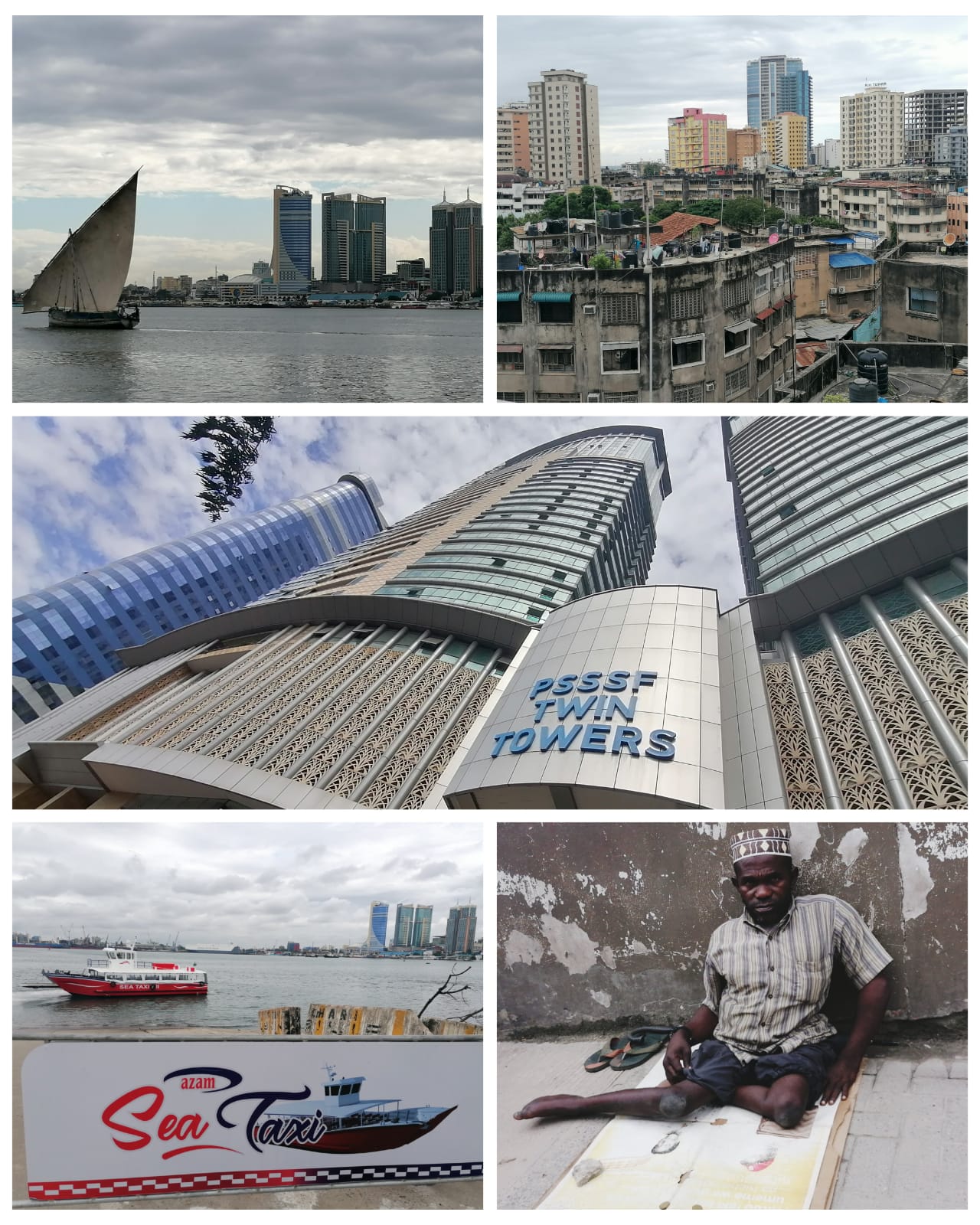
TANZANIA | DAR ES SALAAM: The name originates from the Arabic for ‘Abode of Peace’ (Dār as-Salām). Today, however, ‘Dar is a disaster’, its traffic notorious and its 6 million people confronted daily by the chaos of congestion, collapsing infrastructure and ongoing construction of the Bus Rapid Transit (BRT) System, which has been underway for 7 years and is 70% complete. One of the staff here takes 4 hours to travel the 25 kilometres home after work.
Pro tip: Visit Dar on a Sunday – which we did, jumping on a Sea Taxi for the five-minute hop across to town. The city centre is a mix of squalor and skyscraper, first world and third.
Despite their daily struggles, the people are cheerful, friendly and ever ready to help. Everywhere we go, the Tanzanians welcome us as African brothers and sisters. One of the first Swahili words you will learn is karibu, which means ‘welcome’.
Day 41: (2 June 2025)
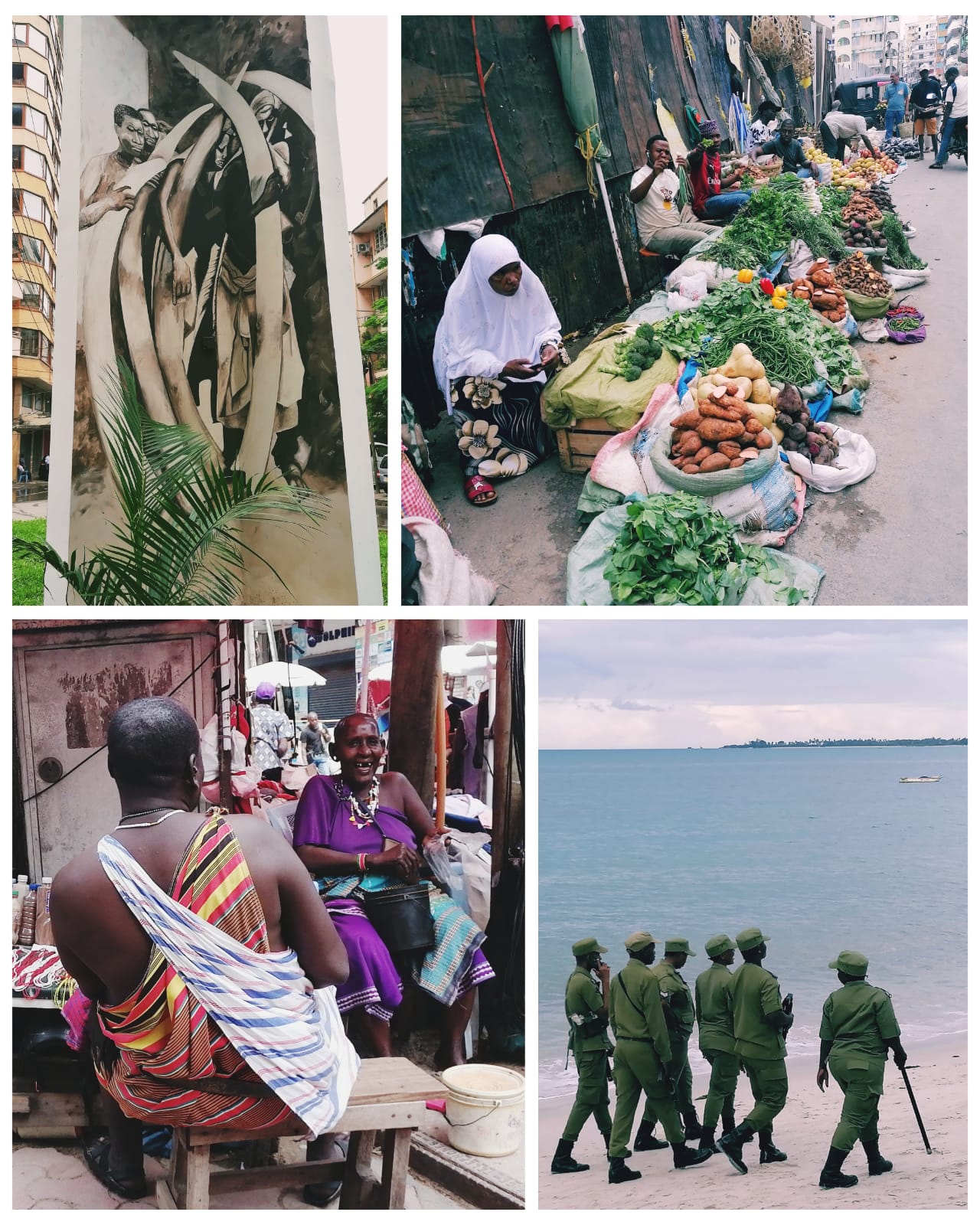
TANZANIA | DAR ES SALAAM: How do you eat an elephant? One bite at a time – so the African proverb goes. Tanzania is East Africa’s largest country (943,000 square kilometres) almost four times the size of the United Kingdom. So, today was spent, beachside, planning our Tanzanian menu, with the help of a tourism operator originally from Zimbabwe. After the current Zimbabwean president – then Minister Mnangagwa – expropriated Tendekayi’s family gold mining venture, he turned his back on his homeland, made Tanzania his home and has prospered. Our meeting was serendipitous as will become clear over the next week. Stay tuned. In the meantime … some denizens of Dar, past and present.
Day 42: (3 June 2025)
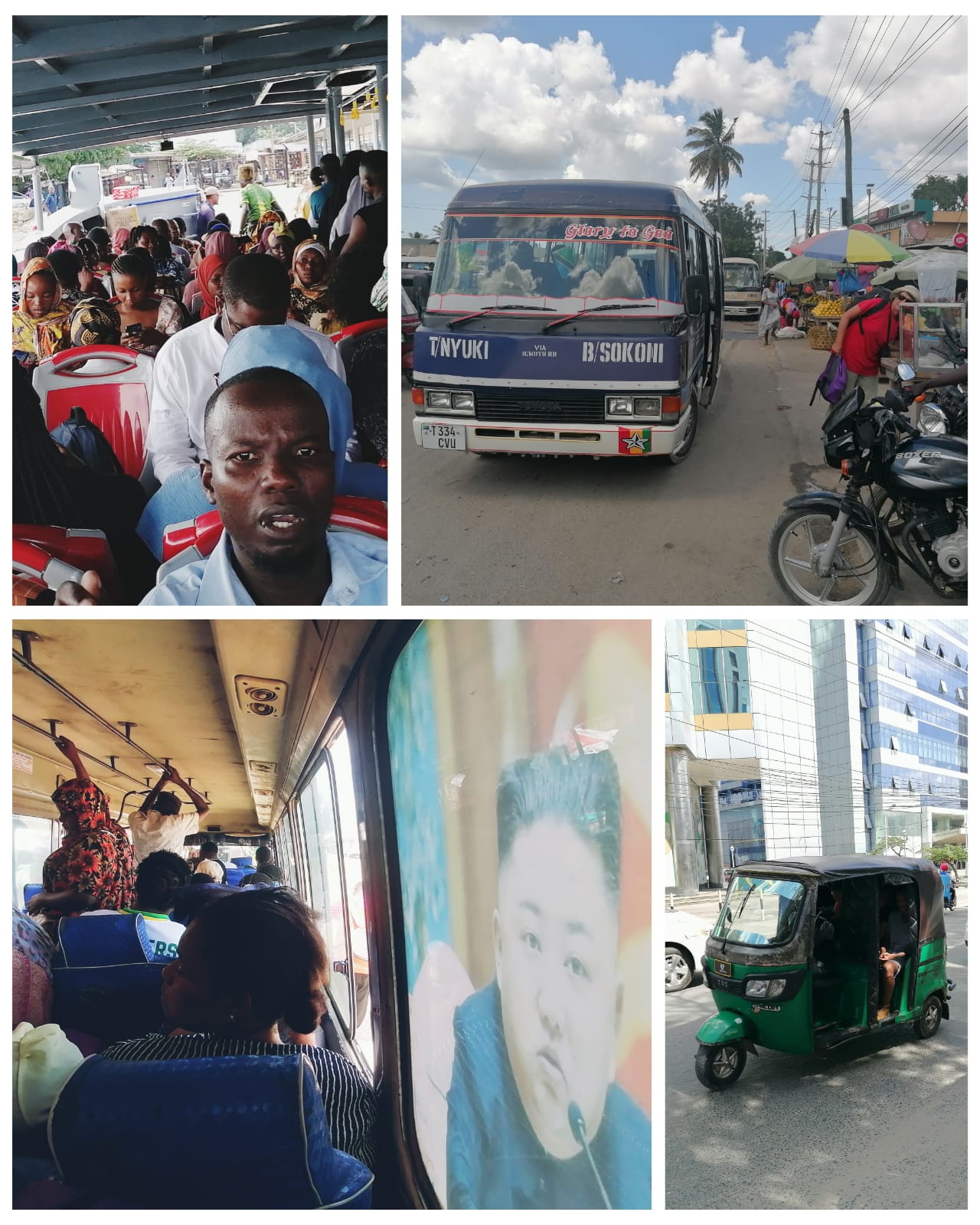
TANZANIA | BAGAMOYO: It took us a sea taxi, 3 tuk-tuks (bajaji), 3 dala-dalas, R127.50 (TZS18,200) and 4 hours to travel the 81 kilometres north between South Beach and Bagamoyo. The road out of Dar was mostly good tar with construction of the BRT taking up the median for some 20 kilometres, in tandem with the building of high-rise commercial buildings and malls. We shared our first bajaji with a corporate lawyer. ‘Glory to God’ was emblazoned on the front windscreen of one dala-dala with Kim Jong Un’s portrait taking up the two rear windows. The driver was clearly hedging his bets. The last dala-dala was standing room only. Indicative of the social hierarchy, a younger woman gave up her seat for an elderly man while a middle-aged official in a safari suit got tired of standing and tapped a young lady on the shoulder who promptly got up and surrendered her seat.
Day 43: (4 June 2025)
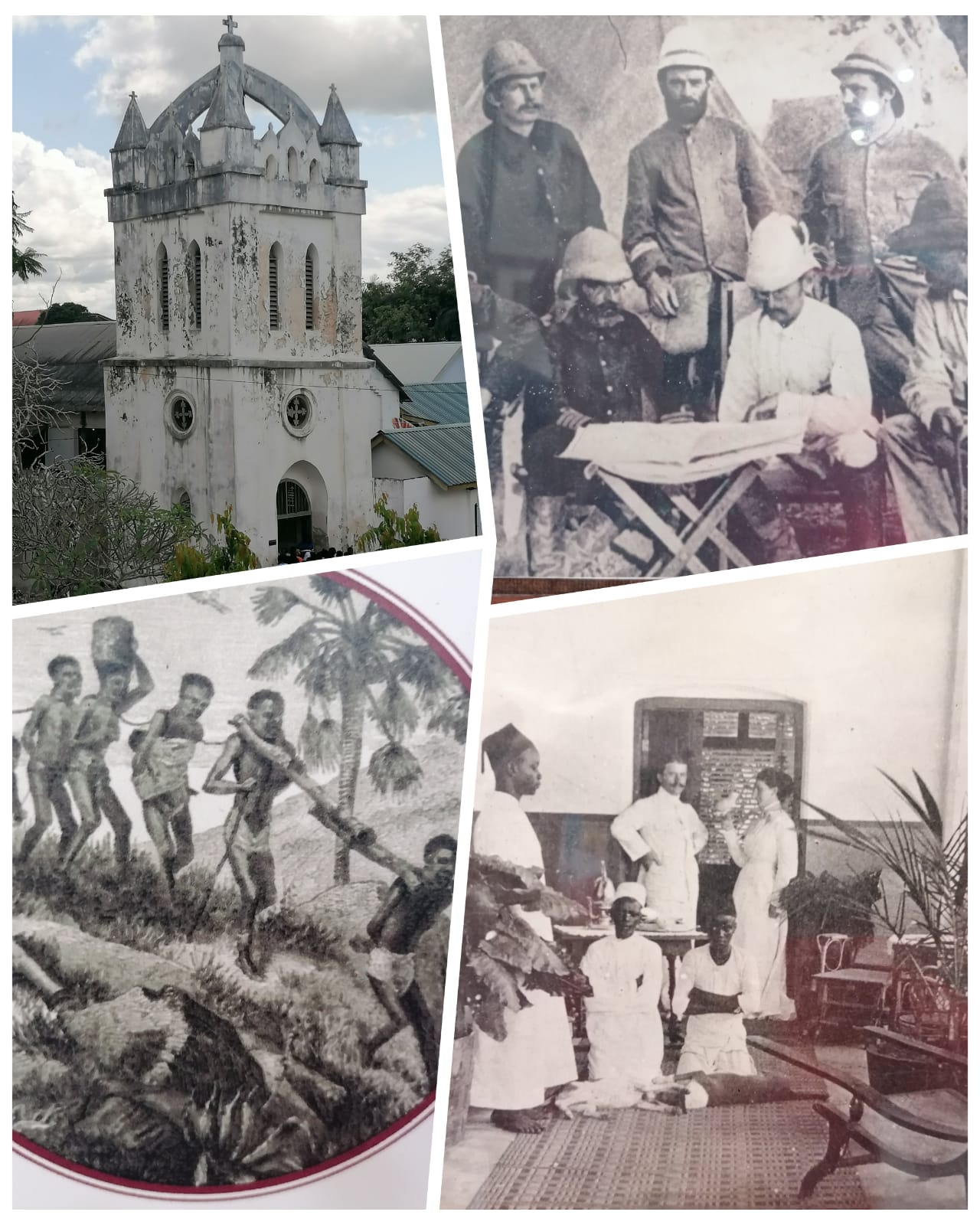
TANZANIA | BAGAMOYO: A visit to the Catholic Church Museum this morning revealed that there is more to this mouldering tourist trap and fishing village than first meets the eye. The town’s name is derived from the Swahili bwaga moyo which means ‘Crush down your heart’. It was the main terminus for the 19th-century East African slave trade in which around 1,487,000 slaves were captured, sold and sent to Persia and India, to South Africa and to the islands of Mauritius and Réunion. The desire to end slavery saw the establishment of the first Catholic mission on the East African mainland, in 1868. Of the first church built in 1872, only the tower remains, in which David Livingstone’s mummified body spent the night in 1874, en route to Zanzibar and London after being carried 1,500 miles from where he died in Zambia. Bagamoyo was also the capital of German East Africa from 1888 to 1916 when the British seized the town during World War I. Slavery was only abolished in Tanganyika in 1920.
Day 44: (5 June 2025)
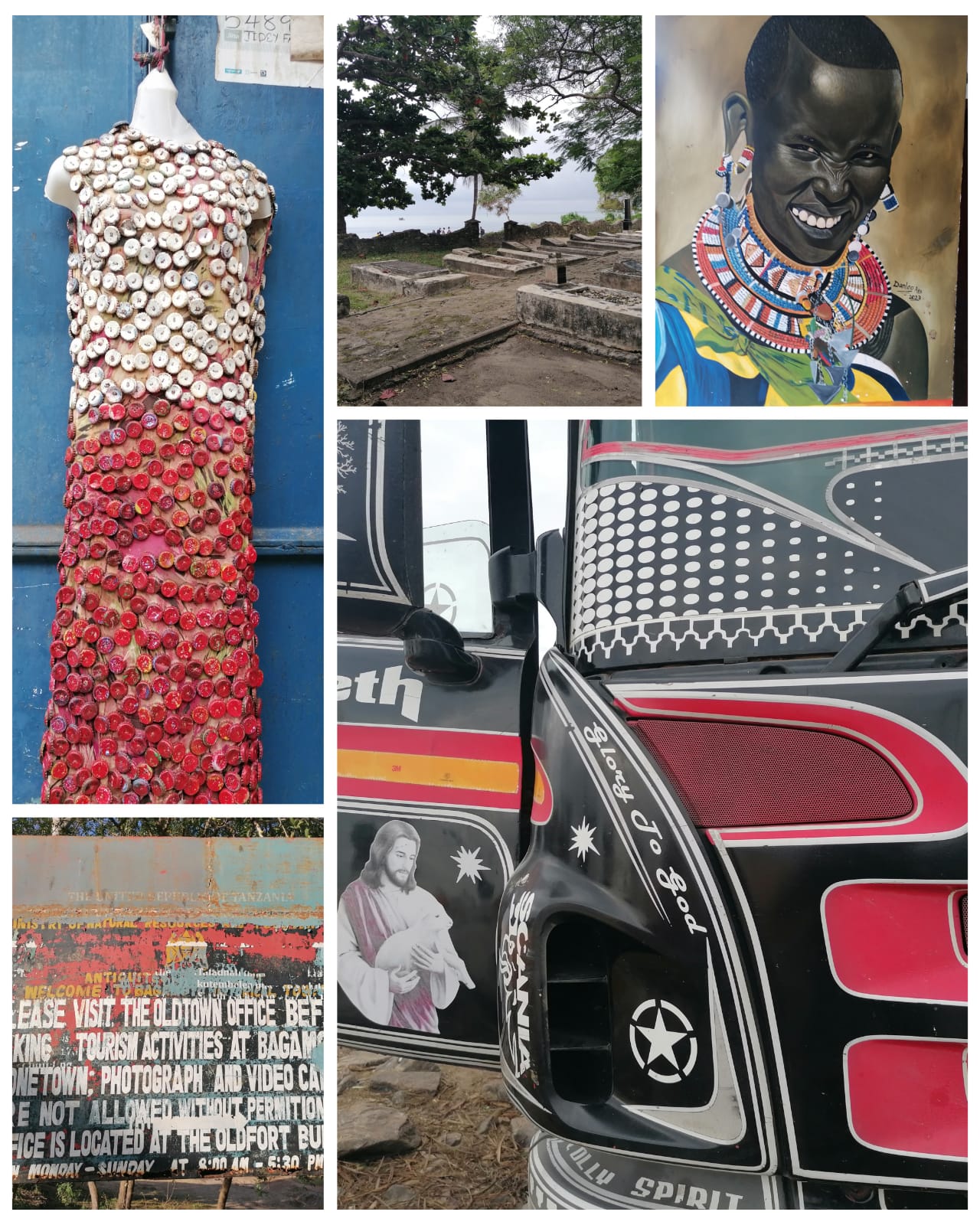
TANZANIA | BAGAMOYO: The Indian trader’s house (c. 1880s) in which we are staying is one of the few 19th-century buildings still standing in Bagamoyo. Nonetheless, a fee is apparently payable to photograph the ruins. To visit what little remains of Kaole, the older Arab trading town and burial ground south of town, (c. 13th/15th C) also comes with a price tag – up to TZS40,000 (R280) from TZS20,000 (R140) in February. Kaole means ‘let’s see’. We came, we saw the entry fee, we left.
The joy was in the journey, not the destination. Local colour abounded on our five-kilometre amble out of town, past dhows loading building stone and timber bound for Zanzibar, the recycled fabric and bottle tops creations of Jidey’s Fashion Designs , the al fresco artworks in the grounds of the art college and the seaside resting place of German soldiers killed in the colonial uprisings of the 1880s. Bee eaters, kingfishers, rollers and a pair of black-collared barbets provided local colour of the feathered variety.
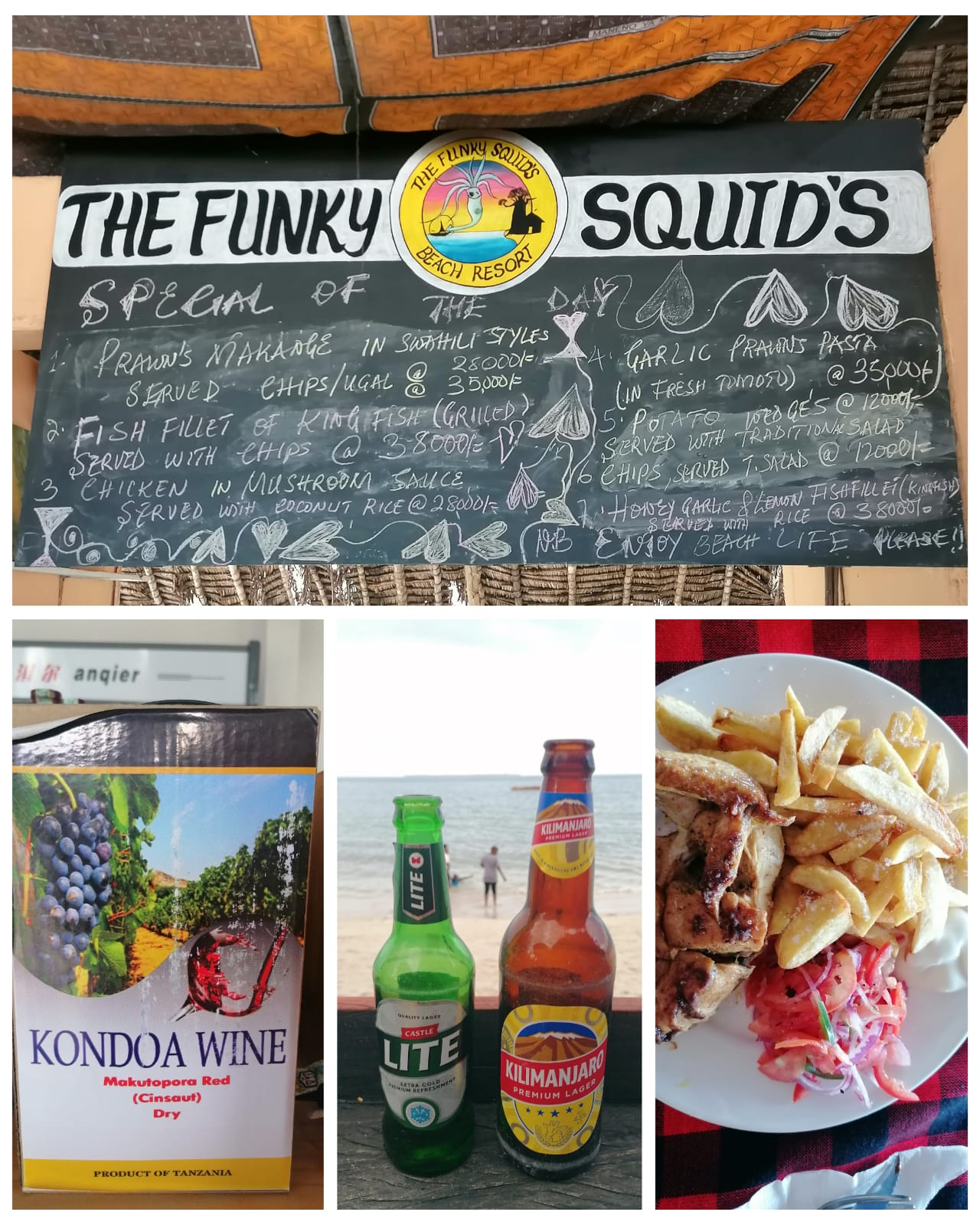
Lunch at The Funky Squid’s introduced us to the aspirational menus of Tanzanian restaurants where most of what is advertised is not available. Fish and chicken are generally a good bet. We encountered homegrown Tanzanian wine for the first time. At TZS30,000 (R210) for a 2 litre box it’s much cheaper than any South African wines we’ve come across since leaving home but was still too pricy for us. Local beers have been cheap and quaffable and, for no apparent reason, big beers and small beers are all the same price.
Day 45: (6 June 2025)
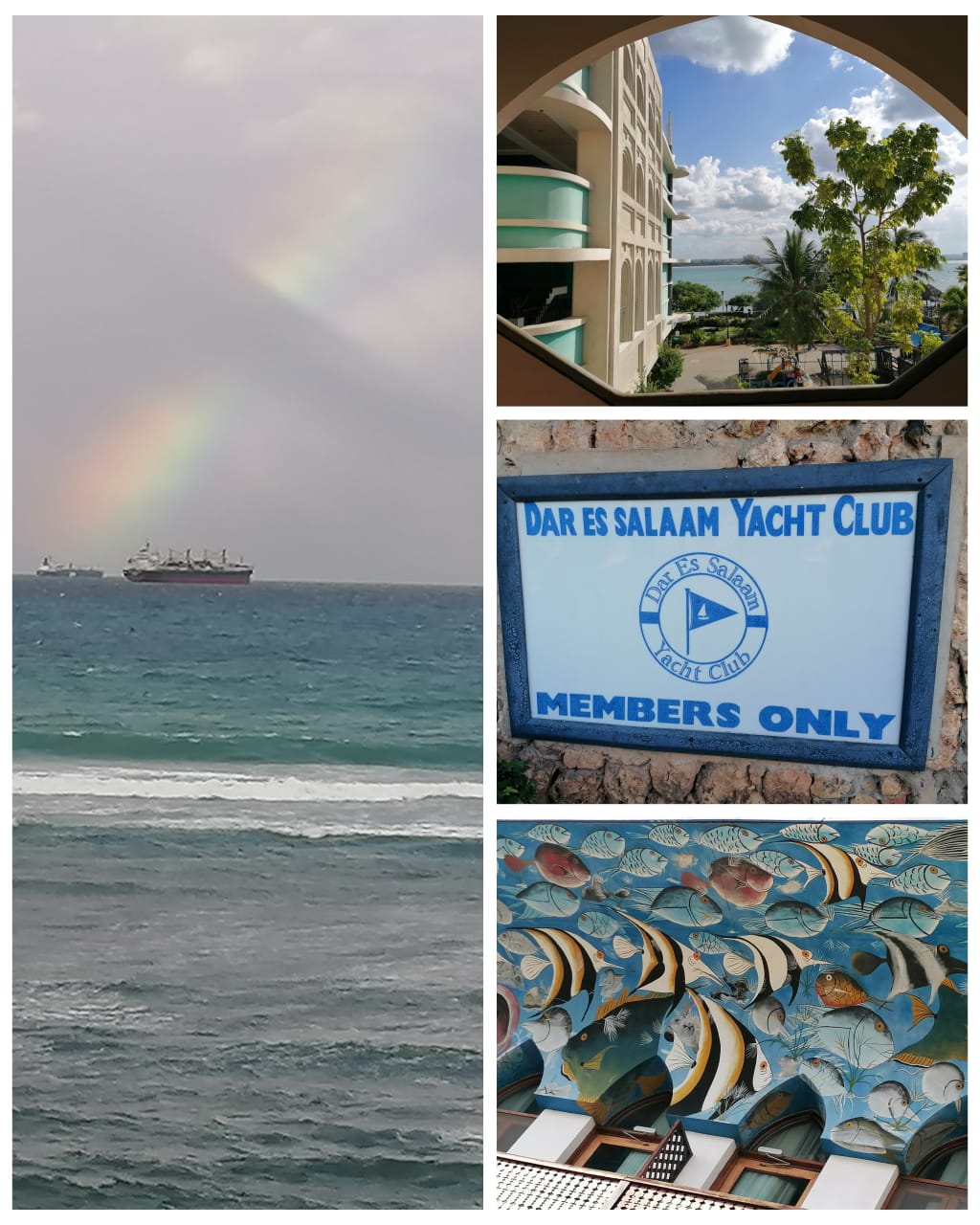
TANZANIA | DAR ES SALAAM: Backtrack. Back in Dar for reasons that will soon become apparent. The Slipway on Yacht Club Road is Dar Es Salaam’s answer to Cape Town’s Victoria and Alfred Waterfront, although not as extensive, but a little more expensive. The views are eye-catching and the people-watching entertaining.
Day 46: (7 June 2025)
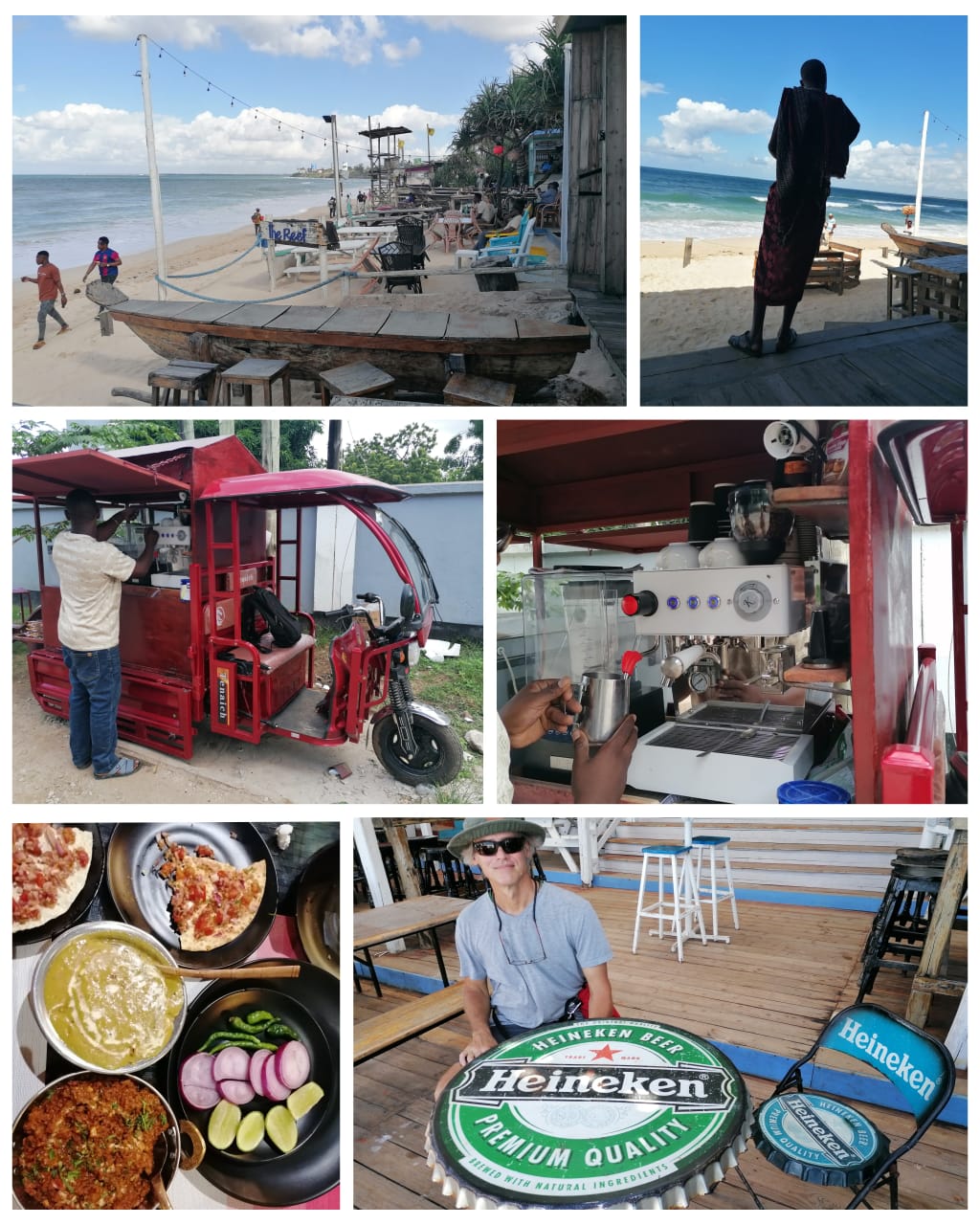
TANZANIA | DAR ES SALAAM: Dar-hopping: the upmarket Masaki Peninsula and the locals’ favourite Coco Beach, rounded off by Zanzibari bongo beats at our backpackers, the Slow Leopard.
Day 47: (8 June 2025
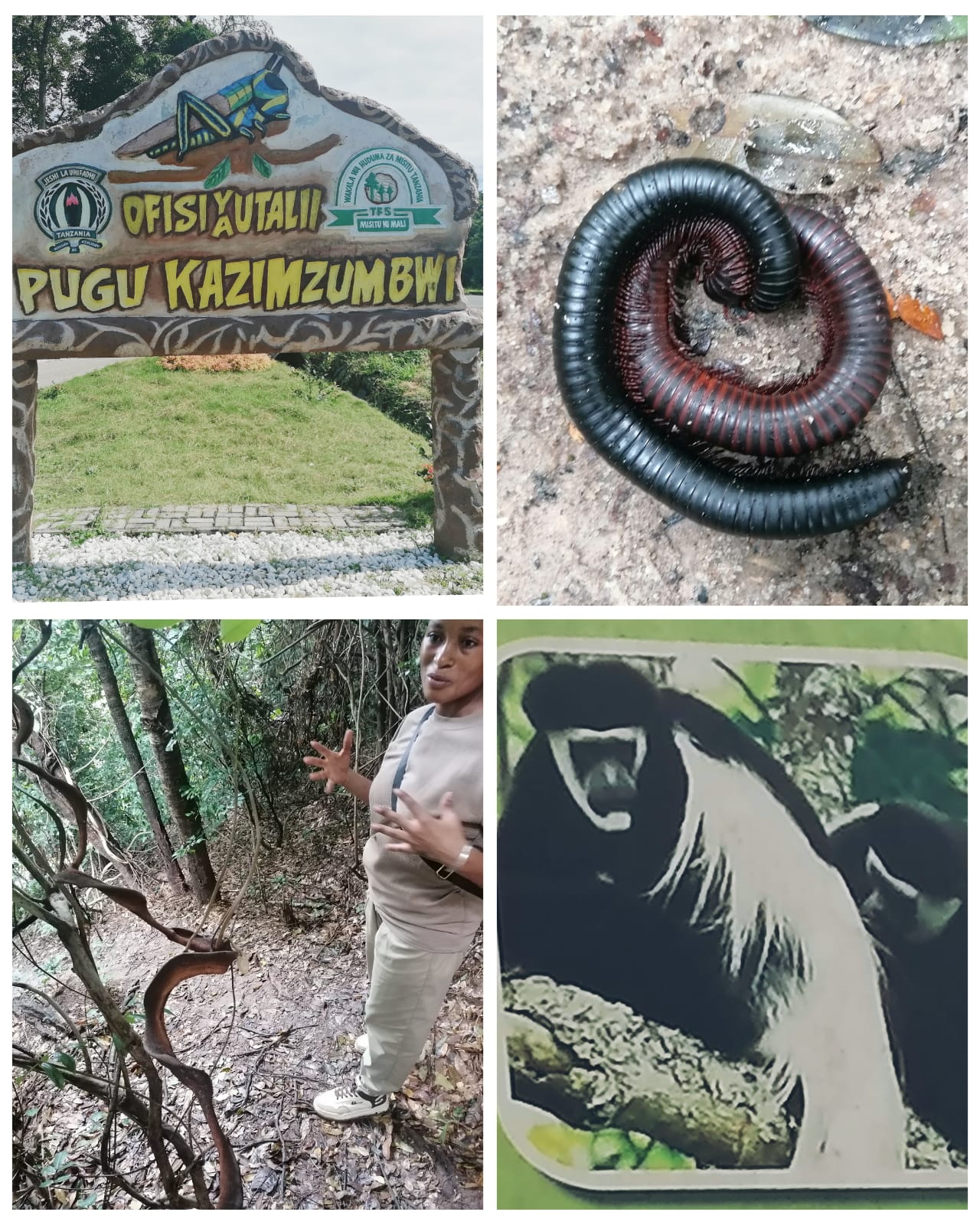
TANZANIA | PUGU KAZIMZUMBWI: Day trippin’, sliding and slippin’, in the Pugu Kazimzumbwi Forest Reserve, on the outskirts of Dar. The reserve is named for a critically endangered liana (Milletia puguensis) which the locals believe is lucky in love. A scenic viewpoint, a bat cave, a grotto sacred to a sect that worships a snake, and an apiary catering to those who believe a bee sting confers immunity – we saw none of these. Accompanied by our mandatory guide, who had been on the job for a month and whose limited knowledge of the reserve had been gleaned from the internet, we narrowly avoided wiping out on the steep, muddy track hacked through the forest, emerging to booming reggaeton beats emanating from the camp site set among thorny groves of alien Asian bamboo and littered with plastic water bottles. Two millipedes, one Colobus monkey and a red-capped robin-chat in a pugu tree cost us R700 in park fees and R400 in transport. Milk the cow, fleece the sheep, cook the goose is a well-known Swahili proverb. Not.
Day 48: (9 June 2025)
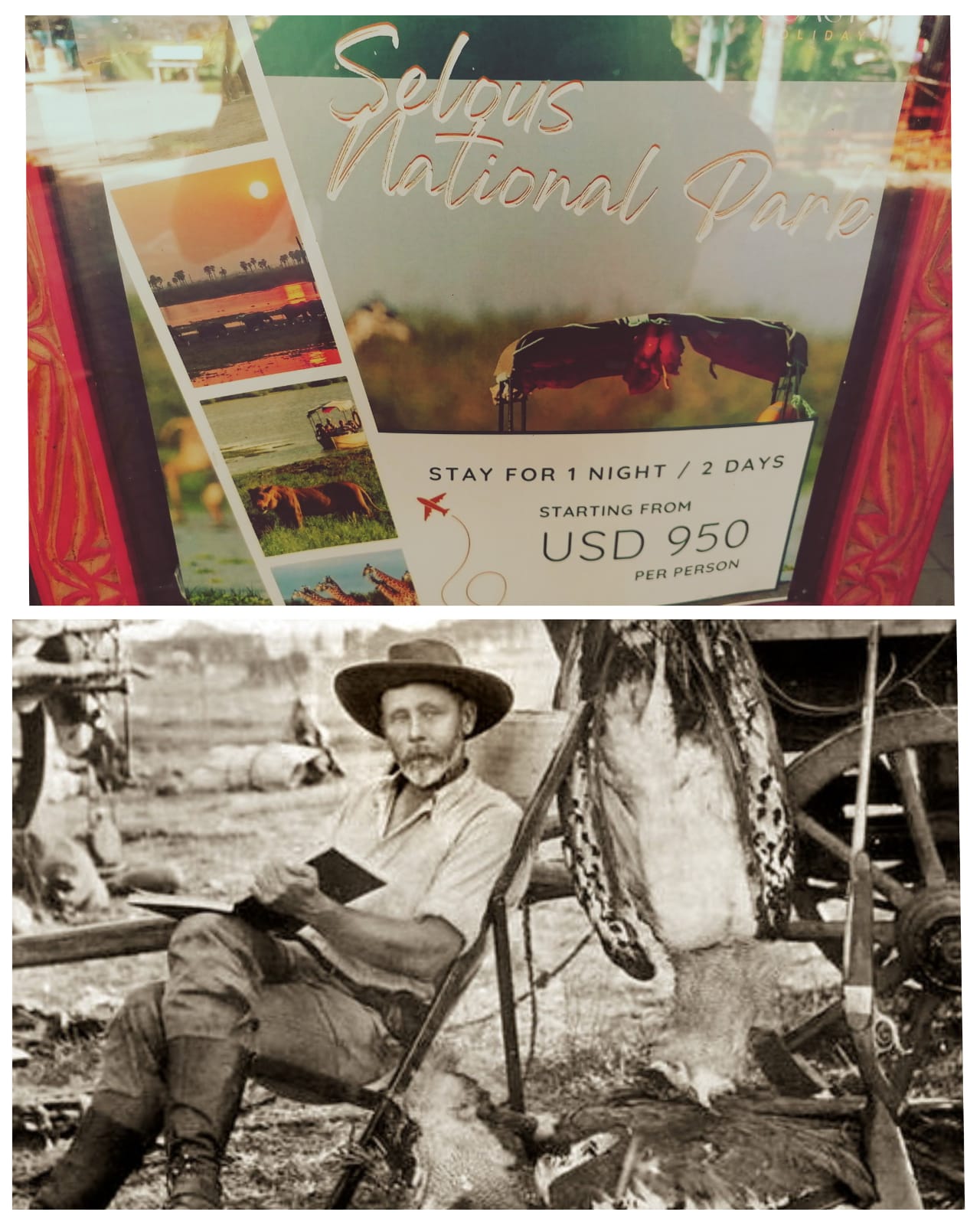
TANZANIA | DAR ES SALAAM: The Big Reveal. A week ago, at Kipepeo Beach Village, we met Tendekayi Guni, a Zimbabwean Buddhist who has lived most of his life in Tanzania (see Day 41). Thanks to his generosity, tomorrow we are heading to his lodge, Makubi Safari Camp, in Selous Game Reserve (Julius Nyerere National Park), on a safari that we would otherwise not be able to afford. Named in 1922 for Frederick Courteney Selous, the British explorer and ‘great white hunter’ who was killed by a sniper during WWI, and buried in the park, it is Africa’s largest wildlife reserve (54,600 square kilometres) and a World Heritage site. Government fees alone are US$165 (R3,000) per person per day. These will be for our account (for context, our daily budget is just over US$125 total). Tendekayi is hosting us free of charge for the next three nights. If you don’t hear from us, you know why.
Day 49: (10 June 2025)
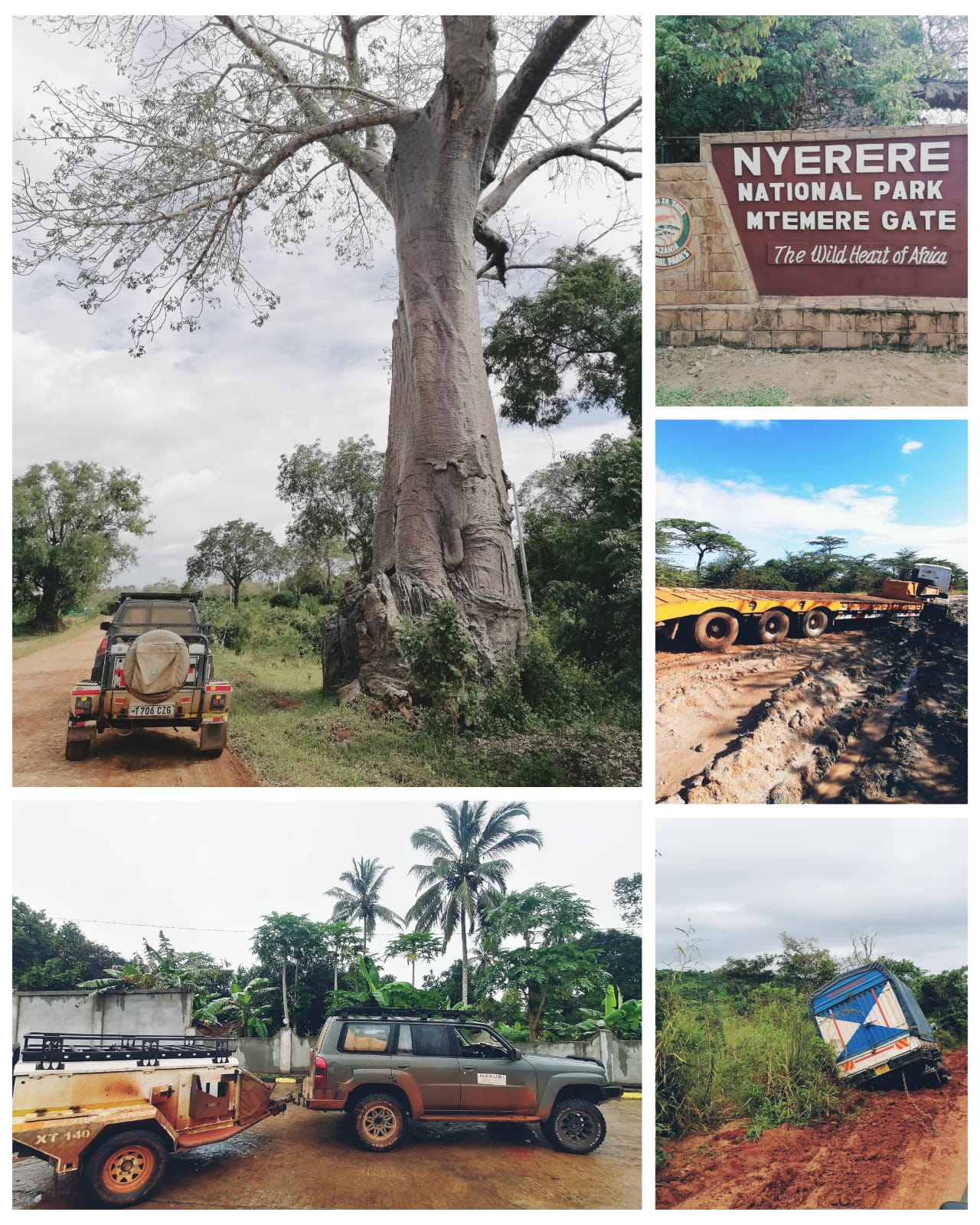
TANZANIA | SELOUS GAME RESERVE, MAKUBI SAFARI LODGE: By the end of the rainy season that begins in March, the black cotton soil is so waterlogged that the main road from Dar to Selous is a conveyance-consuming quagmire.
Towing a laden trailer, we take 16 hours to travel less than 300 kilometres to Makubi Safari Camp in the Julius Nyerere section of Selous Game Reserve, the oldest conserved area in the park, which is unfenced – as are all the game reserves in Tanzania.
The snail’s pace is further slowed by a flotilla of flatbed 18-wheelers who have come to a sticky stop attempting to reach the newly completed hydropower dam named for Tanzania’s most famous president. After waiting for over an hour in vain, we bundu bash our way through in a desperate bid to make the first of two river crossings before nightfall – also in vain. A flat tyre on the trailer is changed by torch light in soft rain and the trailer is abandoned before the first river is crossed.
Lighter now, it is all ‘plains sailing’, as we swoosh through the grasslands leaving sundry antelope, giraffes, buffalo, a hyena, an elephant and her baby, and a lumbering hippo in the wake of our impromptu night drive. After leaving Dar at 05:30, we finally reach Makubi at 21:30, where, in the timeless tradition of safari, (a Swahili word) we are welcomed by a cool gin and tonic and a warm fire.
Day 50: (11 June 2025)
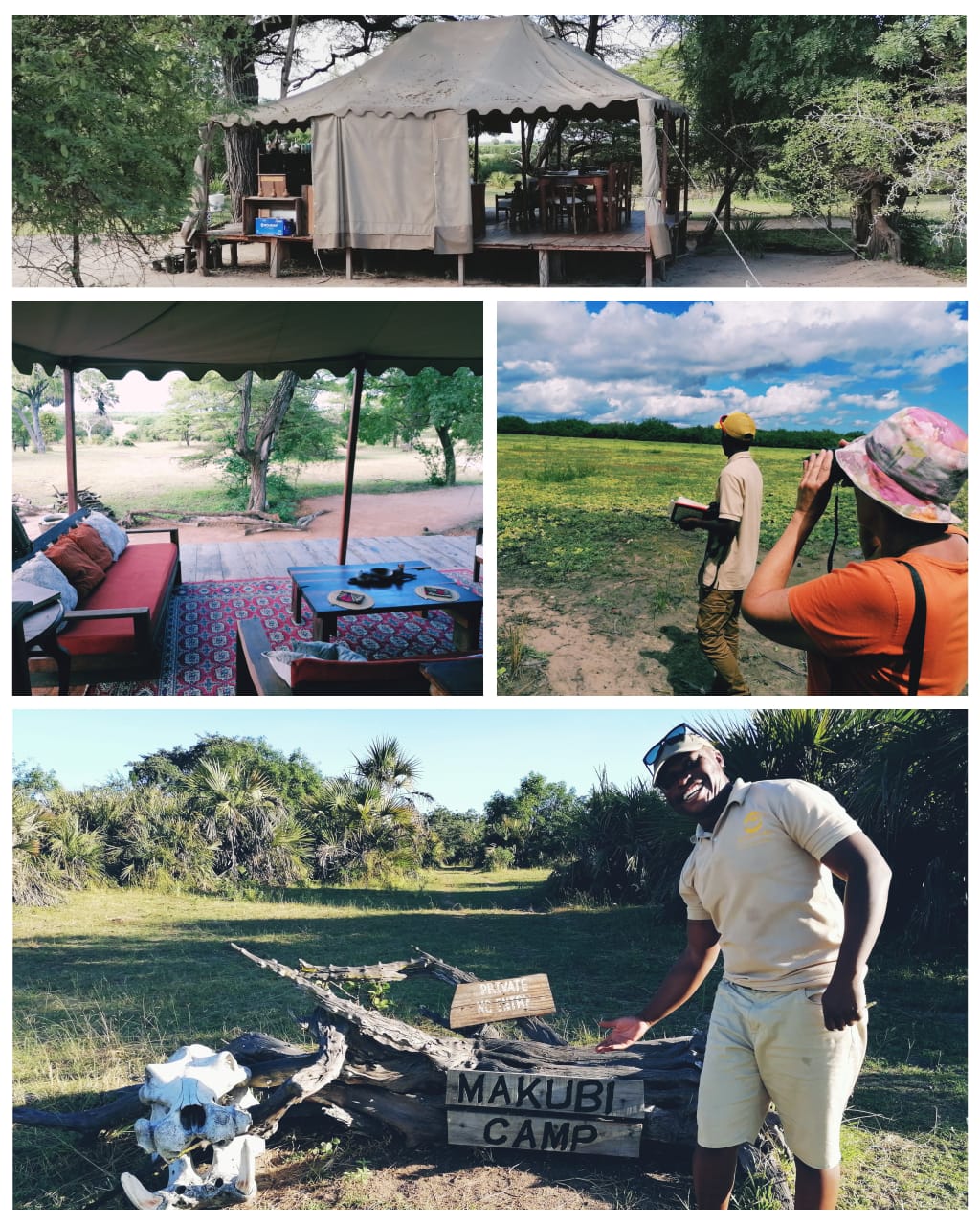
TANZANIA | SELOUS GAME RESERVE, MAKUBI SAFARI LODGE: A woodland wonderland of woodpeckers is the verdict of the morning’s bird walk around camp, which is set alongside an oxbow lake where hippo wallow and buffalo wade.
The new kid on the block, Makubi Safari Camp opened in 2023. In contrast to their pricier European-owned neighbours, some 15 kilometres distant, the 8-sleeper tented camp is family-owned and operated by a Zimbabwean who has long made Tanzania his home. A highly qualified and experienced guide, Tendekayi is also a Buddhist.
The camp’s light footprint reflects the simplicity and serenity of Tendekayi’s spiritual beliefs and his deep connection to the African bush – low-impact compost toilets, cold showers and solar lighting make for a comfortable, intimate immersion in a landscape seemingly lost in time.
Majestic maroela trees, filligreed flat-topped tagalala trees (terminalia spinosa), green thorn (balanites maughamii) long used for lamp oil, whistling thorn acacias, silver cluster trees, tall borassus palms and multi-branched doum palms – which are more closely related to a grass, and whose leaves are relished as a chewing gum by elephant – are interspersed among grasslands greened by rain, set against the blue backdrop of the Kipalala hills in which hot springs of volcanic origin bubble forth.
The lime-green hyacinth-covered lake is the setting for cocktail hour. Bee eaters and fish eagles hunt from dead leadwood trees, baboons and ground hornbills forage in the grasslands and the full moon rises over the lake as the sun sets on the impala herd grazing behind us.
BIRDS 🐦
● Green-backed woodpecker
● Cardinal woodpecker
● Ruvu canary
● African jacana
● Blue waxbill (Blue-capped cordonbleu)
● Red-billed firefinch
● Greater blue-eared starling
● Short-tailed batis
Day 51: (12 June 2025)
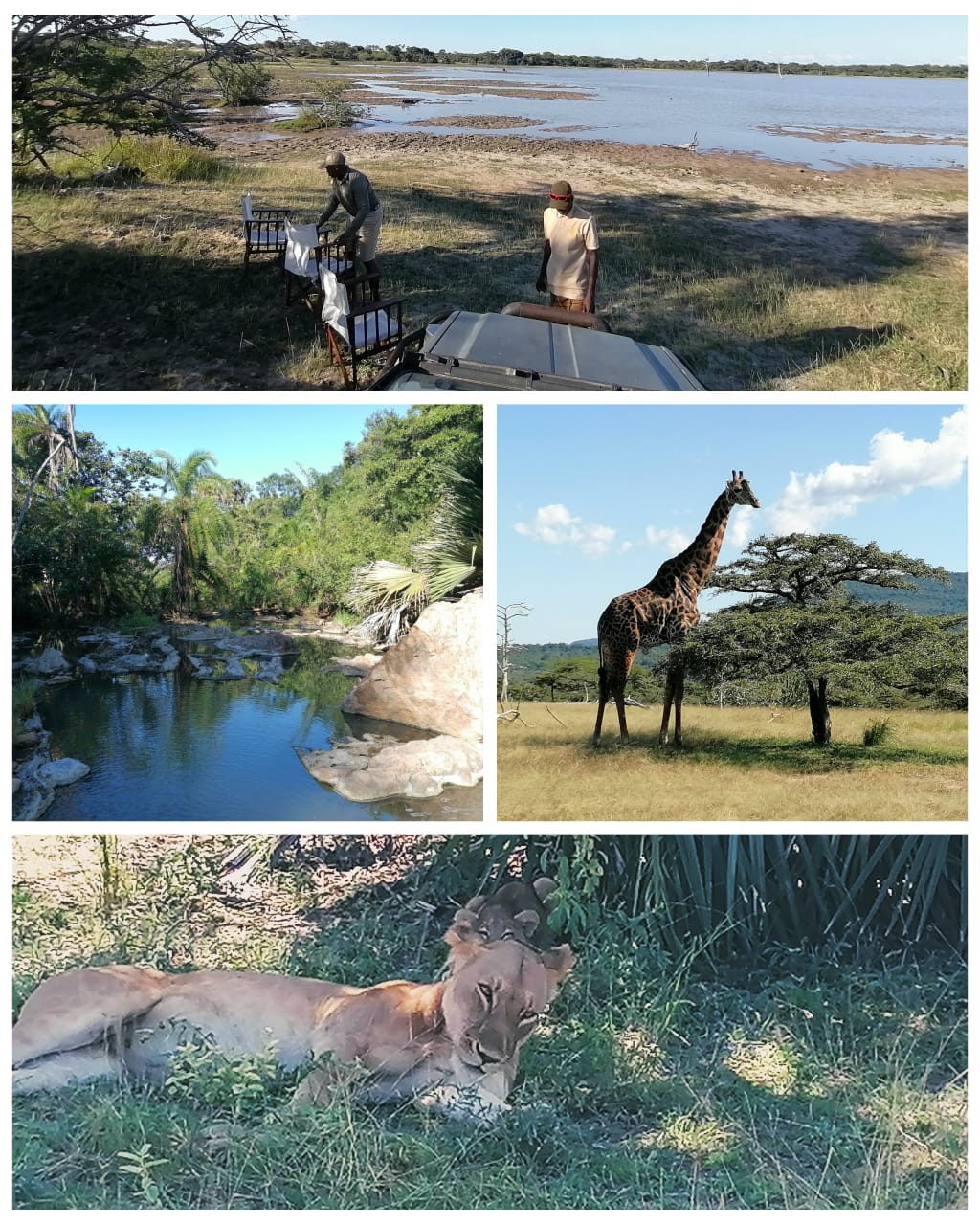
TANZANIA | SELOUS GAME RESERVE, MAKUBI SAFARI LODGE: George, the largest adult male elephant in the area was the first resident we came across on our sunrise game drive this morning, shortly followed by three of the nine lions in the local pride – Victor, Hugo and their sister. A momma hippo and her baby joined us for lunch, cropping the grassy verge of the lake as as we dined on chilled cucumber soup and freshly baked rolls.
We met three more members of the lion pride on our afternoon excursion – two females and a four-month-old cub. They had been calling to each other for the past few days, gathering for a hunt.
We ‘took the waters’ in the hot spring, and had sundowners at the edge of Lake Tagalala, so quintessentially African a landscape, it was as if the set had been dressed for a Hollywood movie – hippos in the water, crocs on the banks, nesting fish eagles in a dead tree, giraffes at the water’s edge, yellow-billed storks and flocks of white-faced geese on the sandbanks and a swirl of pelicans circling overhead, all set to the fluting call of the white-browed coucal.
We headed back as the setting sun turned the sky from liquid amber to molten lava. Later, dining under the stars, the lions loudly announced their presence as they passed through camp.
BIRDS 🐦
● Pearl spotted owlet
● Verraux’s eagle owl
● Eastern black-headed oriole
● Collared sunbird
● Red-necked francolin
● Fischer’s sparrow-lark
● Woodland kingfisher
● Palm-nut vulture
● White-browed coucal
● Black-crowned tchagra
Day 52: (13 June 2025)
TANZANIA | DAR ES SALAAM: Leaving Selous drier than when we arrived, after two days of sun, and lighter without the trailer, it only took us 13 hours to cover the 278 kilometres back to Dar.
Day 53: (14 June 2025)
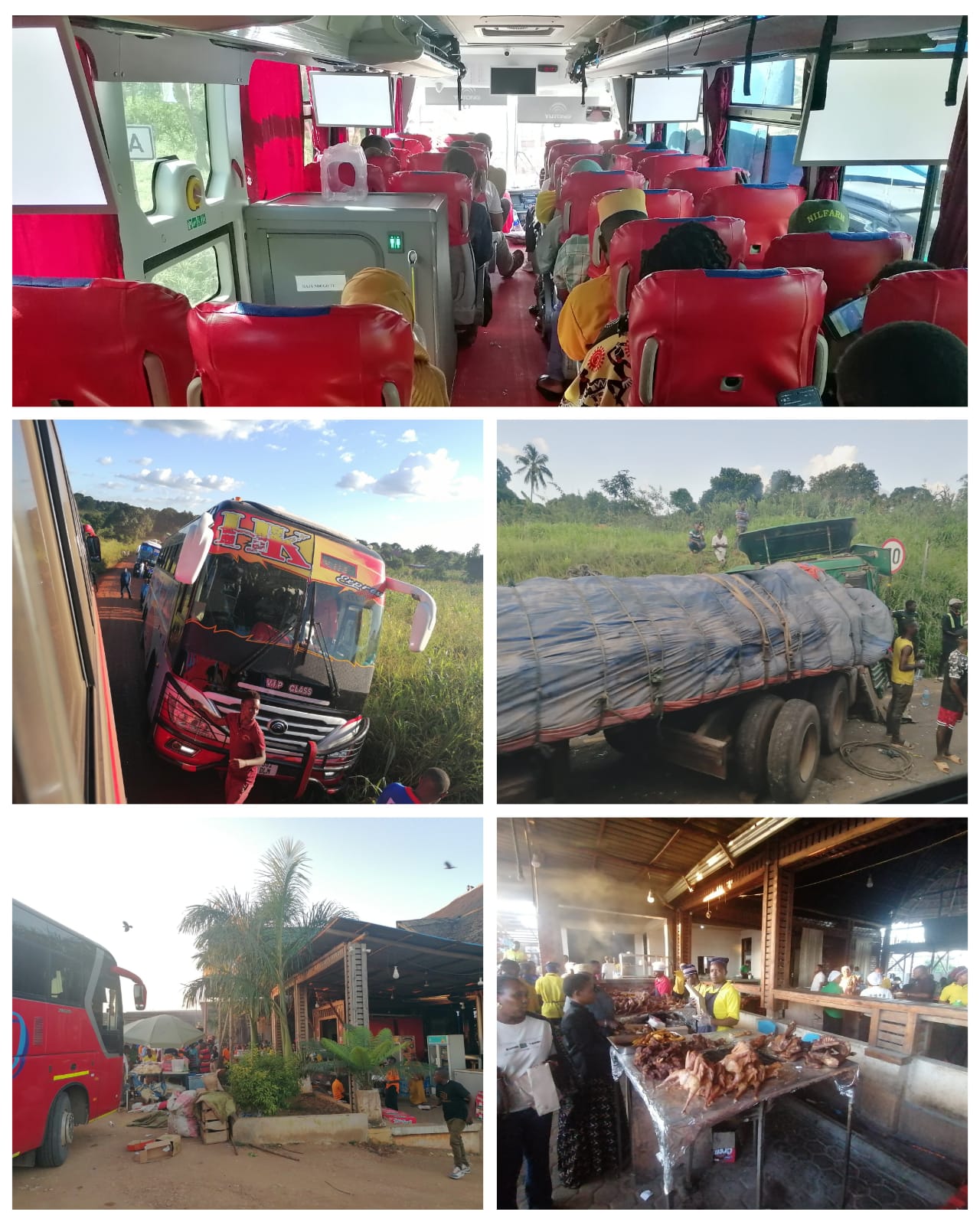
TANZANIA | TANGA: The 11:00 ‘express’ bus to Tanga (R175p/p), 346 kilometres away, left at 11:50. Some 145 kilometres down the main tar road north, our exhilarating, unimpeded progress came to an abrupt halt due to an unidentified obstruction up ahead causing a bottleneck of buses, dala-dalas, SUVs, fuel tankers, freight lorries and farm trucks loaded with mangoes, oranges, pineapples and sweet potatoes. A detour off the tar through the mielie fields caused further delay as everyone had had the same idea and buses attempted to squeeze past a jacknifed flatbed and each other. We rolled into Tanga at 20:50. What should have been a five-hour bus ride had taken nine. Pole pole… (slowly, slowly).
Day 54: (15 June 2025)
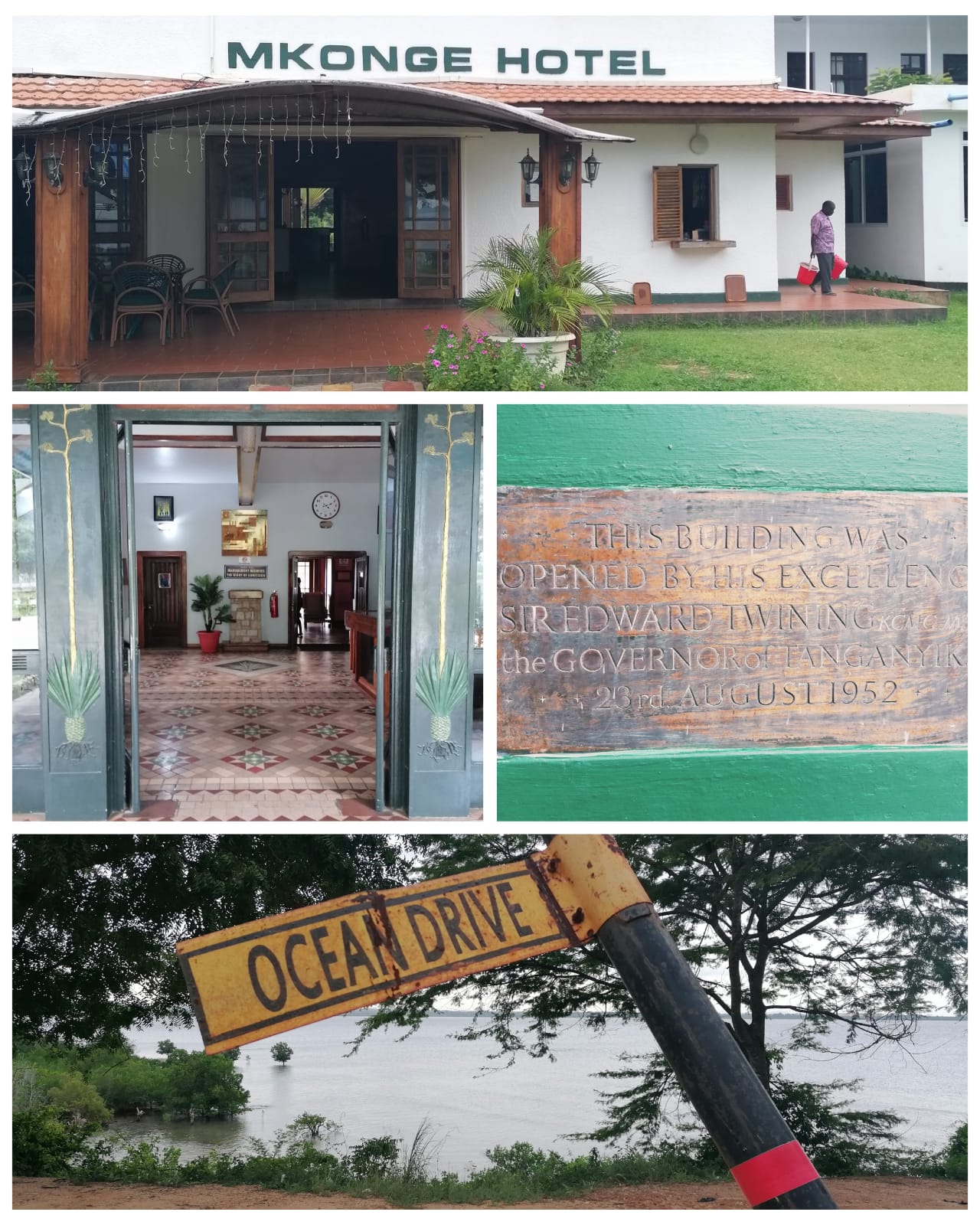
TANZANIA | TANGA: Despite being the second-largest seaport after Dar Es Salaam and the fourth-largest town in Tanzania, Tanga feels like a laid-back, shabby colonial backwater.
Wave-like, its fortunes have risen and fallen over the years. A starting point for ivory trade caravans to the interior in the early to mid-19th century, Tanga’s economy boomed in the late 19th century with the arrival of the Germans who developed the town and harbour as part of the railway line linking Kilimanjaro with the sea. They also introduced sisal, which became Tanzania’s foremost export until the market declined in the 1970s.
An economic resurgence seems to be on the cards for Tanga as infrastructure is being built as part of the East African Corridor Pipeline, which will enable maritime fuel imports from Uganda. Sitting on the cliffside deck of the 1950s vintage Mkonge Hotel, sipping Kili beers and snacking on cashews, we met a Turk from Izmir who is working on the three-year project, due to be completed next year.
Across the bay, Amapiano beats boom from the public beach on a typical, Swahili Sunday – colourful, noisy and crowded. Wakati mzuri (Good times).
Day 55: (16 June 2025)

TANZANIA | TANGA: Crumbling traces remain of Tanga’s German and British colonial history – the disused railway that once scaled the Usumbara Mountains; the disheveled War Memorial to the 16 German soldiers, 48 askari and porters who died in the Battle of Tanga (4-5 November 1914); a dilapidated 1930 villa and the 1958 King George Memorial Library, which is still in use. The trim street-facing exteriors of government buildings like the museum and the library bely the general decay, which is evident if you go around the back. We surmise that the budget is used to maintain the visible facade and the balance disappears into a back pocket.
The Tanga Yacht Club is still going strong. Last night at Pizzeria D’Amore – run by an elderly Swiss-German man and his Mozambican wife of Indian extraction – we met the Commodore, Arvinder Singh Riat, the first non-European, non-sailing Commodore of the Yacht Club since it’s founding in 1941. He has been at the helm 12 times since 1996. Cheers, old chap. 🍻
Day 56: (17 June 2025)
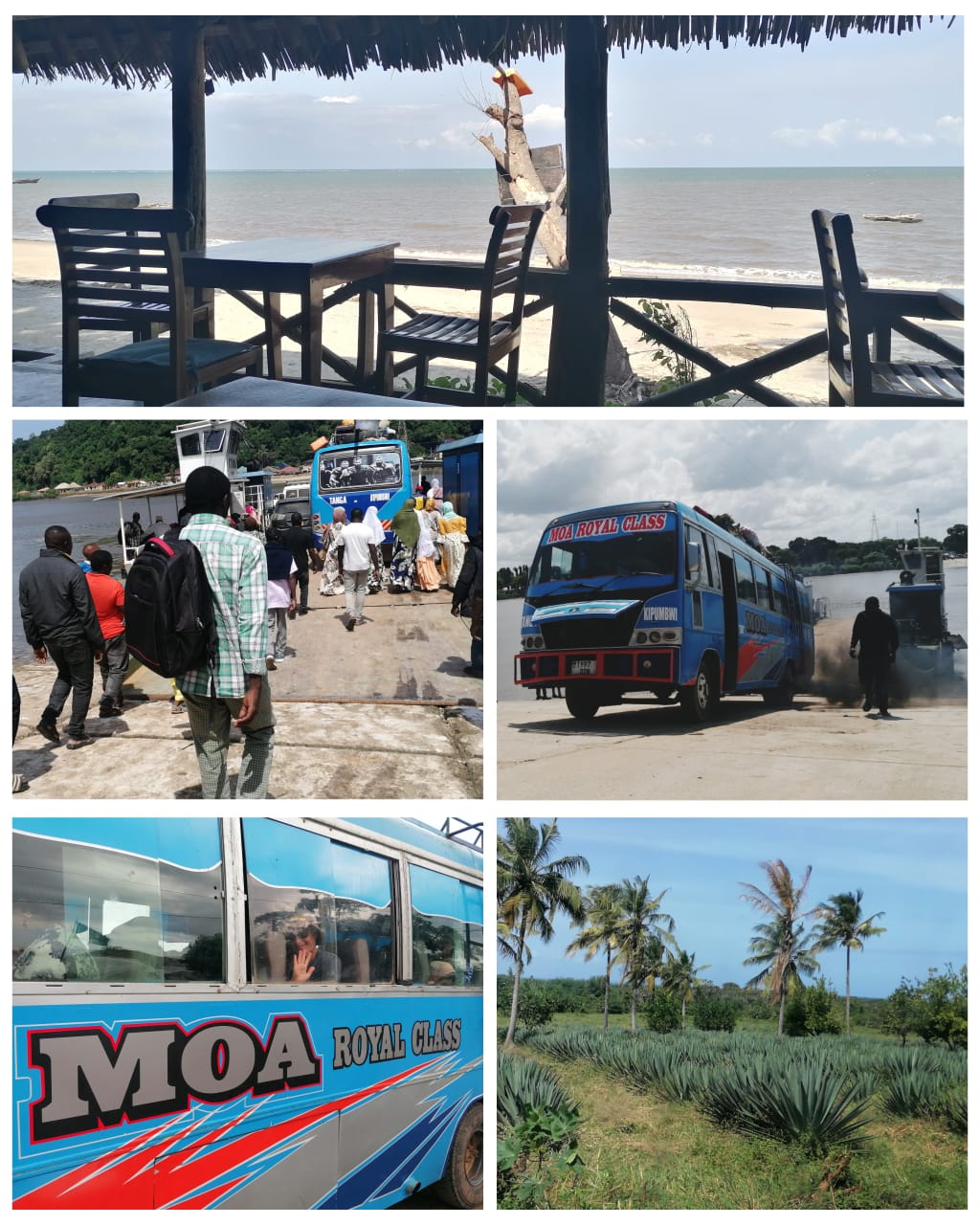
TANZANIA | USHONGO: By tuk-tuk, bus, bus onboard ferry and motorbike, we backtracked south to the beach, paying TZS24,400 (R170) in total to travel 64 kilometres in just over 3 hours. Travelling by public transport in Tanzania is not a straight line – one step forward, two steps back.
En route, the geometric grey rows of sisal were in marked contrast to the greenery of the palms, mango trees and mangroves of the coast south of Tanga. Last night at the Tanga Yacht Club we had met Maurice, from Ireland, a veteran of the Tanzanian sisal industry, who gave us the lowdown. A German agronomist, Dr Hindorf, smuggled sisal plants into Tanganyika from Mexico around 1893, and kickstarted the Tanzanian sisal industry. The ‘white gold’ boom peaked in 1967 and has declined to a mere 10% of its former glory today. Only 2% of the plant – which has a 10-year life cycle – is used in the fibre that reinforces steel cables, soundproofs car bonnets/hoods and makes up dartboards.
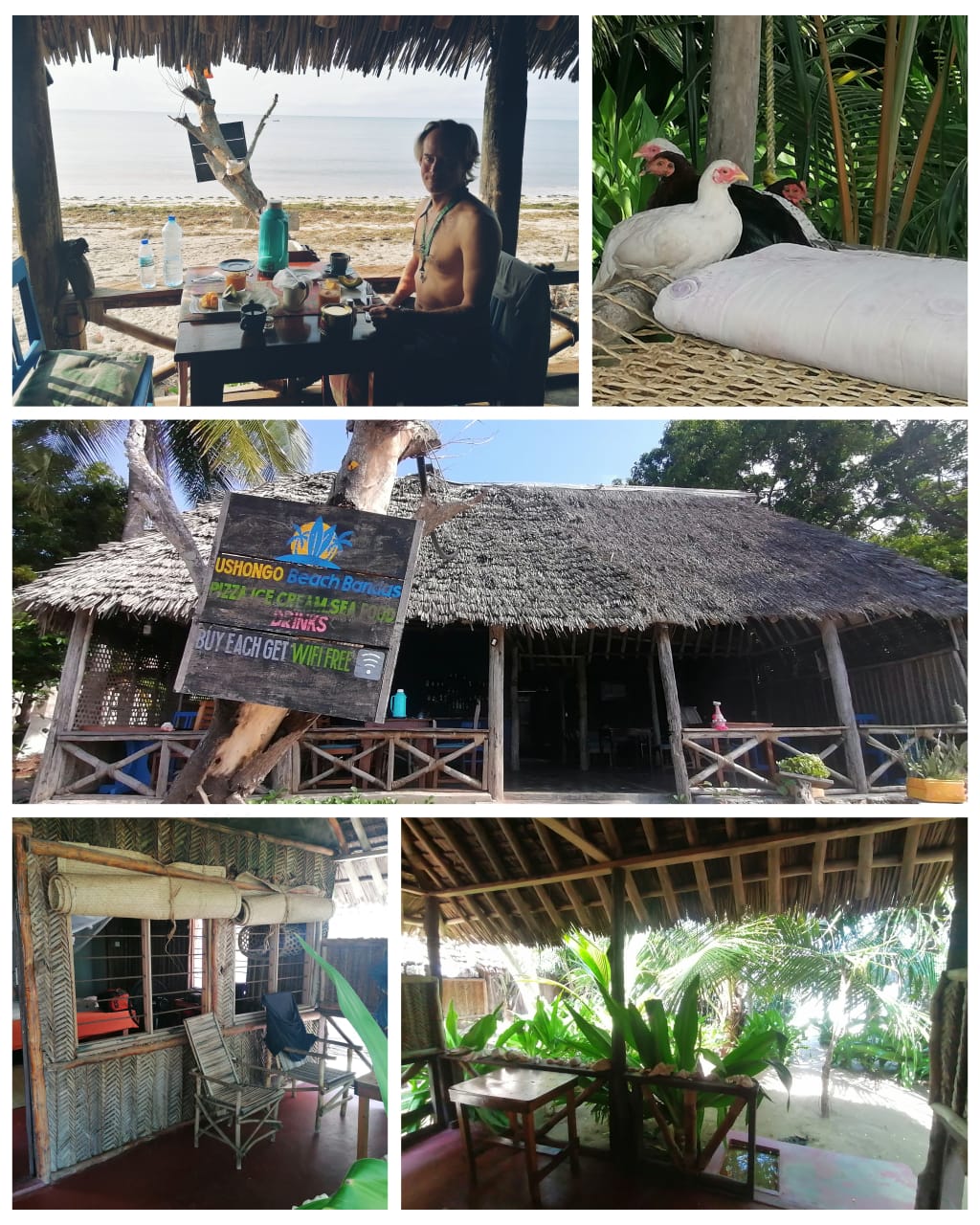
Making landfall at Ushongo Beach Bandas, we discovered that our en suite, palm-frond beach hut was going to cost us almost double the Booking.com quote, which inadvertently had been for one person, not two. Given the logistical challenges, the price for tourist facilities does not usually match the quality of the offering. Some hard bargaining ensued telephonically with the proprietor, who could well have been descended from Arab slave traders, given his propensity to drive a hard bargain. We prevailed, however, and are ensconced in our leafy, seaside banda, with fresh fish on the dinner menu.
Day 57: (18 June 2025)
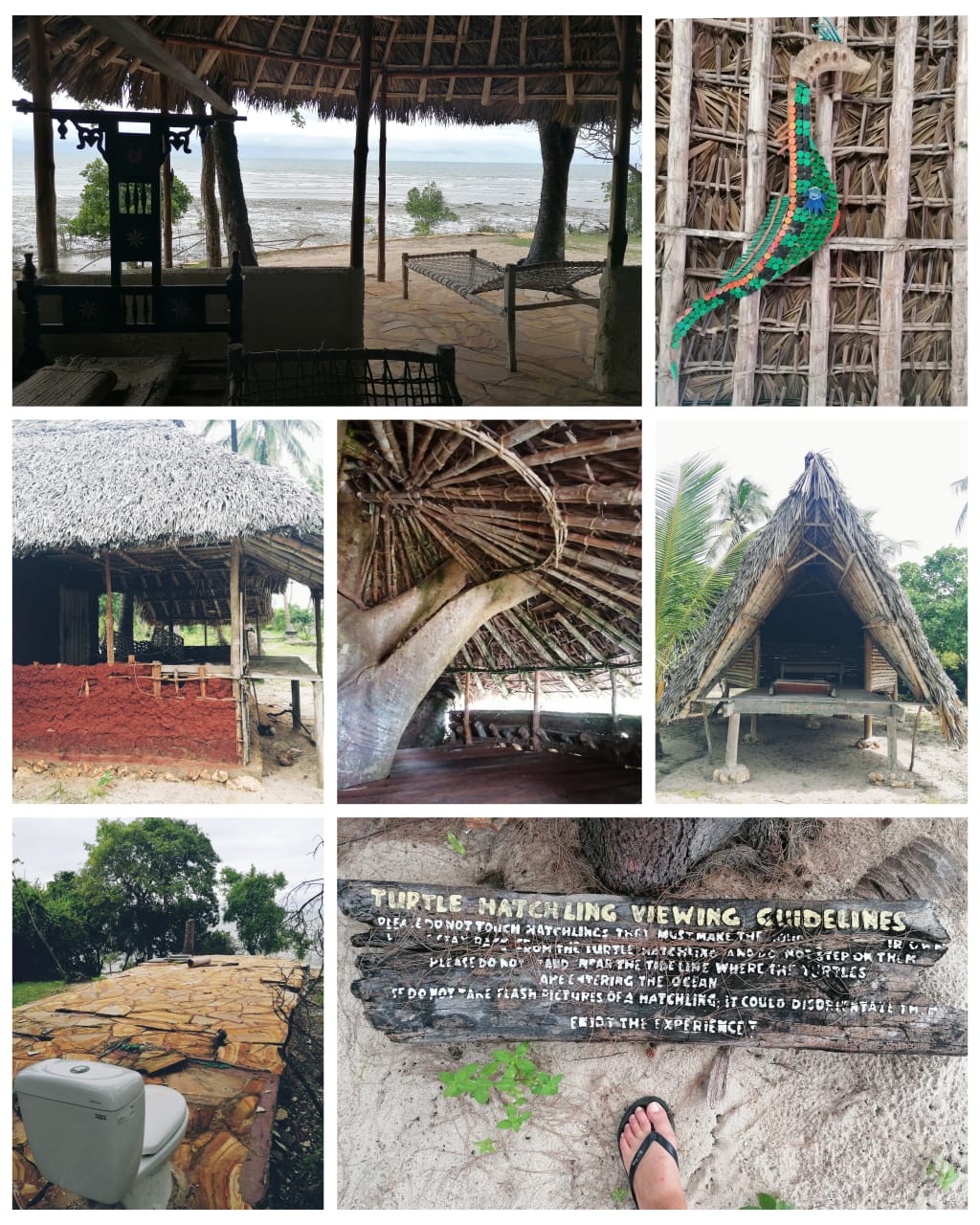
TANZANIA | SWAHILI COAST, USHONGO: Beach of abandoned bandas. We walked a couple of clicks north of Ushongo Beach Bandas on the outgoing tide, which reflected the fate of the score of glamping camps and lodges that did not survive the Covid era. In fortune’s ebb and flow, bon chance for the nesting sea turtles, which hatched three days ago on the incoming tide.
Day 58: (19 June 2025)
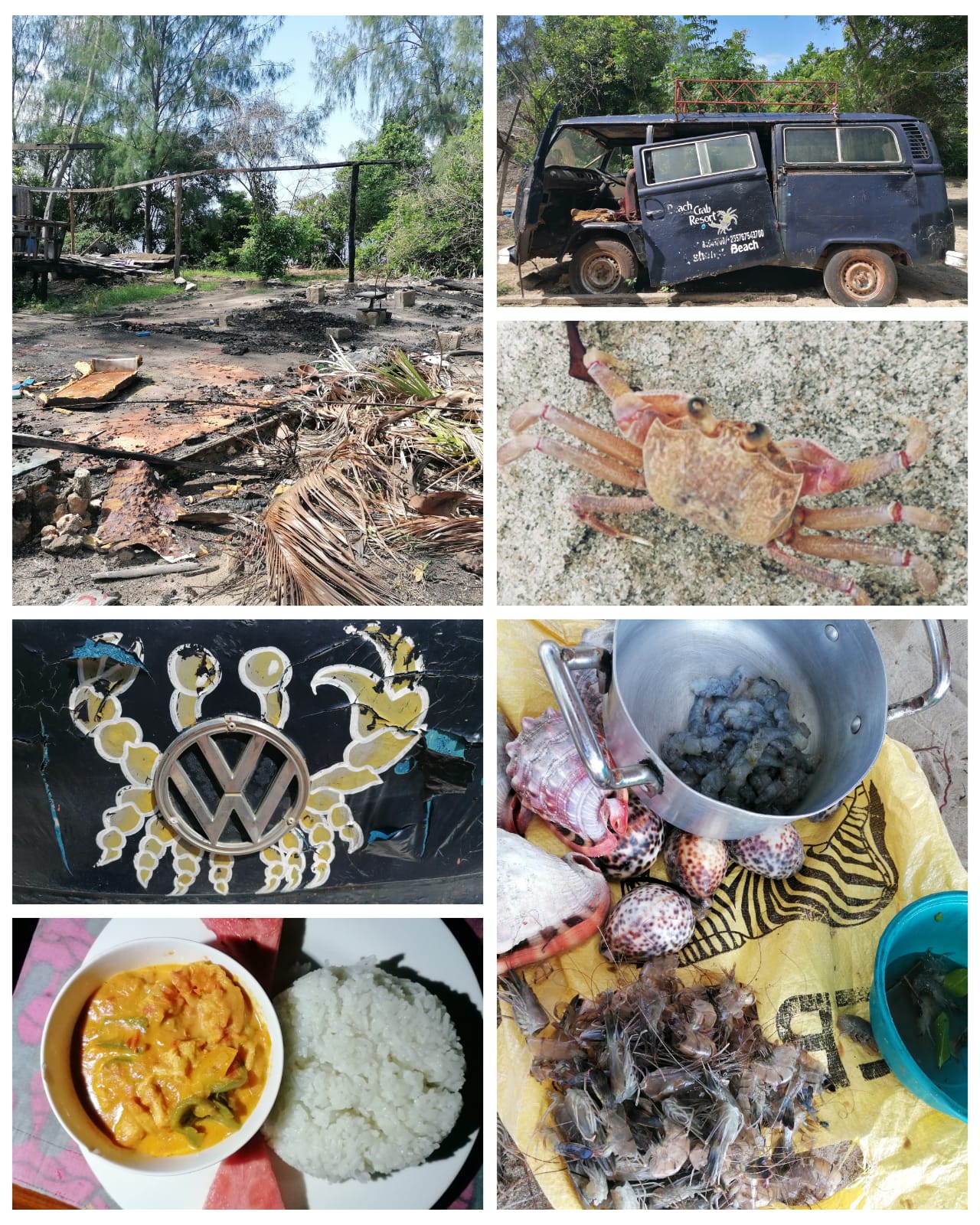
TANZANIA | USHONGO: This morning, on our walk north, the beach was alive with scuttling sand crabs. Other crustaceans were destined for the pot.
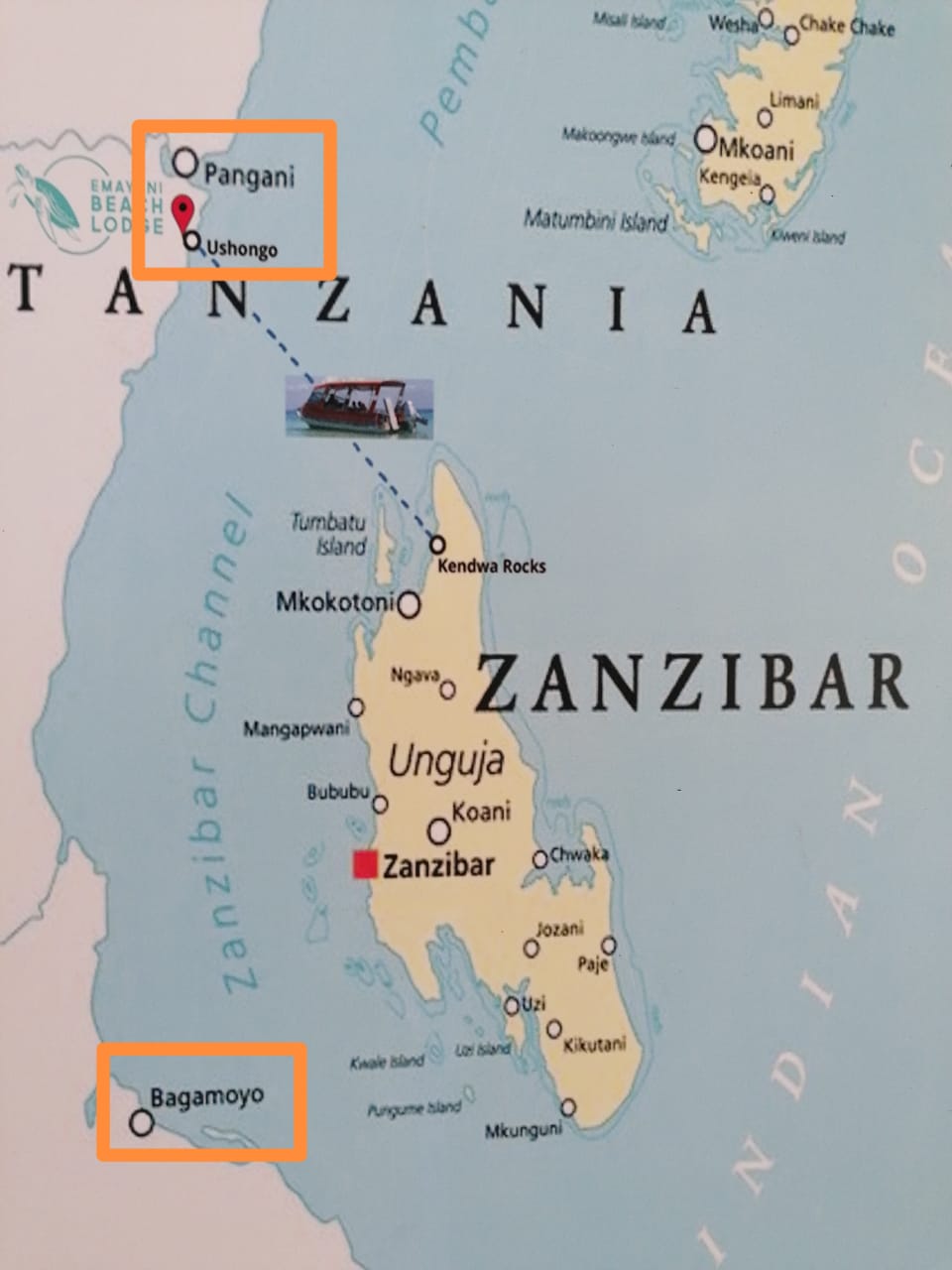
The tourism industry is feeling the pinch. Few of the plethora of resorts survived Covid. Of these the American-owned Emayani Beach Lodge to the south is still operating, at $140 p/p/p/n with full board. However, to the north, the once bustling backpackers, the Beach Crab Resort, was gutted in an electrical fire a month ago. Given the handful of tourists we have seen on the cusp of high season, which begins in July, a comeback seems unlikely. The crabs remain the kings of this coast.
Day 59: (20 June 2025)
TANZANIA | USHONGO: Life’s a beach. A rest and admin day today preparing for our imminent assault on the northern interior of Tanzania. Had we not already visited previously, we would have caught the boat taxi from Ushongo for TZS50,000 shillings and been in Zanzibar in 1.5 hours.
Day 60: (21 June 2025)
TANZANIA | AMANI FOREST NATURE RESERVE: We had an early start this morning to climb from the sea to the montane forest of the East Usambaras. There’s no travelling in a straight line in Tanzania. As the bus to Muheza left at midday from Pangani, we backtracked to Tanga, then retraced the coastal road north towards Dar es Salaam until we turned off to Muheza and new ground. The 134 kilometres took us nearly 7 hours by motorcycle taxi (boda-boda), ferry, bus, tuk-tuk and dala-dala.
The last 34.5 kilometres from Muheza to Amani Forest Reserve was up the winding mountain road by motorcycle with full pack. Our effort was rewarded by ringside seats to the afternoon antics of Sykes monkeys and Trumpeter hornbills in a forest that is around 30 million years old.
Day 61: (22 June 2025)
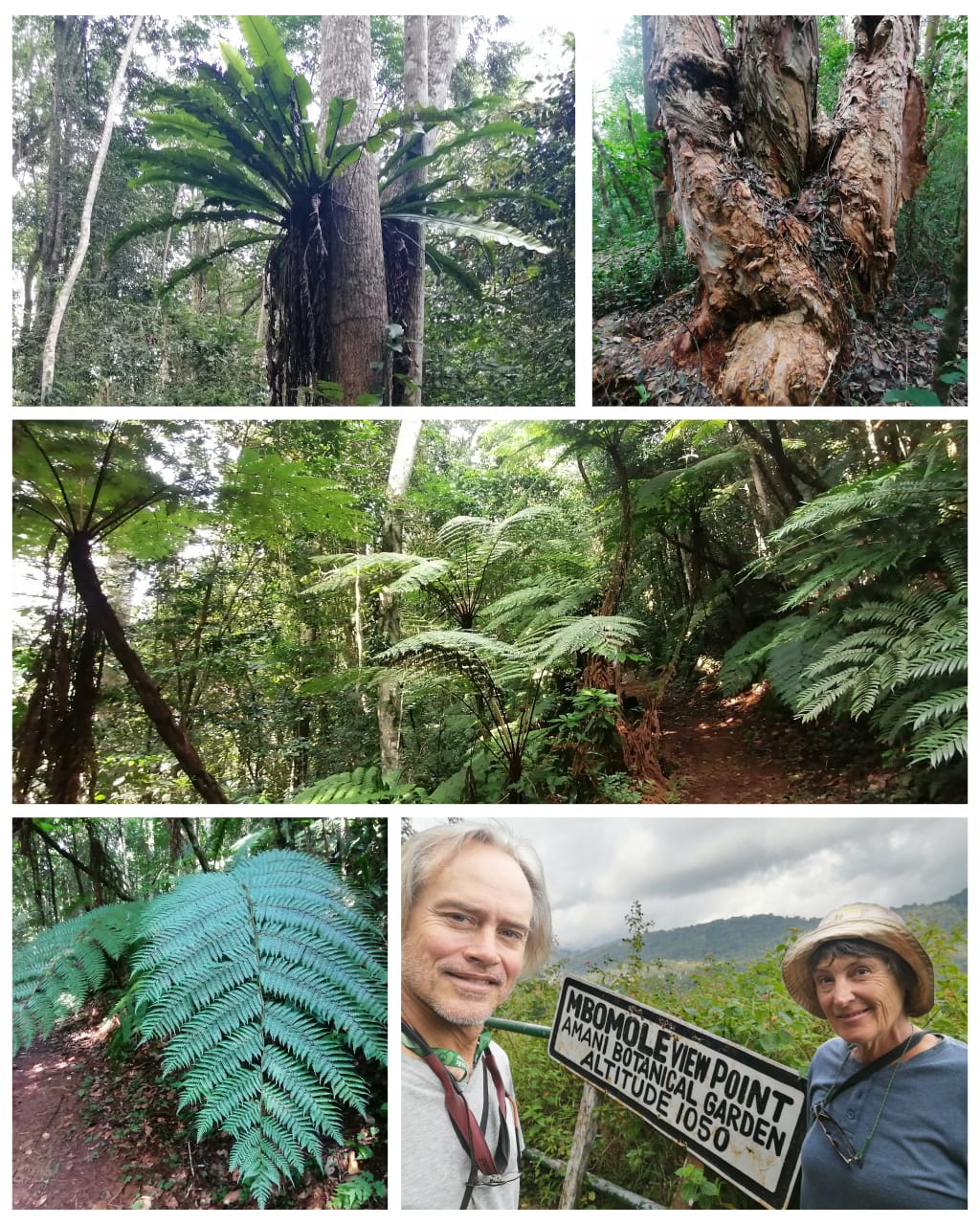
TANZANIA | AMANI FOREST NATURE RESERVE: We took a Sunday morning walk to the top of Mbomole Hill through a green cathedral of tree ferns, cycads and epiphytes.
The East Usambara mountains, between 800 metres and 1,400 metres in altitude, are covered in moist submontane and lowland forest. While more than 25% of plant species are endemic, the most noticeable tree – a tall, slender, silver-barked species (Maesopsis eminii) from Western Tanzania – has taken over some 65% of the indigenous forest after being introduced by the Germans in 1913. Its fruit is much favored by silvery-cheeked hornbills, which congregate in flocks 30-strong, swooping from tree to tree where blue monkeys feed and fuss.
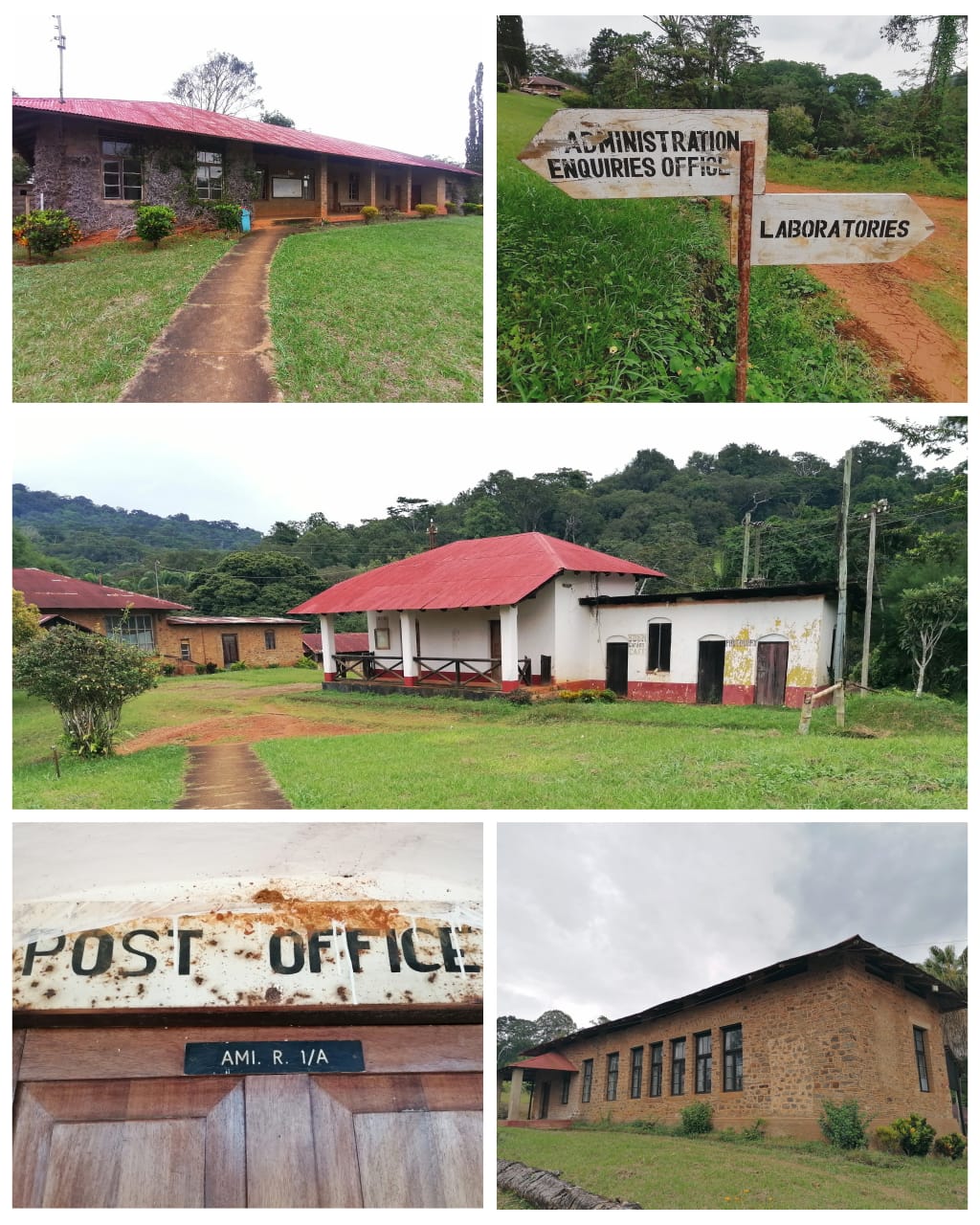
The Germans also left behind a research centre, built between 1902 and 1903, originally for biological agricultural research. Later, it became a tropical scientific institute where renowned German pathologist Robert Koch came to study malaria.
The old stone buildings remain, including the library filled with antique tomes and the dusty, echoing laboratories. Rebranded as a branch of Tanzania’s National Institute of Medical Research, it still has staff members according to a May 2025 circular. However, it appears that it has been many decades since any scientific research has been conducted here.
Day 62: (23 June 2025)
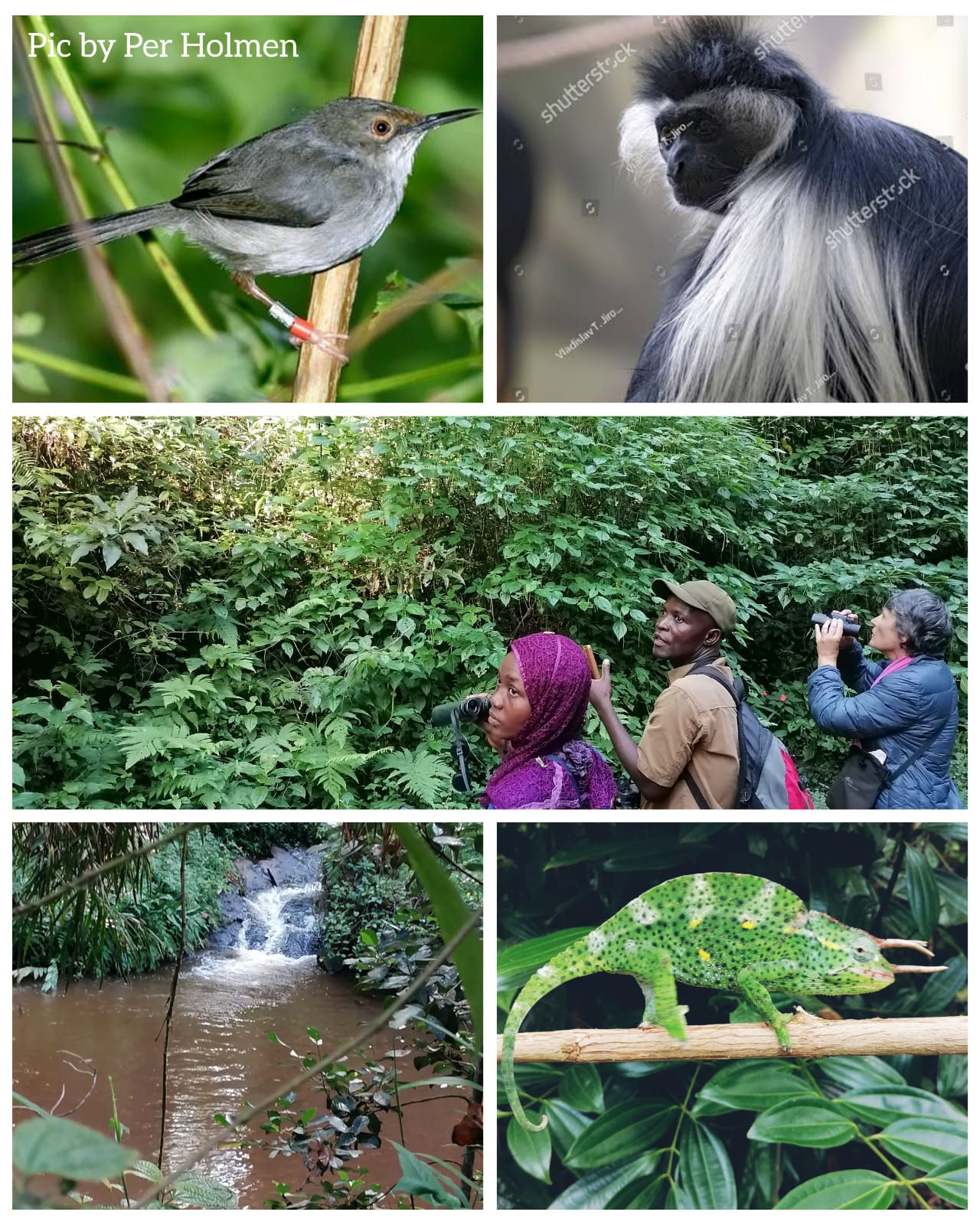
TANZANIA | AMANI FOREST NATURE RESERVE: We were up with the birds this morning and checked off 35 before lunch thanks to our local, self-taught, birding guide, Martin Joho, who is familiar with the call of every bird with whom he shares his home. We saw 4 of the 14 endemics: the Amani sunbird, the Uluguru violet-backed sunbird, the green barbet and the star attraction, the Usambara tailorbird, which is only found in Amani. Also called the long-billed forest warbler (Artisornis moreaui), this secretive and elusive bird was named for its collector, amateur ornithologist, Reginald Ernest Moreau, a British colonial civil servant who was the librarian at the Agricultural and Forestry Research Centre in Amani from 1928-1946. Latterly, a decade of research into the critically endangered tailorbird estimates that only 150 individuals remain.
Chameleons are another of Amani’s noteable inhabitants, with five of the nine species being endemic. We got up close and personal with the Usambara three-horned chameleon. To round off a memorable morning, we got a good look at an unusually unreserved black and white colobus (angolensis) monkey.
BIRDS 🐦
4 of 14 endemics:
● Amani sunbird
● Uluguru violet-backed sunbird
● Green barbet
● Usambara tailorbird (Long-billed forest warbler)
Day 63: (24 June 2025)
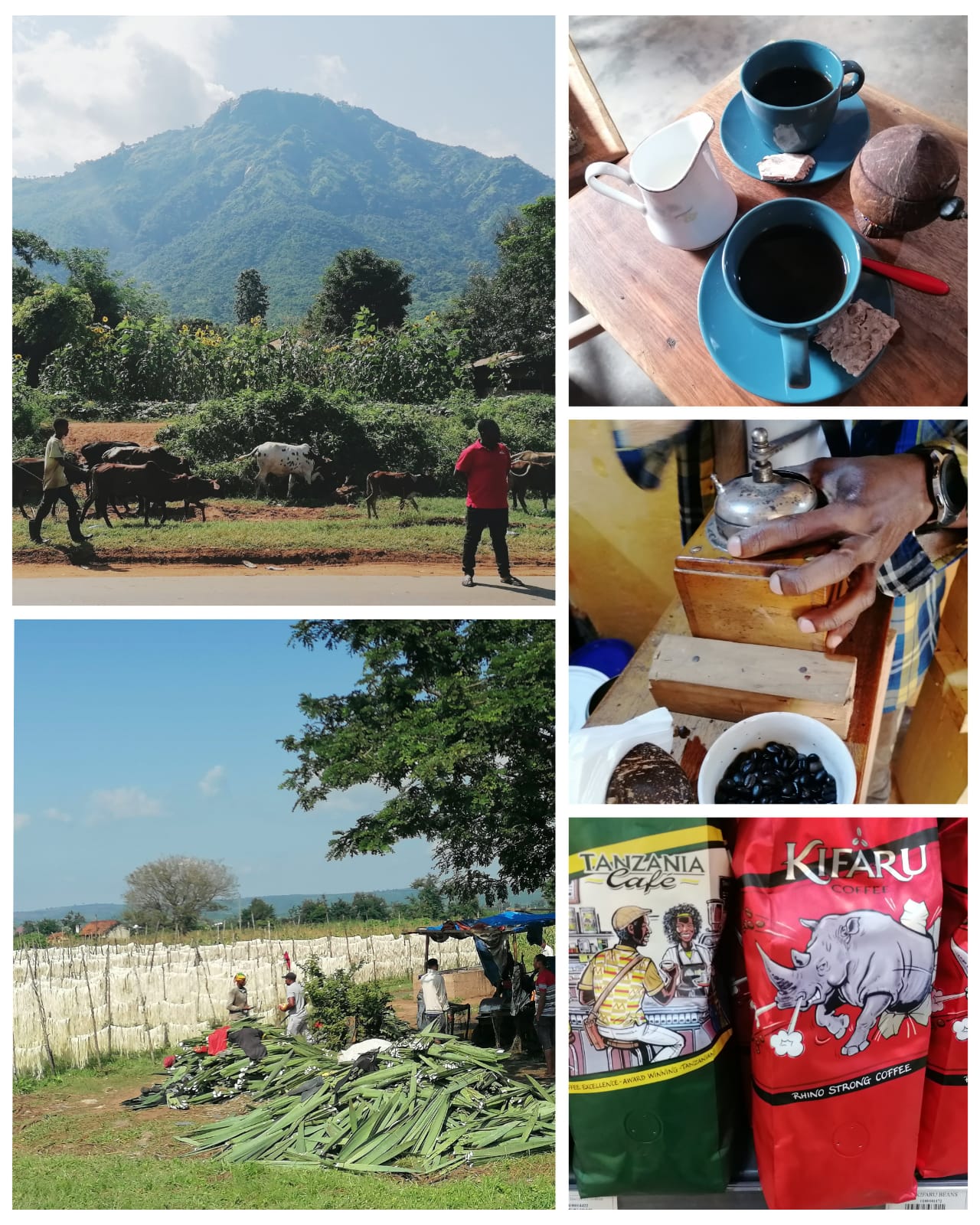
TANZANIA | LUSHOTO: In the pre-dawn darkness, we caught the only bus of the day out of Amani at 06:00. The 34.5 kilometres took an hour-and-three-quarters. We descended the East Usambaras and ascended the West Usambaras. Part of the ancient Eastern Arc mountains that were formed when Madagascar split off from Africa between 290 and 180 millon years ago, the Usambaras cover 4,000 square kilometres of which 465 square kilometres of indigenous forest remains.
We disembarked from the dala-dala at noon, having taken six hours to cover 165 kilometres. Adjoining the bus station’s greasy spoon, which was screening a Mamelodi Sundowns match – with English commentary – we found a hole-in-the-wall coffee shop – our first in over a month in Tanzania. Although coffee is an export crop, there is no domestic coffee-drinking culture and we have been subsisting on instant coffee – often black. 😔 Coffee Corner is run by a tourism NGO that advertises itself as the ‘only freshly brewed coffee shop in Lushoto’. It sources coffee from the local farmers of nearby Kwembago village and roast, grinds and serves it to coffee-deprived Westerners for TZS4,000 (R28). And it was GOOD 😋
Day 64: (25 June 2025)
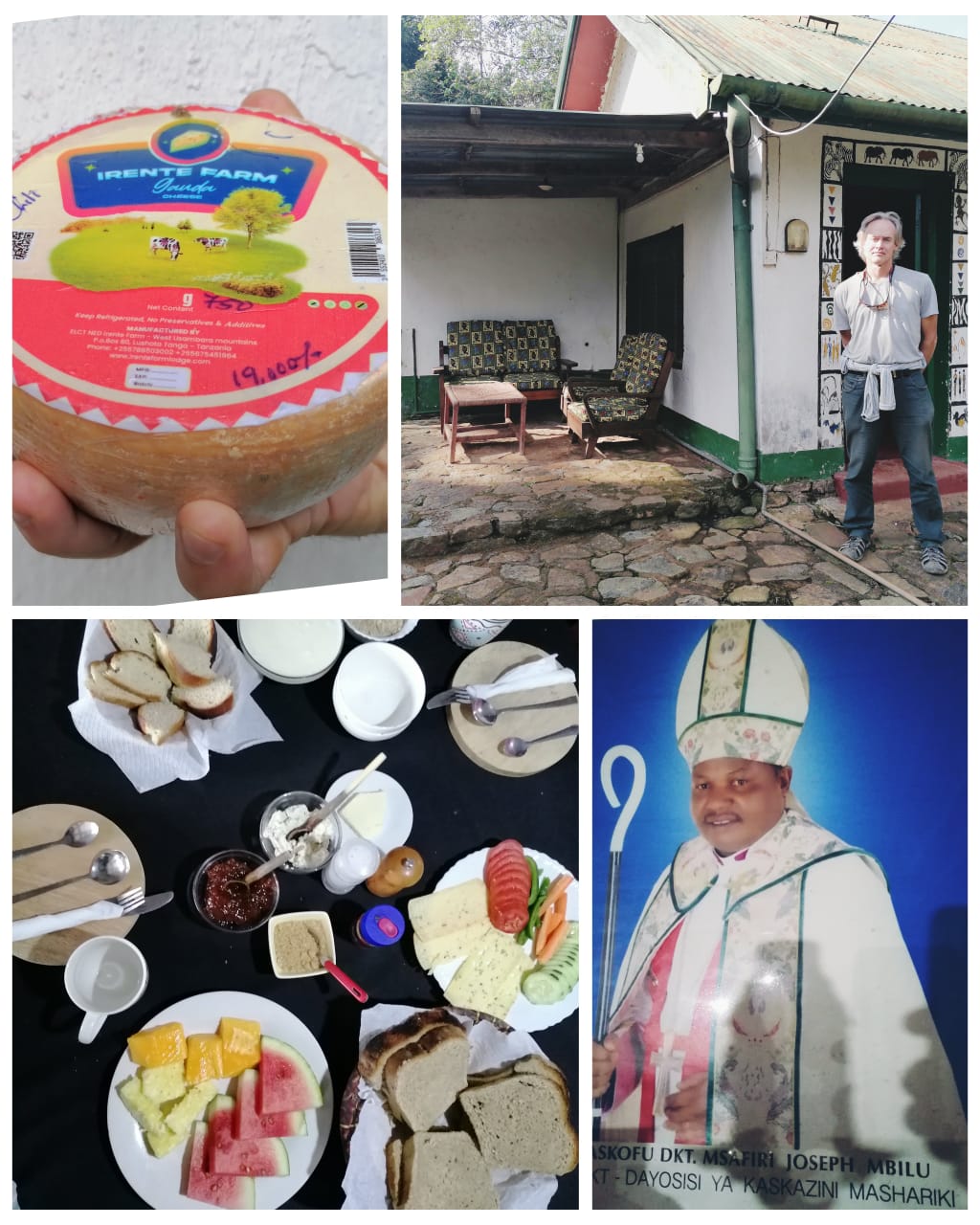
TANZANIA | LUSHOTO: Back in Amani, a local, preparing to take our photo, said, ‘Say chips’, which tells you all you need to know about the role that dairy plays in the Tanzanian diet. Rain stopped play today – our first wash out in two months. Yet, we have landed with our bums in the butter. We are staying in the forest, 1,450 metres above sea level, on a dairy farm run by the Lutheran Church. This morning’s breakfast featured homemade jam, yoghurt, milk, butter, cream cheese, two types of hard cheese, and two kinds of bread – a soft white and a rye mix … and filter coffee 🙌
Irente began as one of the experimental coffee farms established by the German colonial plantation company in 1896. However, the soil proved infertile and the project was abandoned in 1914. The Germans lost World War I and its East African colony to the British in 1918. The land was taken over by a Greek farmer who produced coffee, bacon and cream. At Tanzania’s independence in 1961, Mr WJ Tamè sold his 60 acres to the Lutheran Church for £25,000. The bacon factory became a mental hospital and the patients worked on the farm. Today, in addition to its tourism offering, the dairy and its products, the Church runs a school, a children’s home and a school for the blind.
We are planning to stay an extra night – because of the rain, of course 😉
Day 65: (26 June 2025)
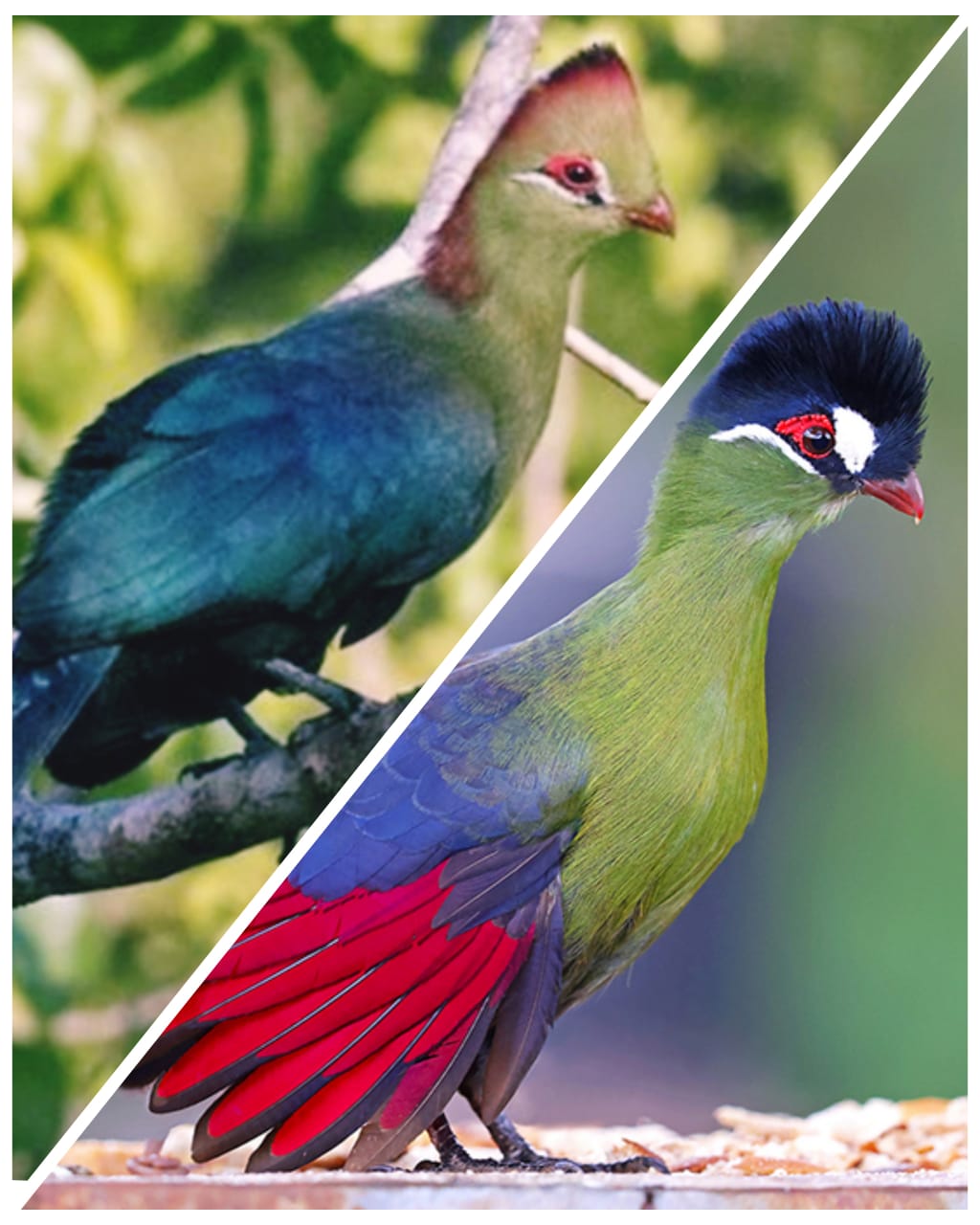
TANZANIA | LUSHOTO: We woke to rain again this morning, which has been intermittent throughout the day. We were able to do some birding from our verandah and had a good sighting of the second of the Usambara Turacos – Hartlaub’s (bottom) and Fischer’s (not our pics).
The inclement weather has allowed us to plan onward travel. We won’t divulge too much right now but we can say that we will not be visiting any more of Tanzania’s National Parks, which number 22 and cover around 15 per cent of the country (99,306.50 square kilometres). Here’s why. 👇
Tanzanian National Parks Tariffs 2023/24
All fees are payable per person per day. More fees apply than listed below, depending on activities/accommodation inside the parks. Tarangire National Park is used as an example.
Three-tier Pricing
(1) East African (EA) Citizen
(2) Tanzanian (TZ) Resident/Expat
(3) Non-EA Citizen
Conservation Fee
(1) TZS10, 000 ($4.50) (2) $25 (3) $50
Motor Vehicle Entry
(1) TZS20,000 ($9) (2) $40 (3) $40
Concession Fee (If staying in a lodge inside the park)
(1) TZS30, 000 ($13.50) (2) $40 (3) $40
Public Campsite
(1) TZS5,000 (2) $30 (3) $30
Sundowners in Designated Areas
(1) TZS5,000 (2) $20 (3) $20
If overnighting and forgoing sundowners, you’re looking at $130 p/p/d before you have paid for accommodation, food, drinks or transport to the park on roads as rough as those inside the parks. 🤯
Day 66: (27 June 2025)
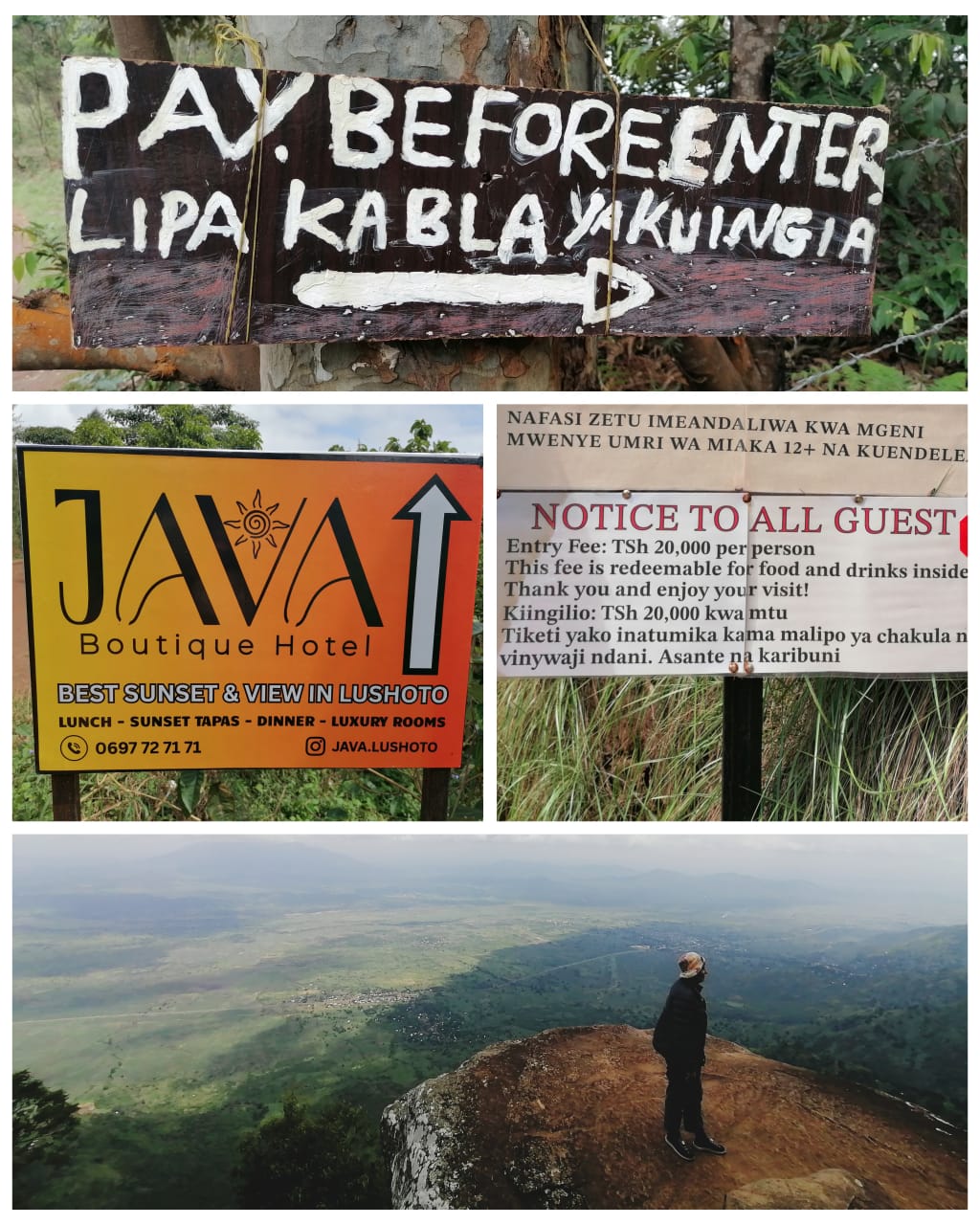
TANZANIA | LUSHOTO: The rain finally stopped and we went walkabout. The West Usambaras are tamer and more populated than the East Usambaras. Australian alien and pine plantations have supplanted much of the indigenous forest and the hillsides are checkered in small-scale crops.
We were heading for the popular Irente viewpoint, despite being alerted by our hosts to the TZS5,000 (R35) p/p access fee. Following their government’s lead, the villagers have cottoned on to easy mzungu money and in recent years have begun to charge for the views. Government takes a 20% cut.
Thinking to bypass the toll, we detoured to the Yoghoi viewpoint, where we were met by Rashied the toll collector. When we first arrived in Lushoto we had had lunch at the Mamma Mia restaurant where we had the best pizza thus far – and, that rarest of delicacies in Tanzania, spinach and ricotta canneloni. Turns out the owner is Italian and had just opened a new hotel up the road from the Yoghoi viewpoint.
Thinking once more to evade the view tax, we headed up the hill to the Java Boutique Hotel, only to find a collector at the boom, ready to sell us entry tickets for TZS20,000 p/p, the fee being ‘redeemable for food and drinks inside’.
Foiled, we backtracked and struck up a conversation with Rashied at the Yoghoi viewpoint. An amiable young man with excellent English, he offered to escort us to the viewpoint for free. Upon taking our leave, we made a TZS5,000 donation to the village and Rashied happily waved us on our way.
Day 67: (28 June 2025)
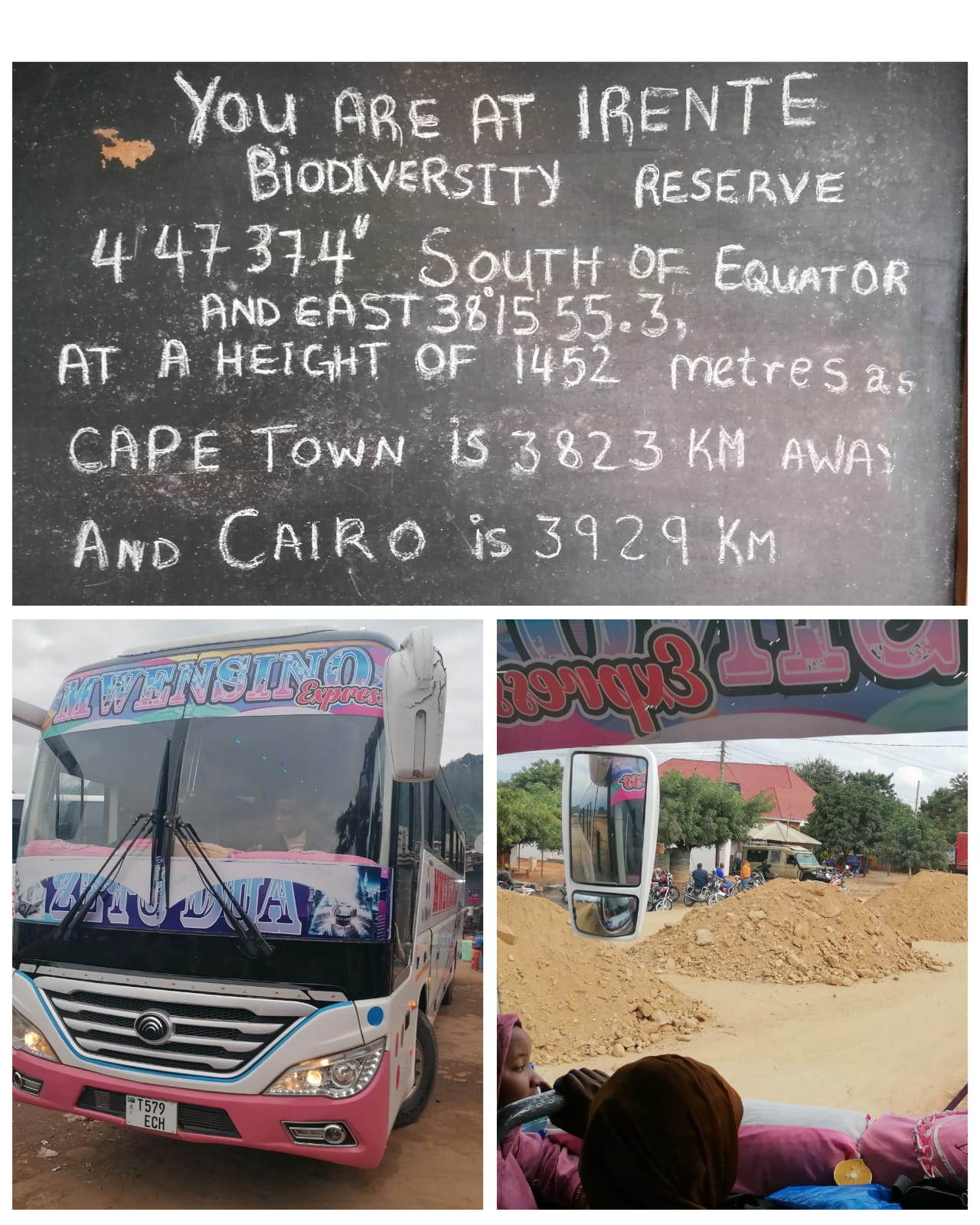
TANZANIA | TENGERU: On the move again today. According to Irente Farm, we are almost at the halfway mark. Seven-and-a-half hours and 389 kilometres later, by boda-boda, bus and tuk-tuk, we arrive in Tengeru.
Day 68: (29 June 2025)
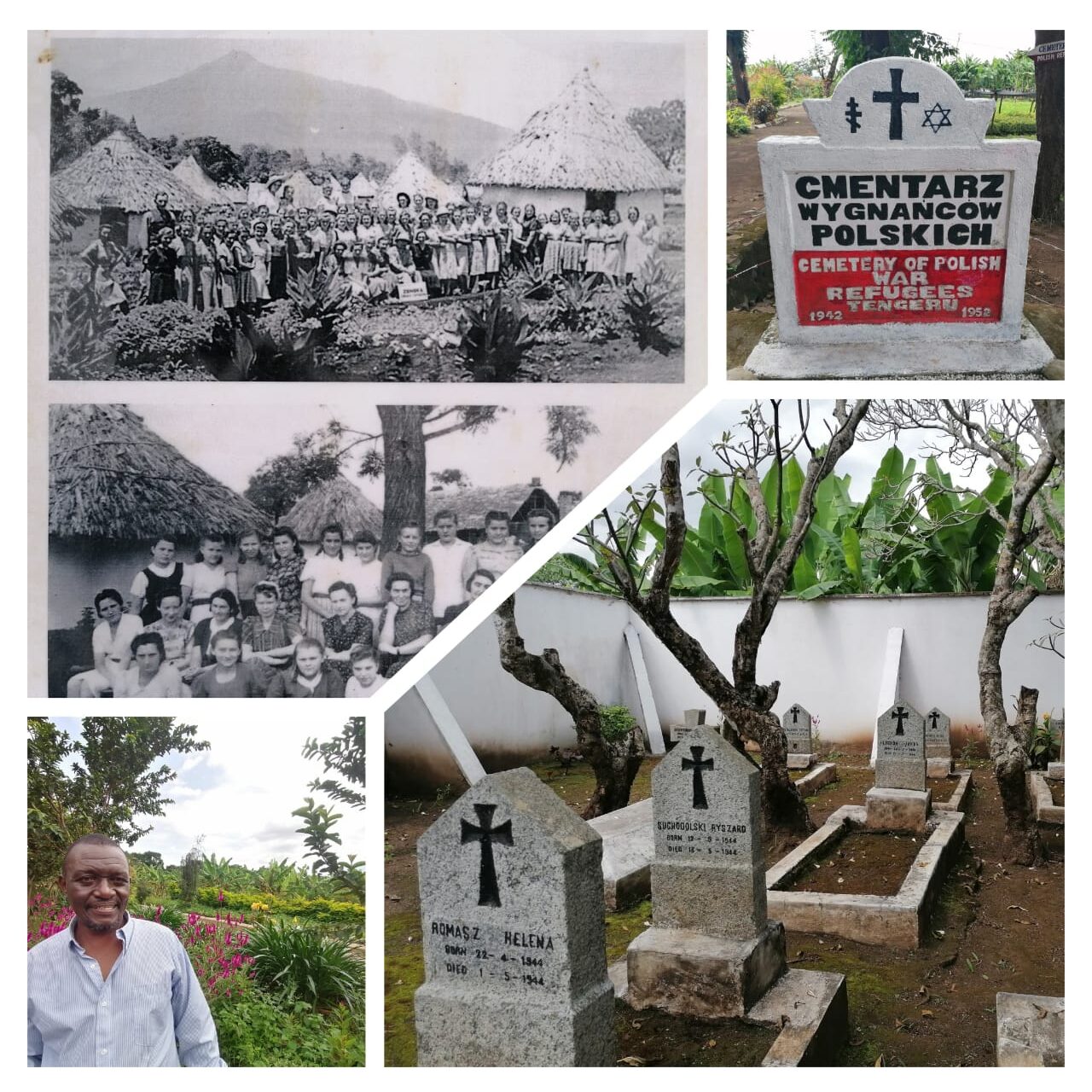
TANZANIA | TENGERU: We are coming to you today from the mielie fields of Tengeru, below Mount Meru, on the outskirts of Arusha, the tourist capital of the country. We are not here for safaris or Kilimanjaro, however, but for a graveyard.
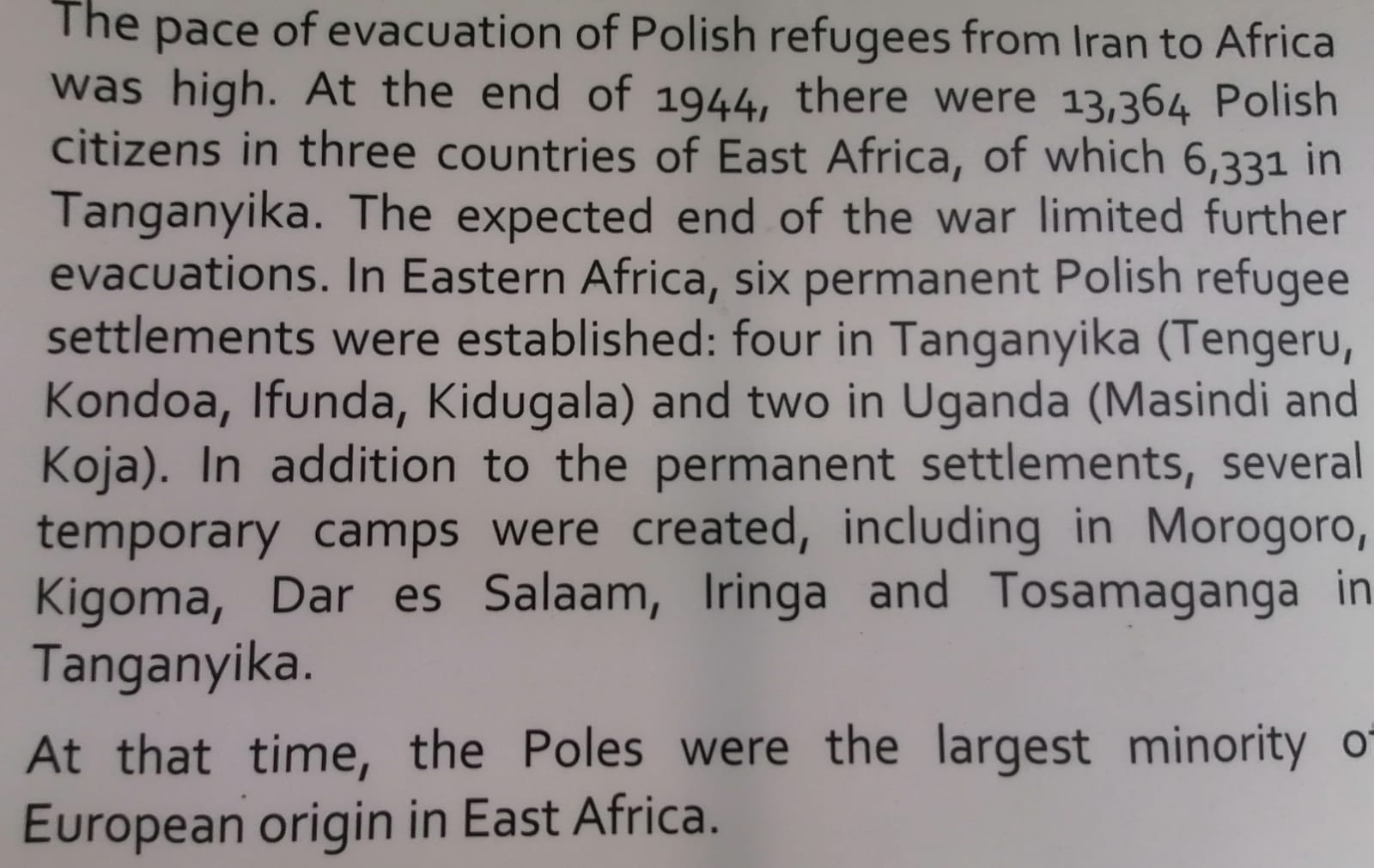
Laurianne’s Polish grandmother was deported to Siberia in WWII and landed up as a refugee in Southern Rhodesia (Zimbabwe) in 1944. There were 20,000 others like her in 22 displaced persons (DP) camps throughout British South and East Africa. The largest of the African settlements, with 5,000 Poles, was in Tenguru.
149 of the refugees are buried in the Polish cemetery here. Some died during the decade that the settlement was operational. Others, like Anna Pietrutczyk who found a new home in Australia after the camp closed in 1952, returned to die in Tengeru. Krystyna Wladyslawa Alexiou was born and was buried here. Edward Wojtowicz, one of the 1,000 who were granted permanent residence, was laid to rest in 2015. The Poles left a legacy. The agricultural school they started lives on as the Livestock Training Agency of Tengeru (Lita).
Among the fields of mielies and groves of bananas and mangoes, vestiges remain of the tree-thick bush, complete with blue monkeys, that was Tengeru in 1942. The well-kept cemetery and small museum are surrounded by a tropical garden, lovingly tended since 2001 by Simon Joseph Andrew Kikarasa, who took over at his dying father’s request. Simon’s son looks set to inherit the mantle of custodian of this African corner of Polish history.
Day 69: (30 June 2025)

TANZANIA | LAKE DULUTI, TENGERU: On a clear day you can see Meru and Kilimanjaro from the shores of the crater lake, Duluti. Alas, today was not that day.
In our first week in Tanzania, at Bagamoyo on the coast, we met ‘Guide’ Dotto, a young Tanzanian tour-guide-in-training. We got chatting over a beer, and he suggested an alternative itinerary to the overpriced national parks. He shared with us the contact numbers of forest conservators, lodge operators and other guides, called ahead to let them know we may be making contact and periodically checked in with us by WhatsApp. His brother’s honey sweetened the start of our days.
Dotto is but one example of the welcoming, cheerful, helpful and honest people of Tanzania, who have been the highlight of our time here. The dala-dala conductors escorted us through crowded bus stations to get us onto the right connection; the Bolt drivers helped us to load airtime on our phone; the Yacht Club Commodore sent drinks over; the ladies in the kitchen fed us as though fattening us up for Christmas lunch. We dined today on giant tilapia from Lake Victoria as we took our leave of Dotto – after stocking up on his brother’s honey.
Waheri Tanzania 👋
Day 70: (1 July 2025)
KENYA | NAIROBI: After 35 nights in the country, we left Tanzania today in cold drizzle, on a cross-border shuttle bus bound for Nairobi 285 kilometres north.
We left Arusha, its mountains and moist tropical forest behind, on good tarred road. Soon, the landscape turned drier and flatter. Gazelles – either Grant’s or Thompson’s – grazed among the thorny scrub and olive baboons squatted at the road’s edge. We could have been in South Africa. This is Maasai country – open ranch land with cattle, goats and large herds of donkeys – “Maasai 4x4s” quipped the Tanzanian tour guide sitting next to us, off to meet his clients in Nairobi. The Tanzanian roads are so poor that it is easier to reach the north of the country from Kenya.
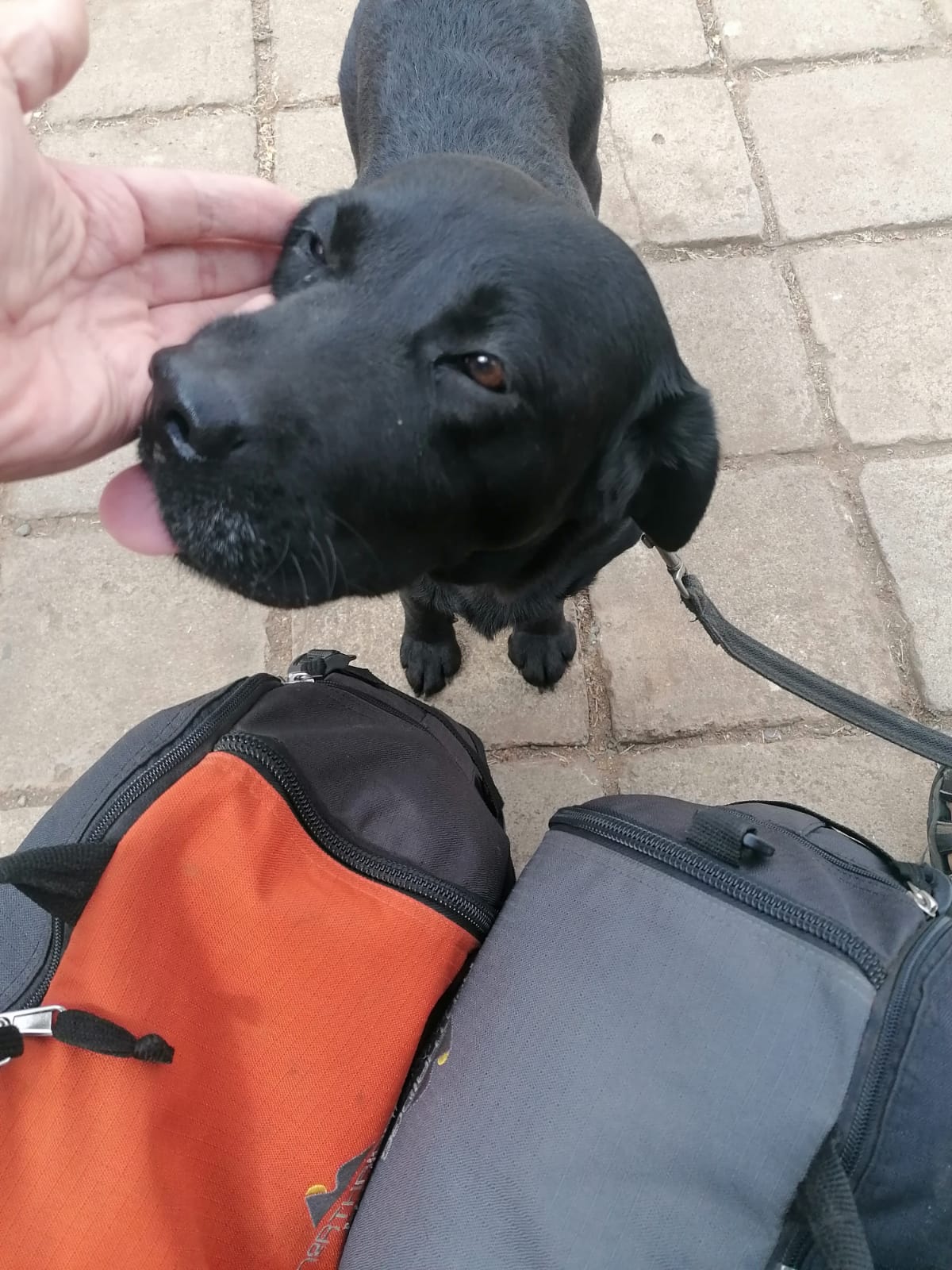
At the border, all our luggage was offloaded from the roof, and lined up on the pavement to be thoroughly sniffed by the sweet-natured drug hound. Her military master was unimpressed by Lee taking a clandestine picture and made him delete it from his phone. He then relented and allow Lee to take a photo of Angel.
Despite having successfully wrestled with online e-visa applications, we still had to queue at the one-stop border post, with a self-important security lady chivvying us to stand in a straight line and moving us one step forward or one back.
After slogging through Nairobi traffic, 12 hours since our 05:00 alarm this morning, we have landed in ‘Out of Africa’ luxury and are off to treat ourselves to something other than chicken and chips
Here’s a breakdown of what we spent in Tanzania. Accommodation, transport, food and drink came in at a similar average to Malawi, but our overall daily spend was higher ($102 vs $65) due to activities like birding, kayaking, snorkeling and, of course, the exorbitant ‘conservation’ fees to access Selous National Park.
💲 Travel Tally: Tanzania
Average expenses (for 2) over 35 nights:
● Accommodation (Double en suite): $31 (R558)/day:
● Food & drink: $23 (R414)/day
● Transport: $8 (R144)/day
● Activities: $35 (R630)/day
● Daily average: $102 (R1,836)/day
Day 71: (2 July 2025)

KENYA | NAIROBI, KAREN: The Galleria Mall is a modest two-story complex just 5 kilometres away from our self-catering accommodation. It had everything we needed for a ‘business day’: forex, haircuts, supermarket (Carrefour – well supported by Americans on safari – accepts dollars and Kenyan shillings), a wine shop and a café serving exotic iced drinks with no chicken and chips on the menu. We never imagined we’d be so excited to be at a mall. We stocked up and that night we had our own version of nyama choma – Kenya’s national cuisine – fire-grilled Kenyan boerewors and South African steak.
Day 72: (3 July 2025)
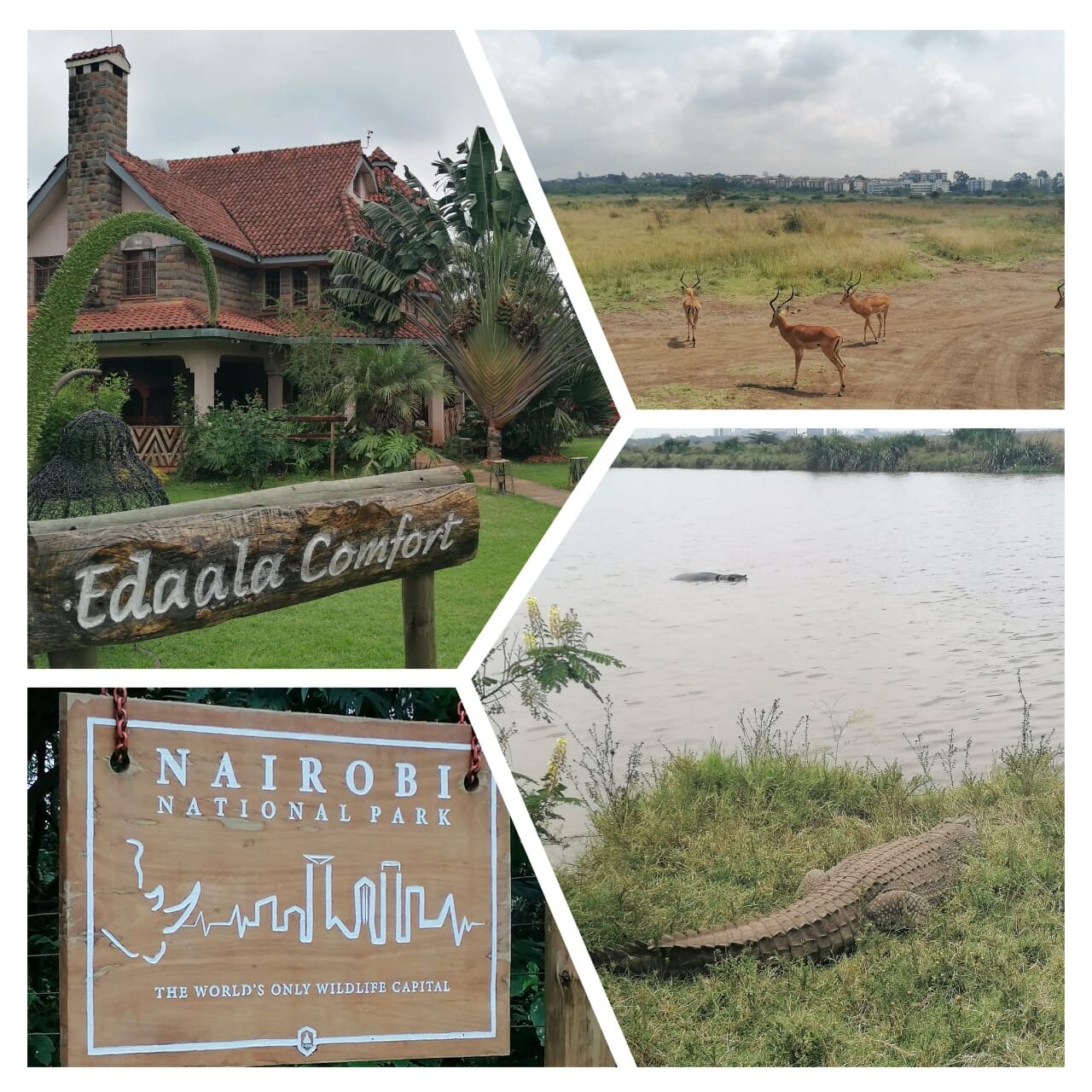
KENYA | NAIROBI NATIONAL PARK: We have inadvertently landed up in Nairobi’s equivalent of Johannesburg’s Northern Suburbs – expansive plots with houses to match – populated by Kenya’s economic and political elite, including, apparently, the President and the Deputy President. The air buzzes with the hum of private planes and safari charters.
We have quaffed cocktails and dined on Wagyu beef burgers and pork wontons in a Sechuan broth, alongside a British army contingent celebrating a birthday. We have been invited to stay at: the Nairobi home of the Kenyan author of Trees of East Africa / the ‘Maasai Mara’ house and Mount Kenya farm of a local businessman/philanthropist / and Patrick Holford’s holiday home on the island of Lamu, courtesy of his friends – a British/Singaporean couple and their 22-year-old son.
We rode shotgun with them today through Nairobi National Park, unique in its proximity to a major city – a mere 7 kilometres from the city centre. The 117 kilometres² of grassy plains, rocky gorges, acacia woodlands and seasonal wetlands sustain 400 bird species and 100 mammal species, including lion, leopard, buffalo and both black and white rhino. Of these star attractions, we saw the buffalo. Of the East African specials, we were treated to Coke’s hartebeest, and the Maasai ostrich, a subspecies notable for the erotically charged pink flush that suffuses the necks and legs of breeding males.
What will tomorrow bring? And where will we land up? Who knows.
BIRDS 🐦
● Superb starling
● Purple grenadier
● Yellow-necked spurfowl (francolin)
● Maasai ostrich
Day 73: (4 July 2025)
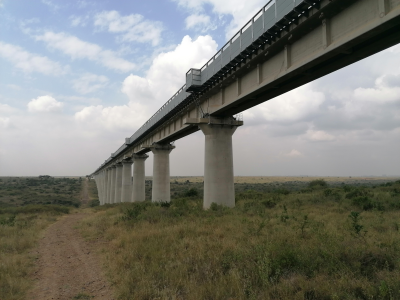
KENYA | NAIROBI, KAREN: Planned/unplanned. As we were heading off this morning to the Karen Blixen Museum (of ‘Out of Africa’ fame), we discovered that our credit card was missing – presumed misplaced or lost rather than stolen. There followed an as yet unresolved wrangle with the bank. We have had no luck in activating the banking app or Google Pay as a substitute for the physical card. Unlike Tanzania, which was all about cash, Kenya is listing towards cashless with its National Parks and major tourist attractions leading the way. We’re still waiting for the Help line to call us back.
Progress, however, was made on planning the Kenyan leg of this trip. Back in Amani in Tanzania, we met Kenyans Najma and Firoz, who connected us with their son in Nairobi. We made contact with Farhaan today and with his input, we are changing gears. Thanks to Kenya’s investment in their road (and rail) infrastructure, a self-drive road trip is loading.
Although Nairobi is 1,795 kilometres above sea level, the winter weather merits little more than jeans and a puffer jacket. Nonetheless, Lee has picked up a cold so the down time has come at the right time.
Day 74: (5 July 2025)
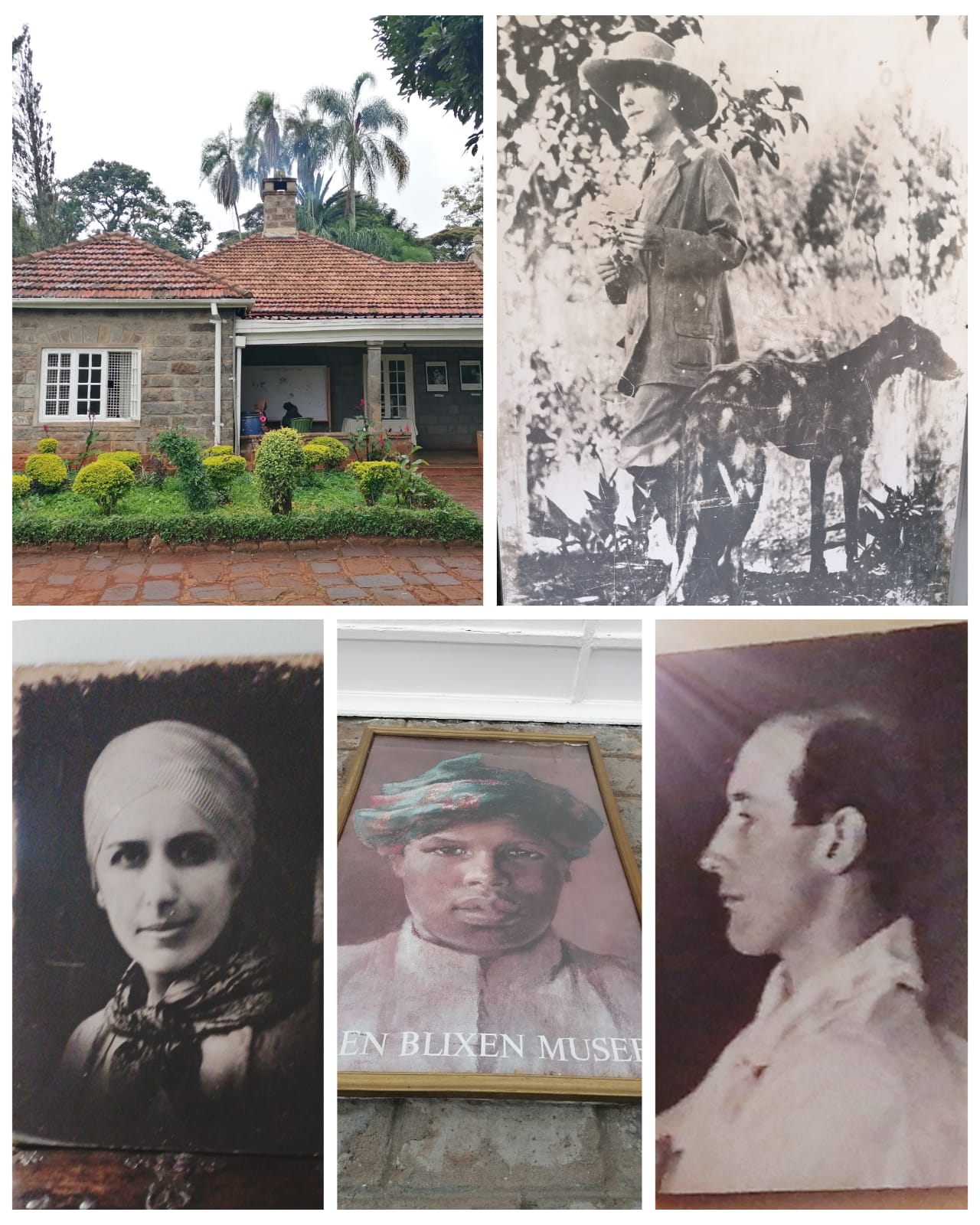
KENYA | NAIROBI, KAREN: Out of Africa: Behind the scenes. Nairobi’s elite suburb of Karen is named after Danish settler Karen Blixen, who came to Kenya in 1914 to marry her cousin, Baron Blixen. The book she wrote (the second of nine) about the 17 years she spent in Africa was popularised in the 1985 movie Out of Africa.
In real life, her lover Dennis Finch-Hatton, with his receding hairline, was no Robert Redford. Their ill-fated love story brought her fame both home and abroad, while she was alive and after her death. A storyteller, author, artist and flower arranger, her turbanned image appeared on Danish stamps and the 50 krone note (1992-2005 series). One of Nairobi’s most popular tourist attractions. her home, where she entertained HRH Edward the Prince of Wales in 1928, was built by a Swedish engineer-turned-African-coffee-producer in 1911-1912.
Nearby is the expansive property where Meryl Streep stayed while filming, and where we were invited for a vegetarian braai this afternoon. Several unpretentious dwellings of 1970s vintage are set among the bush adjacent to the Nairobi National Park. Warthogs root in the grounds, leopards have been known to pass by upon occasion and the neighbours’ dogs fell prey to lion – so we were told by our young hostess, Imogen, a first-generation Kenyan whose UK parents, inspired by Out of Africa came to Kenya and acquired the property from its Italian owners. Other guests were first-generation Kenyans of Indian origin – young professionals, entrepreneurs and artists, avocado exporters, community conservationists, civil engineers, optometrists and wildlife photographers. With their input the itinerary for our road trip is taking shape.
Day 75: (6 July 2025)

KENYA | NAIROBI, PARKLANDS: The kindness of strangers. Among some South Africans the Kenyan capital is known as ‘Nai-robbery’. Belying this reputation, however, our credit card was spotted by a passenger in the Bolt car we travelled in on our first day in Kenya. Hesbon, the driver, drove across town to return the card today.
We have also moved across town, to Parklands, where we are being hosted by Farhaan, in the family home, an invitation extended by his mom and dad whom we met on the road in Tanzania. They live in a housing cooperative that is home to Nizari Ismaili Muslims – a branch of Shia Islam – for whom the Aga Khan is the spiritual leader. A civil engineer, Farhaan works for the nearby Aga Khan University.
Out of a population of 55 million, there are around 100 000 Kenyan Indians, many of them in the Nairobi suburbs of Westlands and Parklands. We have already sampled some of the delectable Indian cuisine in the neighbourhood and were introduced to koroga – a Swahili word that means ‘to stir’ – the local version of potjie (a stew cooked over an open fire in a three-legged-pot). Similar to an Asian hot pot, you pre-order the ingredients, which come ready chopped, and then cook your curry over a charcoal brazier in designated spaces in the restaurant.
Kenyan politics is currently volatile, and the incumbent President Ruto is deeply unpopular, although only in his first term. Tomorrow, 7 July, (Saba Saba) is a day that commemorates the struggle for multiparty democracy in 1990 during the era of Daniel Arap Moi. It seems that the next round of protests will take place tomorrow, and schools have been closed in anticipation of violent disruptions. The National Museum and Arboretum will have to wait until Tuesday.
Day 76: (7 July 2025)
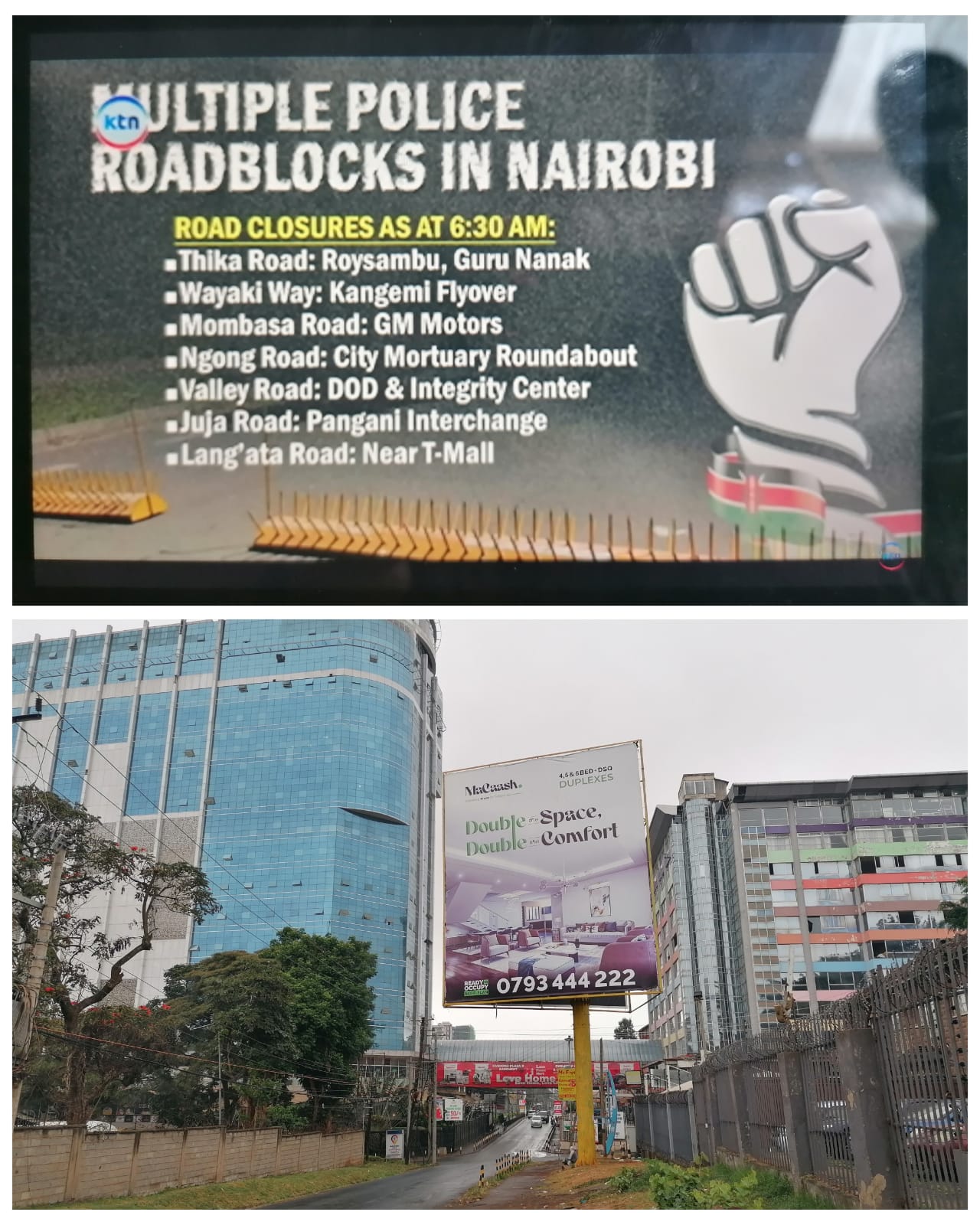
KENYA | PARKLANDS, NAIROBI: Nairobi took a pyjama day today as the government sealed off the CBD in anticipation of #RutoMustGo protests. Almost $100 million was lost to the city’s economy and at least 10 people were shot dead around the country. Such measures worked to keep the masses off the streets but everyone knows – including the President himself one must assume – that his days are numbered. 2027 is a long way away.
Despite most businesses being closed, we were able to arrange our hired sedan car (R500/day with unlimited mileage). We also registered for Kenya’s eCitizen platform and activated our Mpesa mobile money account – these enable payment of entry fees to National Parks and other government-run attractions like museums. Mpesa saves us 3.8% in comparison to using our credit card for the car hire.
Good cheese, coffee and ice cream were in short supply in Malawi and Tanzania. Not so in Parklands. 😋
Day 77: (8 July 2025)
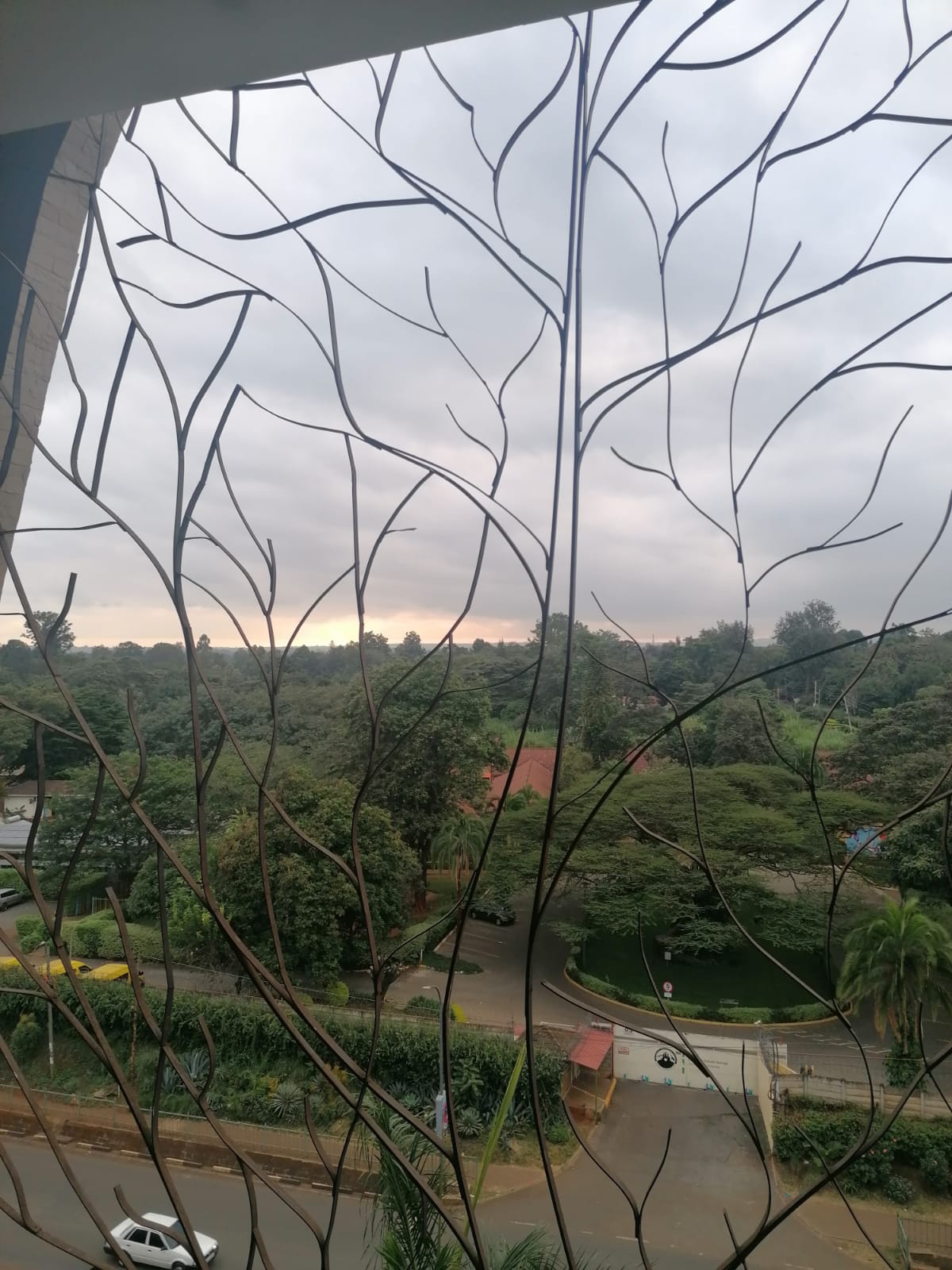
KENYA | NAIROBI, GIGIRI: The leafy suburb of Gigiri is home to embassies, UN offices and the Nairobi National Museum, which provided a comprehensive introduction to Kenya’s history, both political, and natural. While trying to snap a treetops view from the swanky Village Market Mall., a security guard comes over to inform us of Rule #3: ‘Only selfies allowed.’ Since the terrorist attack by Al-Shabab militants on a Westlands hotel and office complex in January 2019, security guards and scanners monitor people and vehicles entering business, shopping and government premises.

Railroaded. “It is not uncommon for a country to create a railway line but it is uncommon for a railway line to create a country.” – Sir Charles Elliot
Begun in 1896, the 1,060 kilometres “lunatic line” from Mombasa to Lake Victoria cost 5 million pounds and took 5 years and 38,000 imported Indian laborers (mostly Sikhs) to build. Of these, 2,943 died – some eaten by the infamous lions of Tsavo – and 6,724 stayed, to be joined by Indian immigrants who opened shops along the railway line. Although the Uganda Railway never actually reached Uganda, it opened up British East Africa to trade and development – “the Uganda Railway has literally created a new country.” – South African Railway Magazine
In 1901, Kisumu on the Kenyan shore of Lake Victoria was the end of the line. We were enthused to discover that a weekly train still ran from Nairobi to Kisumu, only to find out that after being resurrected in January 2025, the service is “currently suspended until further notice”.
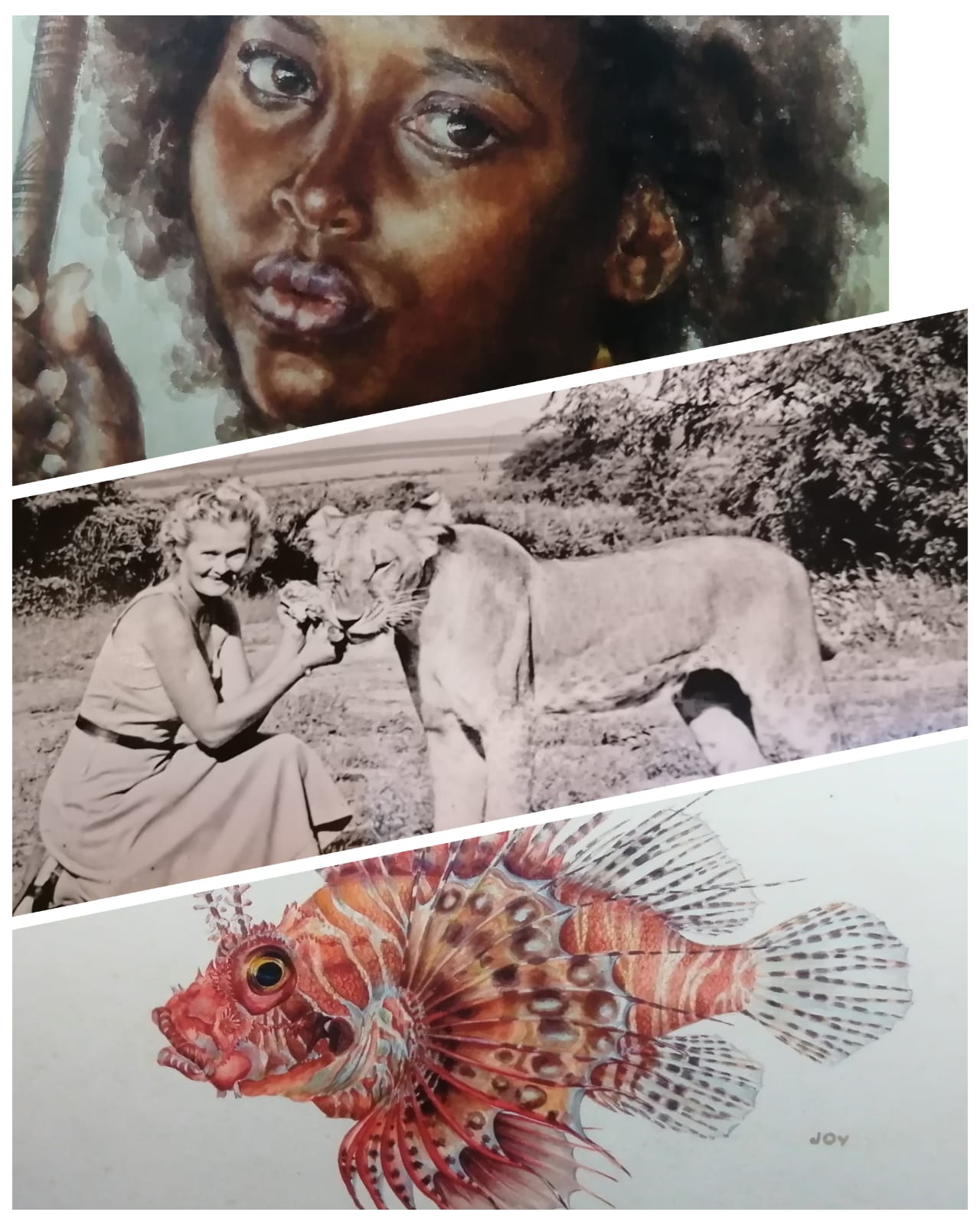
Like Karen Blixen, Joy Adamson (b. Friederike Victoria Gessner in 1910 in the Czech Republic) is another white woman that left her mark on Kenya. Well-known for her book Born Free about her adopted lion Elsa, Adamson was also an artist who captured Kenya’s people, plants and animals, and she co-founded the World Wildlife Fund (WWF). She was murdered in 1980. So too was her third husband, George Adamson, in 1989.
Day 78: (9 July 2025)
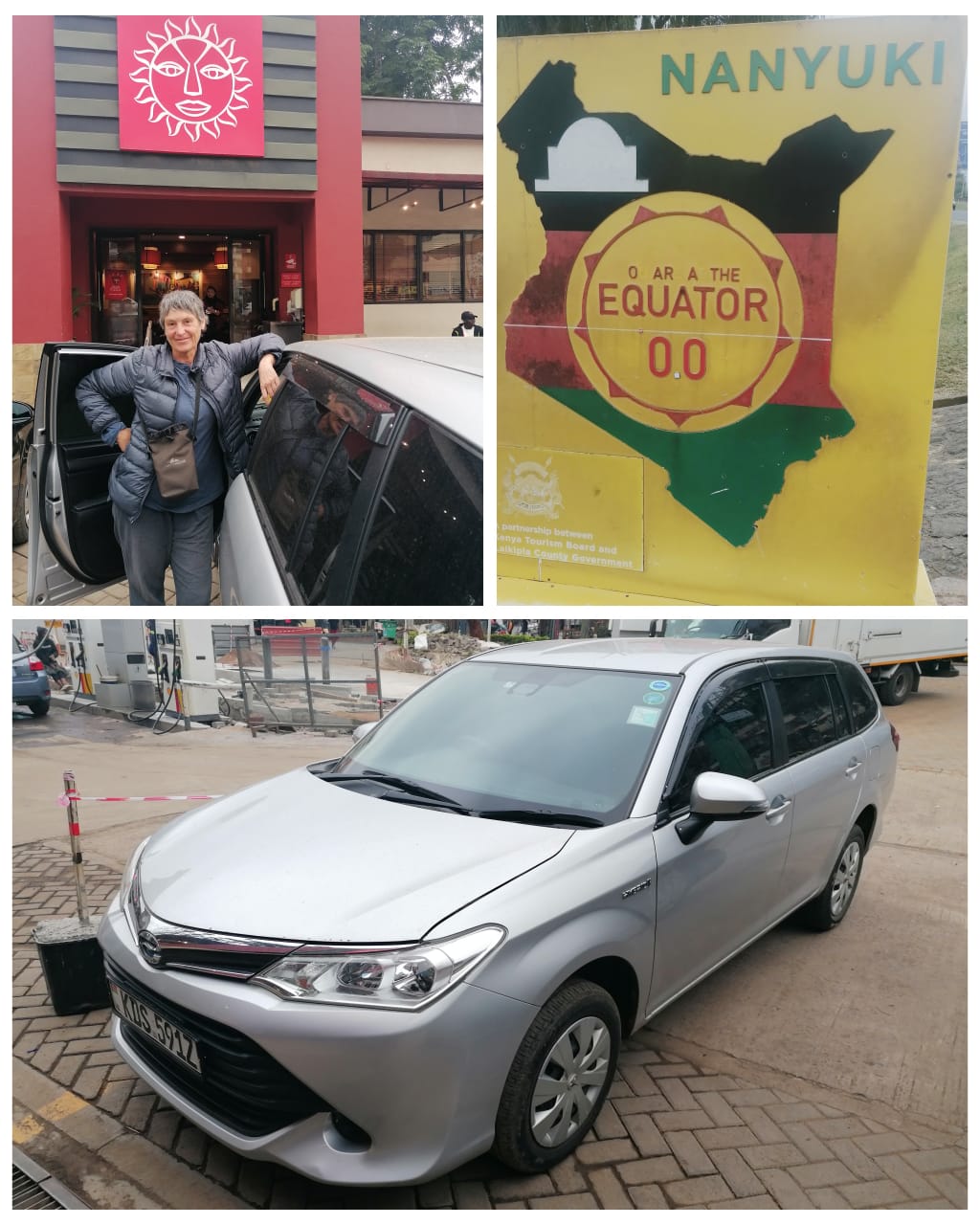
KENYA | NANYUKI: We hired a Toyota Fielder sedan car for our road trip at the bargain rate of R500/$27 per day all in. A Hilux, which could have got us off road, would have cost double so we are sticking to the tar.
Some 200 kilometres out of Nairobi, we crossed the Equator as we arrived in Nanyuki. Our water now drains down the sink in a counter-clockwise direction due to the Coriolis Effect. Nanyuki, in the Kenyan Highlands 1,947 metres above sea level, is the gateway to Mount Kenya – which proved as elusive as Mount Kilimanjaro – and conservancies like Ol Pejeta Conservancy, home of the last two Northern White Rhinos on the planet. At $110 p/p just to enter we won’t see them either. We do hope to see some of Kenya’s 10 endemic and 1,300 bird species in the next weeks, and some of the 70% of Kenyan wildlife that isn’t within their National Parks, which are not as uniformly overpriced as Tanzania’s, but require heavy-duty wheels. (Cheapest admission fees are $22 p/p).
It’s Laurianne’s turn to be under the weather – a bad samoosa is the chief suspect. A Kenyan dawa (honey, lime/lemon and ginger hot toddy) and sleep should see her back on her feet.
Day 79: (10 July 2025)
KENYA | NYERI: In 1902, after the completion of the Uganda Railway, the British colonial powers encouraged European settlement, offering 5,000 acres at 0,20c/acre for 999 years. We explored Nyeri, a corner of the ‘White Highlands’ today.
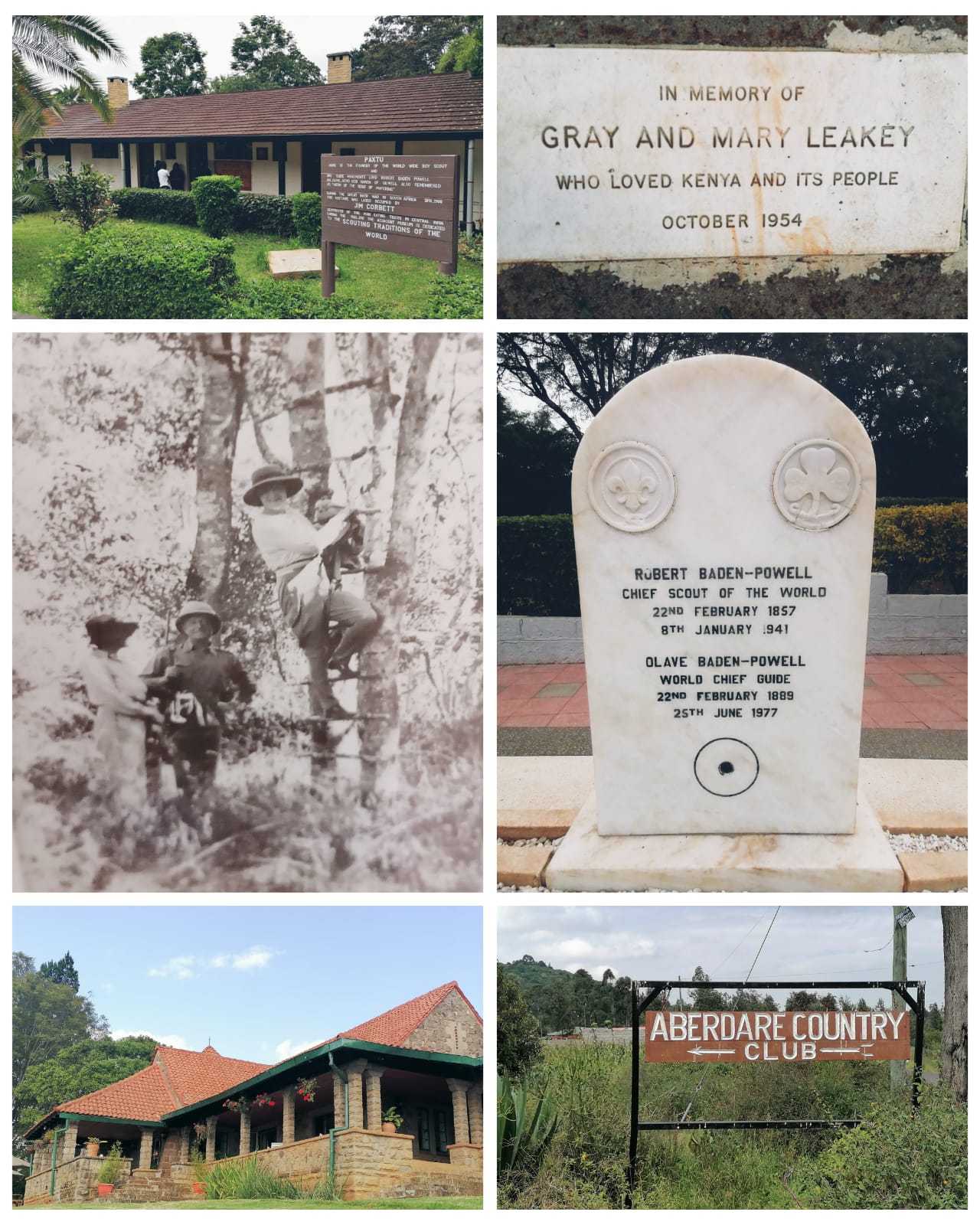
Bushbuck keep the bougainvillea in check, while warthogs mow the greens and baboons steal stray golf balls at the Aberdare Country Club, originally ‘The Steep’, built in 1935-1937 as a family home by British newly-weds and owned today by Indians who were kicked out of Uganda by Idi Amin.
Tucked away behind the gates of the Outpost Hotel, built in 1927 by Eric Walker, is the cottage where Lord Baden-Powell of Boy Scout fame spent his final years. To sleep in the bed where he drew his final breath and to soak in his tub will cost you KES9,000 (R1,270) by special request.
Walker also built the nearby Treetops Hotel – ‘a separate wing built in the treetops so that visitors can study lions over breakfast’. Princess Elizabeth was staying at Treetops in 1952 when she learned of her father’s death and thus became Queen – ‘a princess went up a tree and came down a queen’ to paraphrase the entry made in the Visitors’ Book by Jim Corbett, Anglo-Indian author and hunter of man-eating tigers. Treetops was torched soon after by Mau Mau fighters in the uprising against British rule (1952-1960).
Sir Baden Powell is buried in St Peter’s Cemetery along with Jim Corbett, white ‘pioneers’ and British soldiers and civilians killed during the May Mau Emergency. There are Leakeys buried at St Peter’s too – of the famed family of archaeologists and paleoanthropologists known for their discoveries of hominin and other fossil remains in eastern Africa.
Louis Leakey’s parents were missionaries who arrived in 1902. In 1906, Arundel Gray came out and helped his uncle, Reverend Harry Leakey, to build a church. He stayed on in Kenya, managing farms and the White Rhino Hotel in Nyeri and ultimately farming his own land at Kiganjo near Nyeri. On 13 October 1954, in a Mau Mau attack, Gray (69) was ‘buried alive’ as a ‘sacrifice’, his third wife Mary was strangled in the farmhouse while Mary’s daughter survived, only to be killed by a lion in Arusha, Tanganyika, while shooting a movie about Kenya in 1960.
Day 80: (11 July 2025)
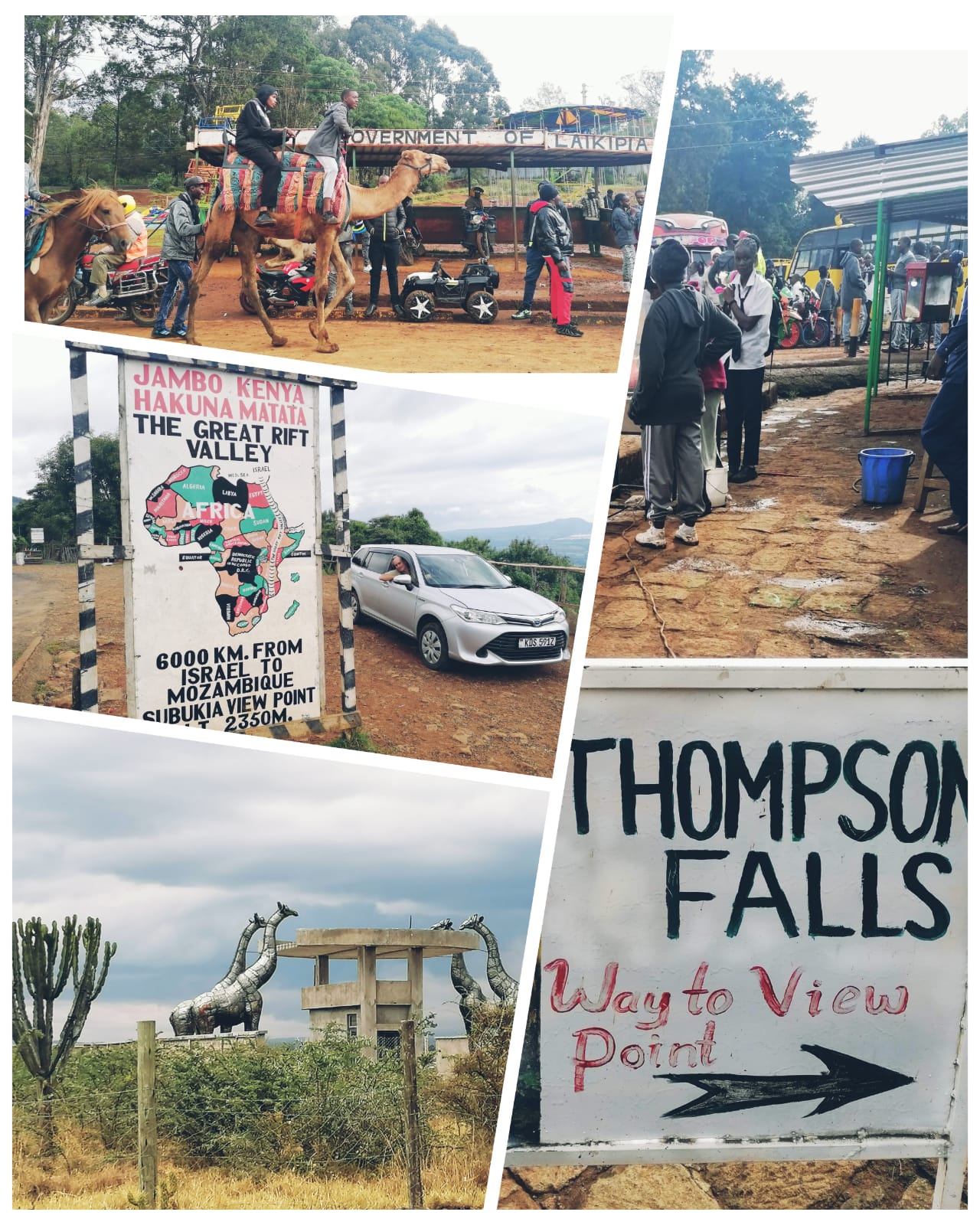
KENYA | NAKURU: We didn’t get to see Nyahururu’s star attraction Thomson’s Falls – named for the 19th century Scottish explorer and naturalist Joseph Thomson – bustling with bus loads of school kids on a Friday afternoon, as we declined to pay KES500 p/p (R75) to access the viewing platform. We did, however, see the river flowing over the precipice for which there was no charge.
We had stocked up this morning on artisanal cheese, marinated artichokes and salami – all as rare as Kenya’s mountain bongo antelope. Heartened by our haul, and the tarred A and B roads encountered thus far, we set off on a C road … and were forced to backtrack once again, returning to Nyeri and then west through a landscape transformed by human habitation – mielie fields, wattle forests, goats, sheep, cattle, schools and churches of all shapes and sizes, including a ‘Jesus Winner’ chain, and even a Messianic Jewish synagogue. We criss-crossed the Equator while descending the Rift Valley.
We arrived in Nakuru at peak rush hour. There were no robots, just jammed roundabouts manned by seemingly inept policemen. At one point we didn’t move for 20 minutes and Laurianne was raring to get out and direct traffic.
Day 81: (12 July 2025)
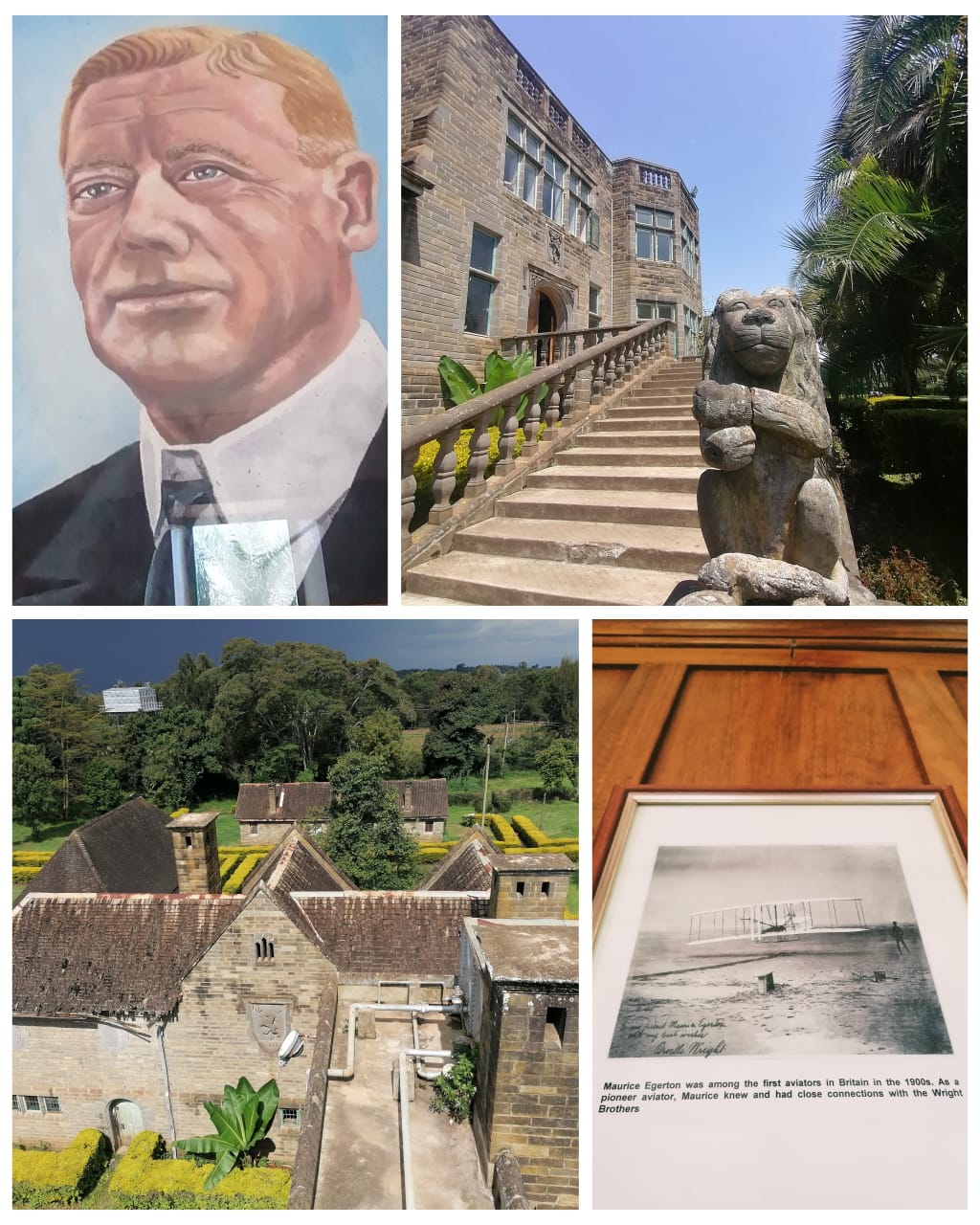
KENYA | NAKURU, NJORO: Among the mielie fields of the Great Rift Valley, in a parkland of clipped hedges and expansive lawns, stands a neo-classical stone castle with 52 numbered rooms, Italian marble fireplaces, staircases and panelled walls of English oak and a two-storey, 411-pipe organ in a ballroom the size of a tennis court.
The once polished parquet floors are lifting, the ceiling panels sag and water damage streaks some of the graffitied walls. Yet the castle remains in remarkably good shape for having housed squatters for three decades since independence before being claimed by Kenya’s oldest institution of higher learning, Egerton University, which, like the castle, bears the name of its founder, Maurice Egerton, the fourth – and last – Baron Egerton of Tatton Park, Cheshire.
Born in 1874 in London, as the third son he was not in line for the title but his two brothers died young and he was raised at home by a protective mother. However, his father imparted in him a taste for travel. Other passions included photography, hunting, farming, radio transmission, motor sports and flying. A pioneer in UK aviation, he bought one of the Wright brothers’ first planes, survived an air crash soon after getting his licence in 1910 and walked with a limp for the rest of his life.
As a serviceman in WWI, he took up the colonial government’s settlement offer and arrived in Kenya in 1920, the same year in which he came into his title, aged 46. He increased his holdings to over 100,000 acres farming wheat, cotton, sisal, maize, tea and livestock, established a tannery, a cotton gin, a sisal factory and a cheese factory, and in 1939 started Egerton Agricultural College which became Egerton University.
The foundation stone for the castle was laid in 1938 but war intervened and it was 12 years before Egerton moved in, in 1951. The story goes that he built the castle to woo a certain ‘Lady Victoria’ who was unimpressed. Being spurned caused him to ban all women from the homestead. However given that he was 68 when building commenced and 77 when he moved in, such ardour seems unlikely. He died 7 years later at 84, unmarried, childless and the last of his line. He rests in the Nakuru North cemetery, flanked, it is said, by two women.
Day 82: (13 July 2025)
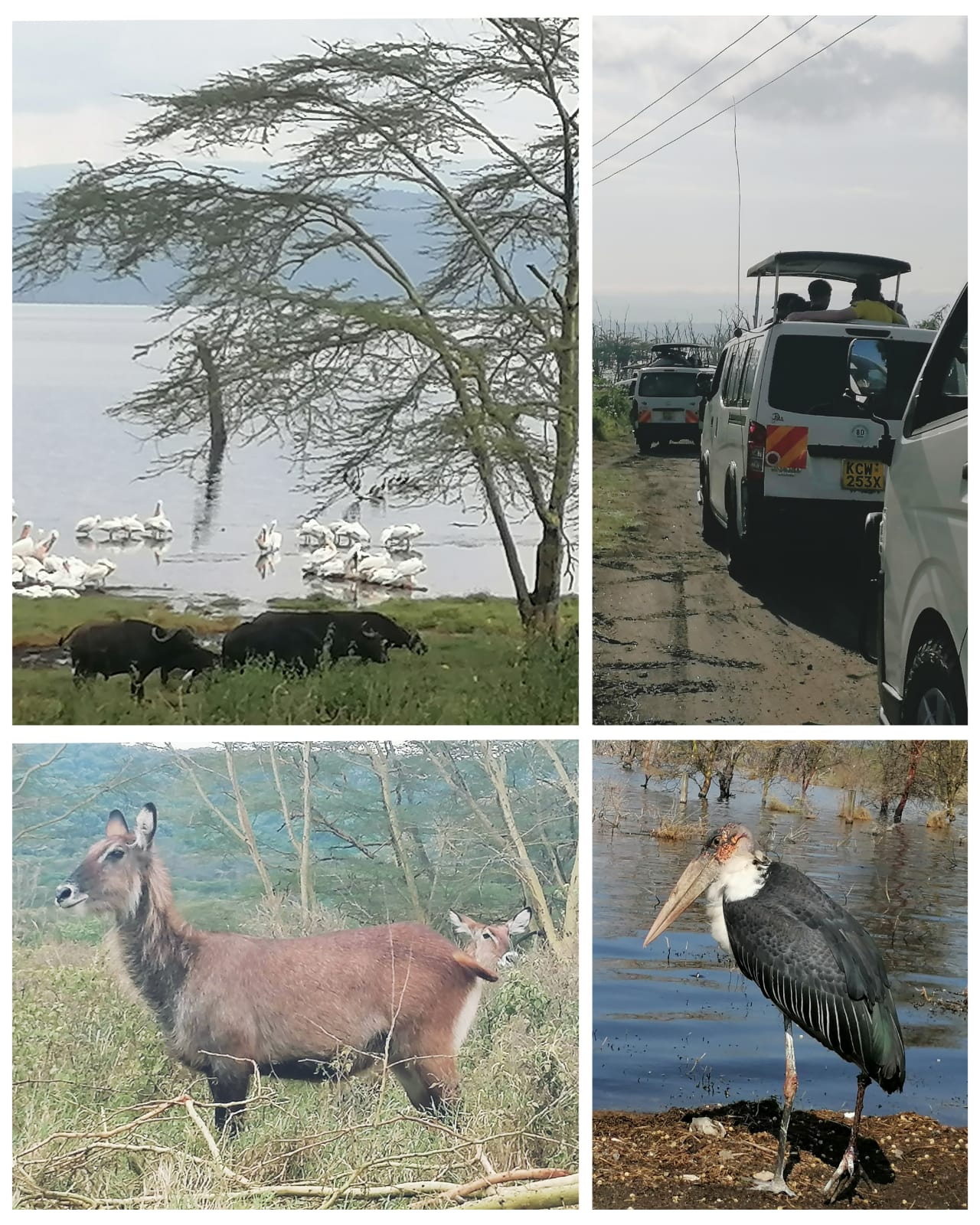
KENYA | LAKE NAKURU: Like Nairobi, Lake Nakuru National Park (188 km2) is another of Kenya’s national parks within a stone’s throw of a metropolis – Nakuru is Kenya’s fourth largest city. The national park encloses the Rift Valley soda lake and the surrounding mountains, woodlands and savanna.
Since the park was nearby and its roads sedan-friendly, we decided to pay the hefty ‘foreigner’ entry fee. Arriving at the main gate early this morning to monkeys picking through the litter in the parking lot and public toilets choked with loo roll, we had to deal with the E-Citizen digital payment system, an abortive attempt – as we were to find out later – to ensure that all takings at national tourist attractions go straight to government. Online reservations do nothing to speed up the process so we spent at least 30 minutes at the gate attempting to pay our $130 including the vehicle.
Looking past the roaming ticket inspectors and pop-topped kombis filled with excitable tourists waving phones and the fact that there were no discernible public facilities of any kind, our perseverance was rewarded with a male lion striding past within 5 minutes of entering the park.
While the sizeable herds of buffalo, zebra as docile as donkeys and the Defassa waterbuck were noteworthy, the birds were the star attraction – pods of pink-backed pelicans, fish eagles in the fever trees, ospreys perched on trees drowned by a lake that has been rising since 2009, yellow-billed and saddle-billed storks stalking the shallows and rare woodland species like the white-headed barbet and the uncommon black-lore babbler. We had to tear ourselves away and head for the hills of the Northern Rift Valley.
Day 83: (14 July 2025)
KENYA | ROKOCHO: The Elgeyo Escarpment forms the western wall of the Rift Valley and the 110- kilometre western boundary of Elgeyo Marakwet County, which is where we find ourselves, amid evergreen forest and farmland. We are rooming at the 100-bed Cheptebo Convention Centre, a rural development centre run by the African Inland Church (AIC), where more birding awaits. On the premises is a 20-hectare demonstration and training farm, an agricultural training centre and hostel, a value-add facility producing dried mangoes and honey, a farm shop, a tree nursery and a clinic and dispensary.
A flash of long white tail through the trees at dusk proves to be a breeding African paradise flycatcher (white morph). The next morning’s birding in the forested grounds proves rewarding but the smoke rising from the shorn slopes above the farm is sobering. Charcoal burning, overgrazing and clearing of vegetation for crops threaten the indigenous subtropical forest and the creatures that depend on it.
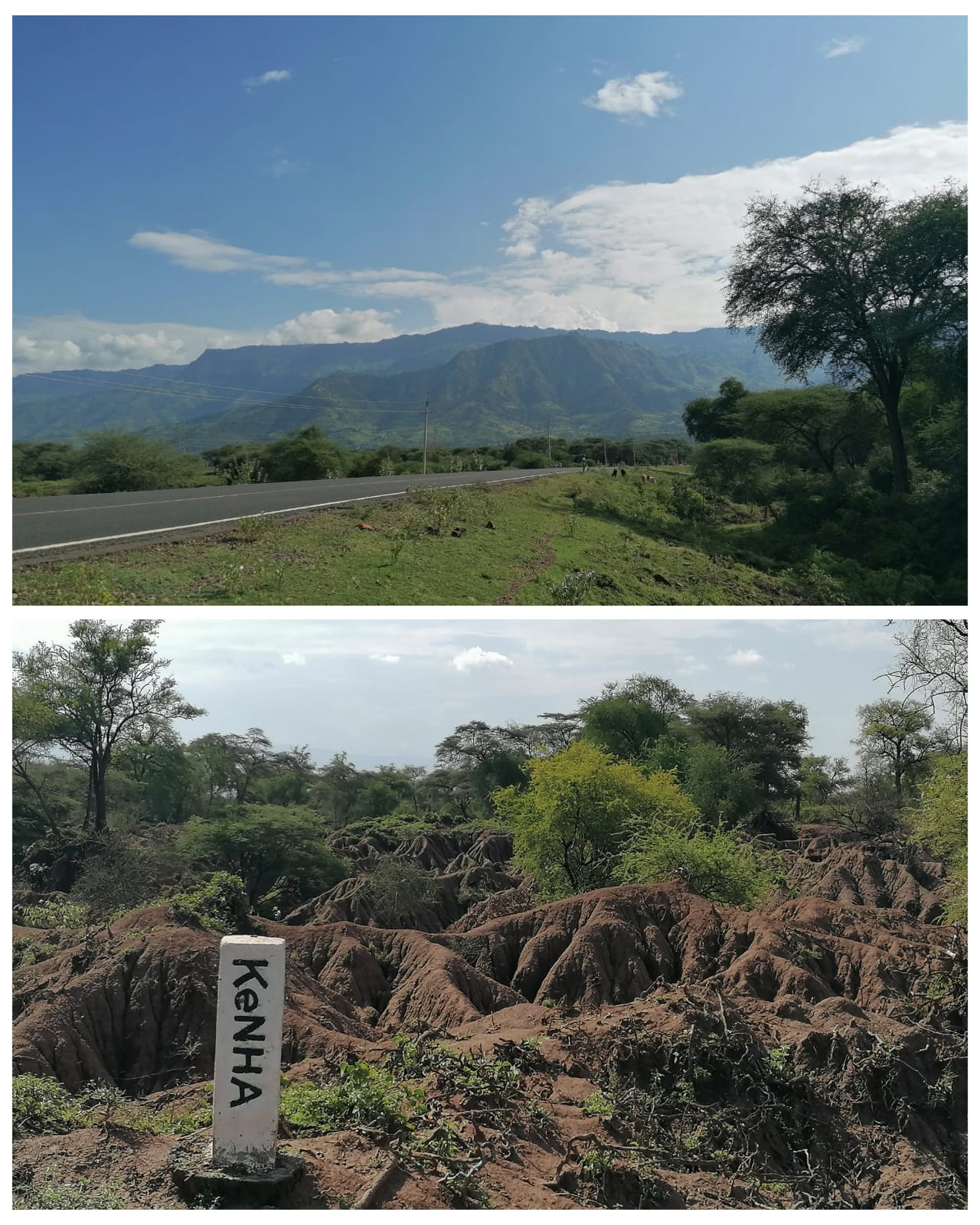
BIRDS 🐦
● African paradise flycatcher (male white morph)
● White-crested turaco
● Black-and-white casqued hornbill
Day 84: (15 July 2025)
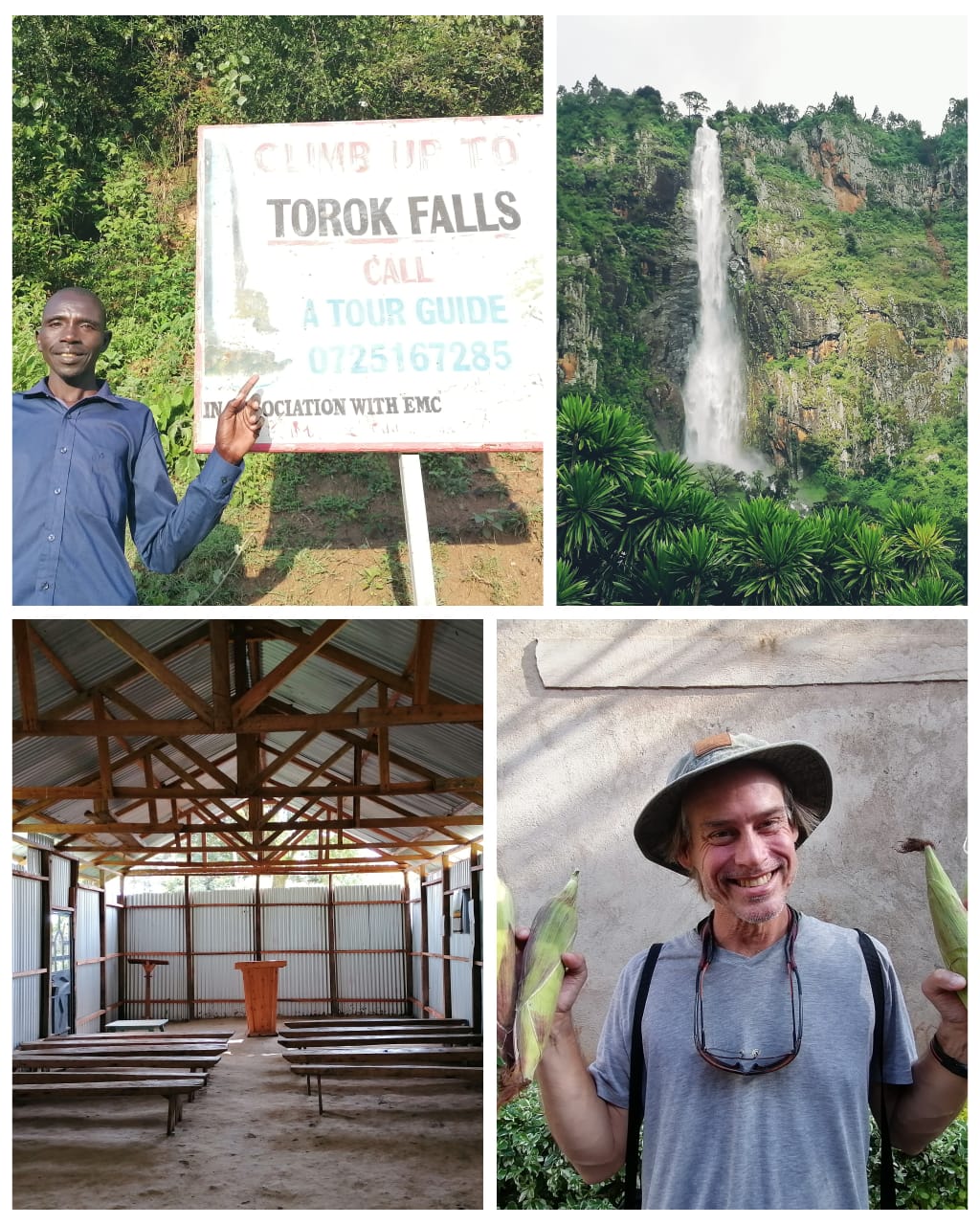
KENYA | ROKOCHO: We hiked 7.25 kilometres to the base of the Elgeyo Escarpment – and back again – to Torok Waterfall, a 200-metre-long, spring-fed, perennial cascade. Torok means ‘wild beast’, according to our guide, Timothy Kimutai, who grew up here. “A long time ago”, at the top of the escarpment, “there were many wild animals but they have now disappeared”. So too has most of the sub-tropical forest studded with euphorbias that once blanketed these mountains. Cultivation of maize, millet, mangoes, beans, coffee and even passion fruit, extends up to the base of the waterfall at an altitude of 2,160 metres.
Iten, the nearby capital of Elgeyo-Marakwet county, is known as the Home of Champions, producing world-class, long-distance runners. Little wonder. As a boy, Timothy would run 11 kilometres to school and back again every day, propelled by wild fruits and cactus that tasted sweet and “filled you up”. He is a graduate of the AIC Cheptebo’s agricultural programme. Although he now lives in a village some 15 kilometres distant – by road – he walks up to the waterfall every day to tend his mielie field. One ear of corn sells for KES20 (R2,80) at the market; 200 pieces amount to 90kg, which, once milled, is sufficient to feed a family of five for a month. For Timothy, 90kg will fetch him KES4,000 (R565), less KES 300 (R42) for motorcycle transport down the mountain and another KES300 for public taxi transport to the closest big town, Kabernet.
Timothy is an AIC church elder. He negotiated with a community member to use a portion of land to erect a Sunday School, for which he solicited funding. Once completed, they evangelised in the area on the Friday and Saturday and on Sunday they had 90 children whom they feed after church every week, cooking porridge in a fire pit outside.
As we said our goodbyes this afternoon, he gifted us four of his mielies, fresh off the stalk.
Day 85: (16 July 2025)
KENYA | SAIWA SWAMP NATIONAL PARK: Kenya’s smallest National Park, at 3 square kilometres, is home to the marsh-dwelling sitatunga antelope and De Brazza’s monkey. As there are no campers tonight, we have it all to ourselves. The Sitatunga Tree Top House is costing us $100 a night all in. After spending an hour-and-a-half at the entrance gate, in the rain, trying to pay Kenya Wildlife Services (KWS) our park entrance fees by E-Citizen, our perseverance was rewarded: a female sitatunga welcomed us upon arrival; a blue-headed coucal masquerading as a cormorant perched on a dead tree branch; a pair of grey-crowned cranes did a fly-by and three black-and-white colobus monkeys leisurely enjoyed their evening’s repast.
Day 86: (17 July 2025)
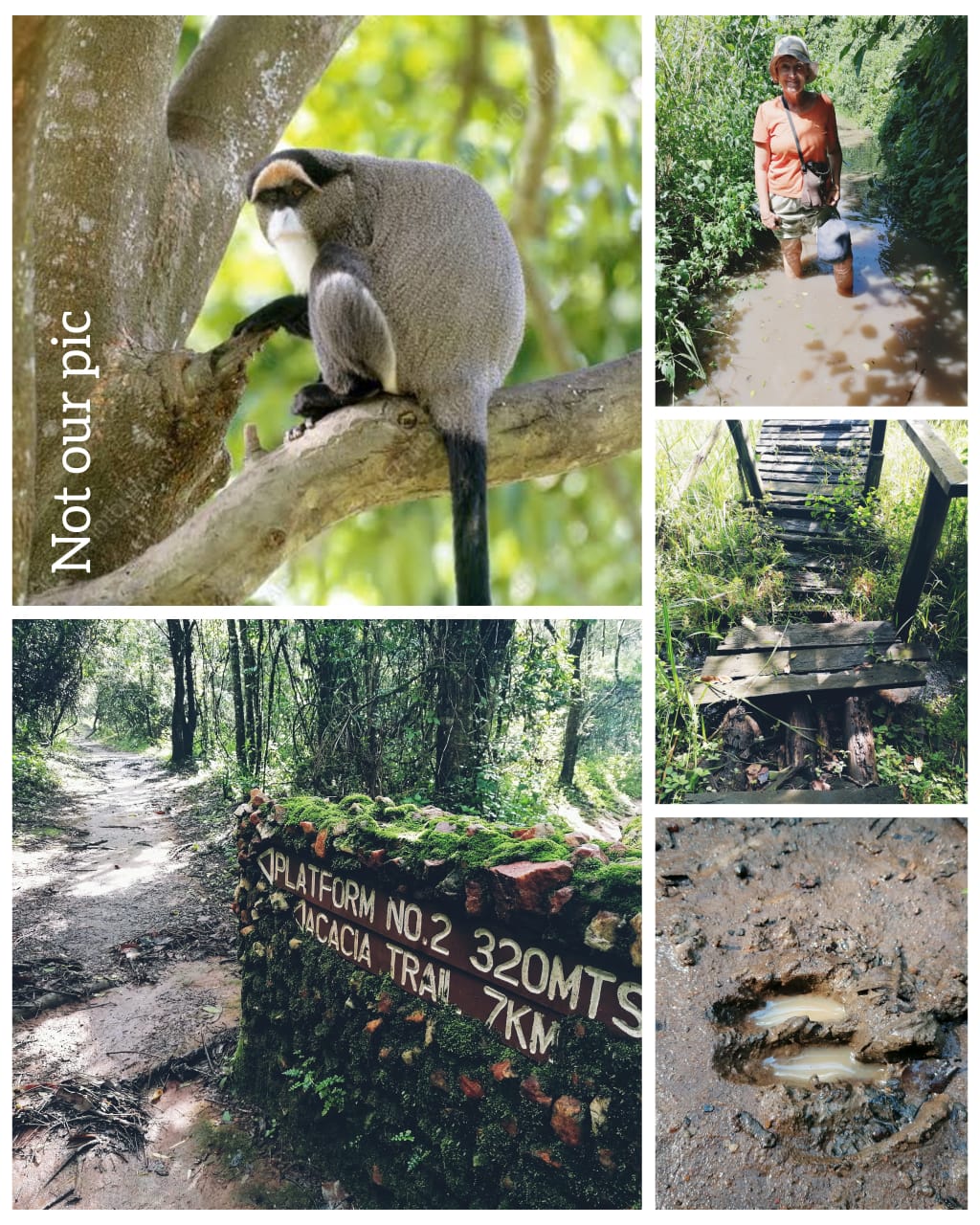
KENYA | SAIWA SWAMP NATIONAL PARK: No walk in the park. As we breakfasted on our verandah, we were joined by two pairs of grey-headed (crowned) cranes, one pair circling over ahead while another pair pranced in the clearing next to us – a spot also favored by the sitatunga.
We set off on a 7-kilometre-long circumambulation of the swamp, which was probably longer as it took us 4.5 hours to complete. We hoofed it, following in the footsteps of the sitatunga, contending with calf-high waterlogged trails, eye-flying midges, biting ants and stinging nettles with only a pair of collared sunbirds and an unidentified cuckoo for the bird list. It is unclear where the park fees are going as nothing is being spent on trail or tree house maintenance.
However, we did see De Brazza’s monkeys high in the treetops as we left this morning and a couple of black-and-white colobus on the path as we returned, somewhat the worse for wear.
Day 87: (18 July 2025)
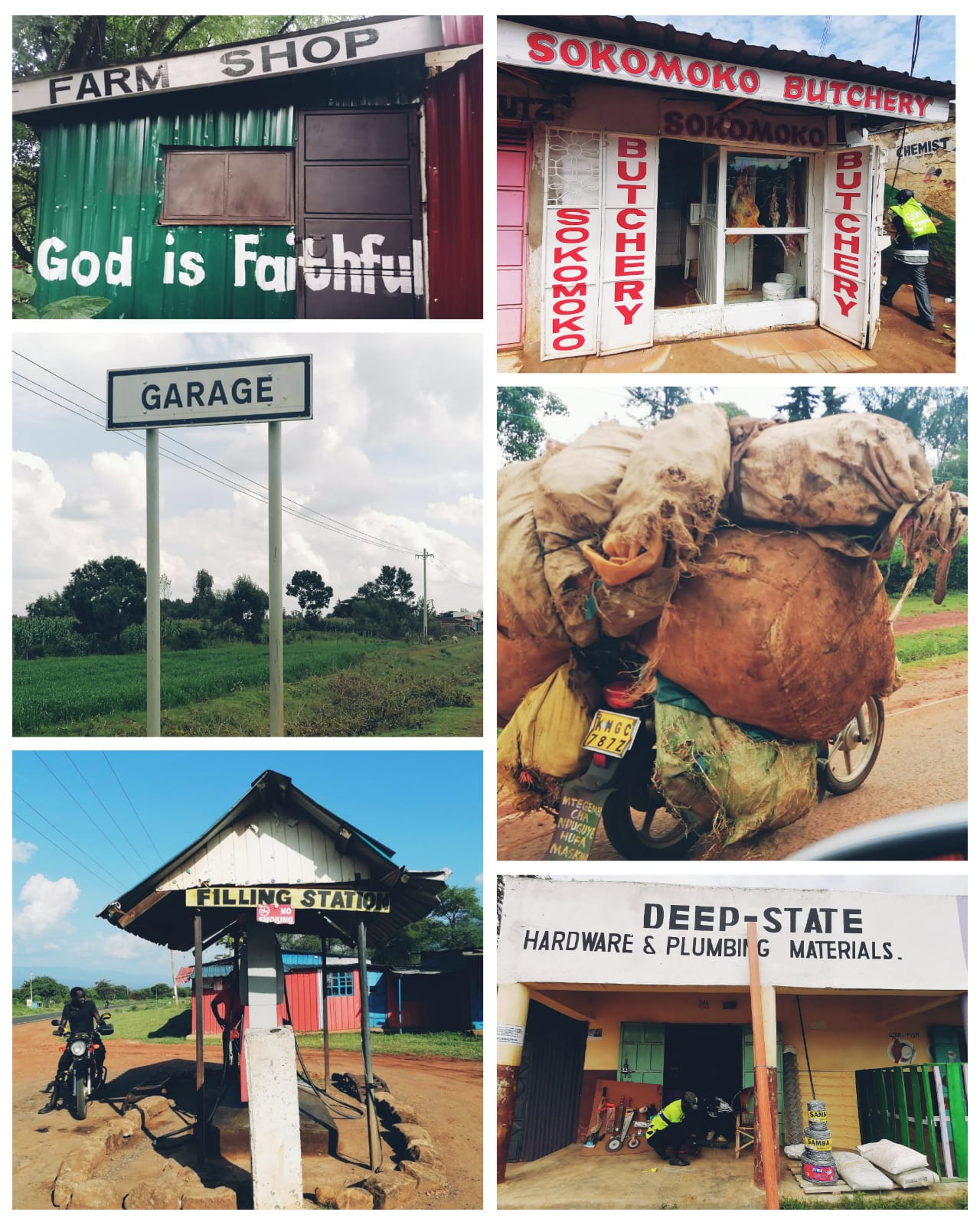
KENYA | SAIWA SWAMP NATIONAL PARK: A comedy of (t)errors. After grilling Timothy’s corn on the cob at the campsite fire pit, we returned to our shack-on-stilts to discover we had been locked out. Try as we might, we failed to gain access so we called the park supervisor, Raymond, to help. He had the magic touch and we got inside. We judiciously left the door wedged, but not closed, with the keys in the lock.
Half an hour later, there was a scraping at our door. Warned about marauding monkeys, Lee instinctively slammed the door shut. ‘Aren’t you going to see what it was?’ ‘Hell, no,’ was the immediate reply. No further scratches came and Lee went to open the door … which had now locked us in with the keys outside. We phoned Raymond again. This time, his magic fingers failed us. He returned with a screwdriver, dismantled the lock and eventually got the door open. ‘Tree squirrels’ was Raymond’s verdict on the source of the scratching after we sheepishly explained what had happened.
Some hours later, we awoke to a plastic rustling sound from within our room. With new-found bravura, Lee stared down a mouse that had made its way into our food cupboard. Several more hours later there was an almighty crash. A tree fell in the forest and we heard it. Dawn broke, cranes danced once more and scratching sounds emanated from the roof. We looked at each other and with insouciance, simultaneously pronounced, ‘Tree squirrels’.
Day 88: (19 July 2025)
KENYA | KAKAMEGA FOREST NATIONAL RESERVE: After a stop in Kitale for a rental car oil service, we continued to Kakamega without incident until the E-Citizen platform failed to charge us a park entry fee. This KWS guard, more reasonable than the last ones, said “Can you come back tomorrow?” and let us in.
Kakamega Forest is the largest surviving ‘relict equatorial rainforest’ in Kenya (240km2). It is the easternmost sector of the Congo West African equatorial rainforest. It is split into two parts and we are in the northern section (44km2) ‘managed’ by KWS. Around 10% to 20% of the fauna and flora here is found nowhere else in Kenya, for example, the bush-tailed porcupine and the hammerhead fruit bat, neither of which we have seen. We have, however, on our 10-kilometre walk this morning, seen black-and-white colobus, blue monkeys, baboons, bushbuck, blue flycatcher (African), blue-headed bee-eaters, and myriad varieties of their staple diet – butterflies – of which the forest has 400 species.
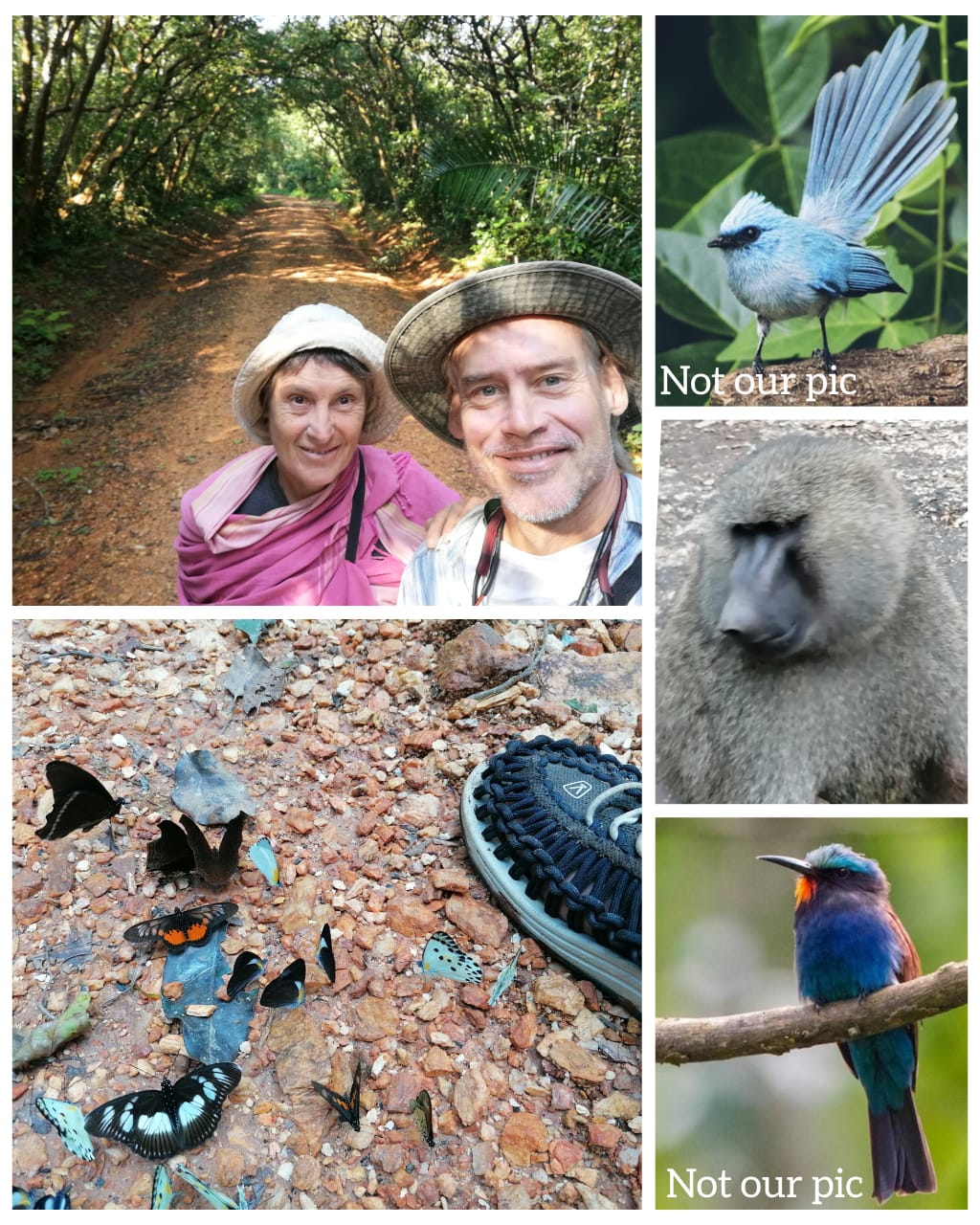
Day 89: (20 July 2025)
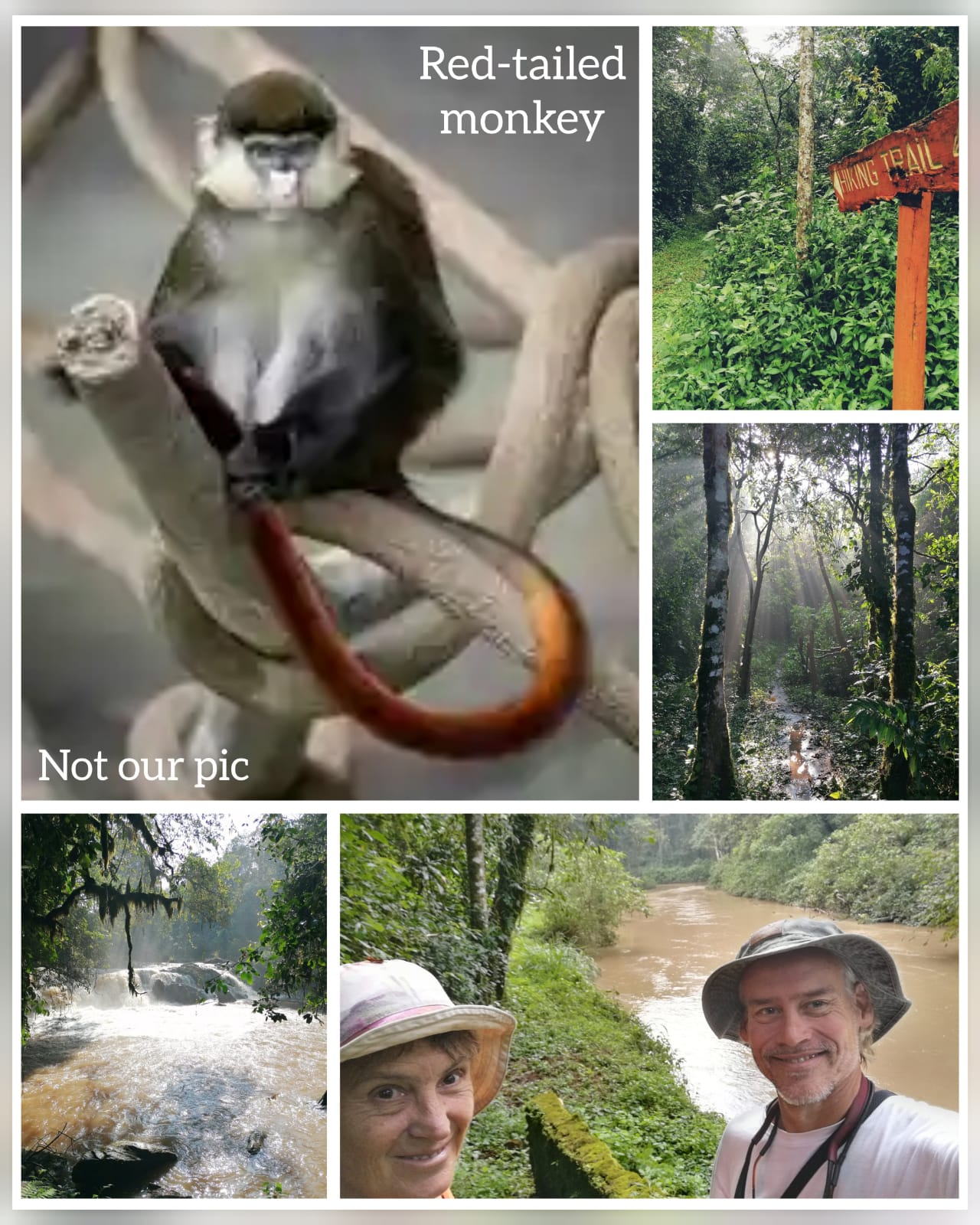
KENYA | KAKAMEGA FOREST NATIONAL RESERVE: While our self-catering cottage did not live up to its price tag – R1,725 a night + park fees – on the plus side, we have had the reserve to ourselves. Forest footpaths yielded fecund foliage, flowing falls, furtive fauna, flitting flutterbys, funky monkeys and falling baboons but, alas, few feathers.
Day 90: (21 July 2025)
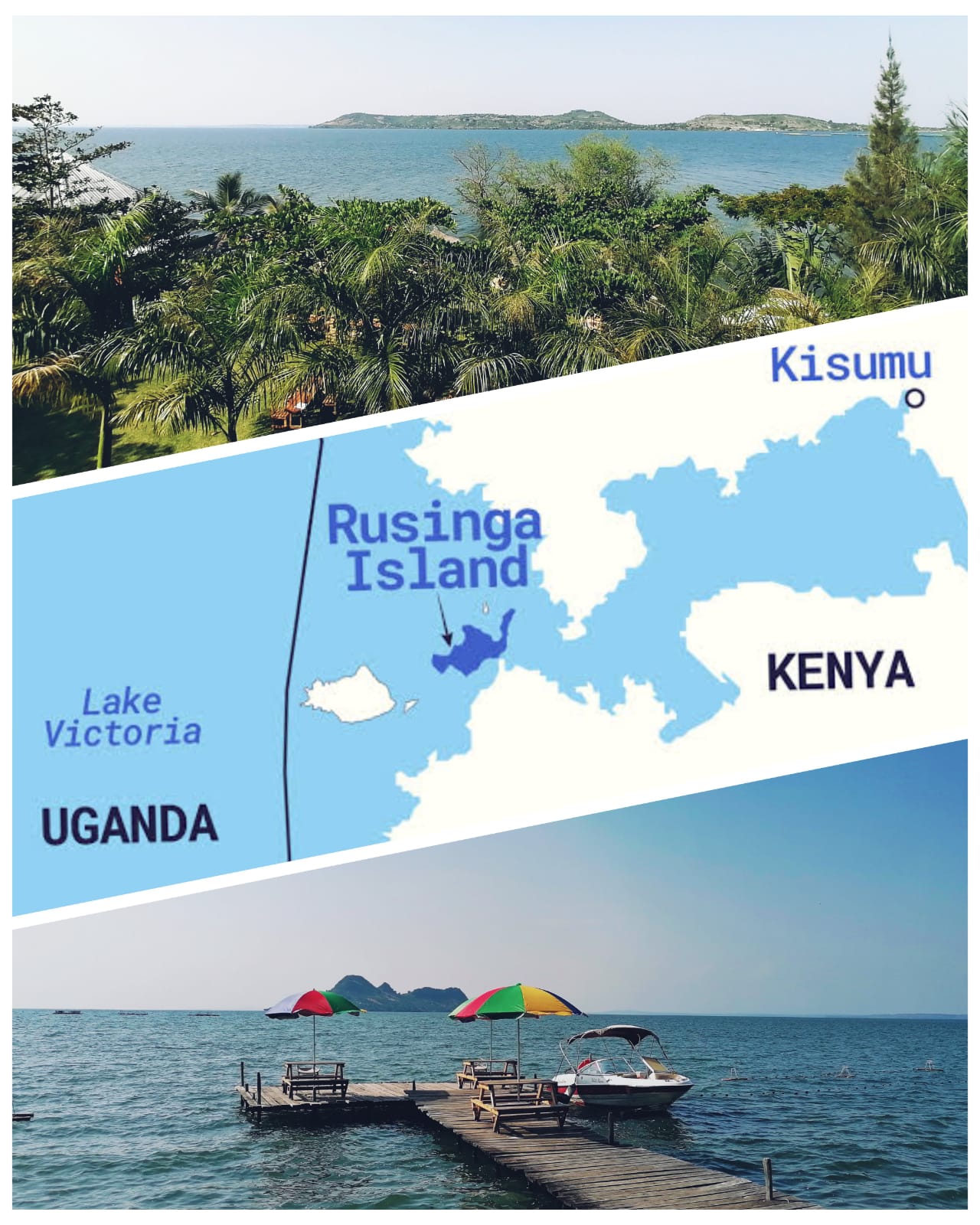
KENYA | LAKE VICTORIA, RUSINGA ISLAND: Good tar roads and a new bridge carried us from the last of Kenya’s rainforest to Africa’s largest freshwater lake. Today we find ourselves on Rusinga Island on the eastern shore of Lake Victoria. The world’s second-largest freshwater lake by surface area, after Lake Superior in North America, Lake Victoria is shared by Kenya, Uganda and Tanzania. We have traded monkeys in the misty mountains for sunbirds and storks on the sun-kissed shore.
At night, from our third-floor hotel room, a sprawling city of lights springs up, strung like fairy lights across the horizon. The boats fish for omena – the 3.5-inch-long Lake Victoria sardine (rastrineobola argentea) which are caught using lights when they come to the surface during the darkest nights of the month. Tomorrow is the new moon.
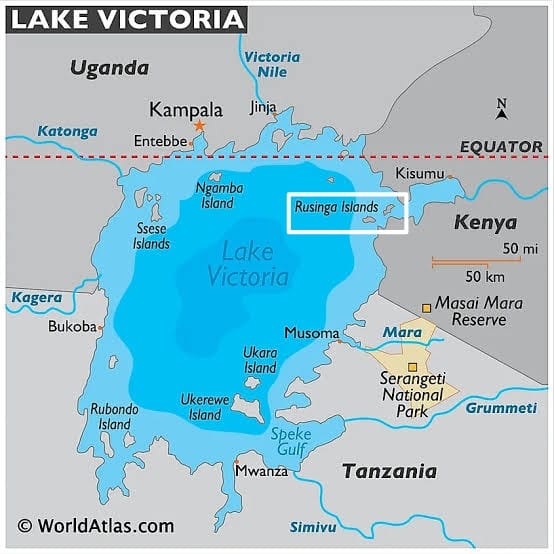
Day 91: (22 July 2025)

KENYA | LAKE VICTORIA, RUSINGA ISLAND: The lakes of the East African Rift Valley, from Lake Malawi to Lake Victoria, are full to overflowing and establishments such as White Stone Beach Resort, where we are staying, are unable to live up to their names.
The neighbouring lodge, Wayando Beach Club, was started by an American woman as a tribute to her lost love. In 1963, the year Kenya gained independence, Linda Campbell Tilton was a 19-year-old college student studying art at George Washington University where she met Thadayo Olewa Okatch (26) a political science student from Kolo Village on Lake Victoria. Okatch was a beneficiary of the Kenya Airlift programme (1959-1963) started by Tom Mboyo, a Kenyan pan-African trade unionist who ‘laid the foundation for independent Kenya’s capitalist mixed economy’. The programme enabled promising young Kenyan students to study at Canadian and US institutions.
The couple were married in 1965 and their son Otieno was born in 1967. The following year Okatch was murdered, officially ‘in a daylight robbery’ in Kansas City, Missouri, but unofficially, a victim of a hit ordered by her family who were against the mixed marriage. He was buried in his home village in Kenya where Linda met his family for the first time. Tom Mboyo was gunned down a year later, on 5 July 1969, in Nairobi CBD, the victim of a political assassination.
Four kilometres down the newly-laid ring road is Rusinga Island Lodge. Its claim to fame is the lofty fig tree under which Louis and Mary Leakey had their camp in 1948 when they unearthed the ~18 million-year-old skull of Proconsul Africanus, an extinct ape species, and other Miocene fossils.
BIRDS 🐦
● Eastern plantain-eater (turaco)
● Black-headed gonolek (bush-shrike)
Day 92: (23 July 2025)
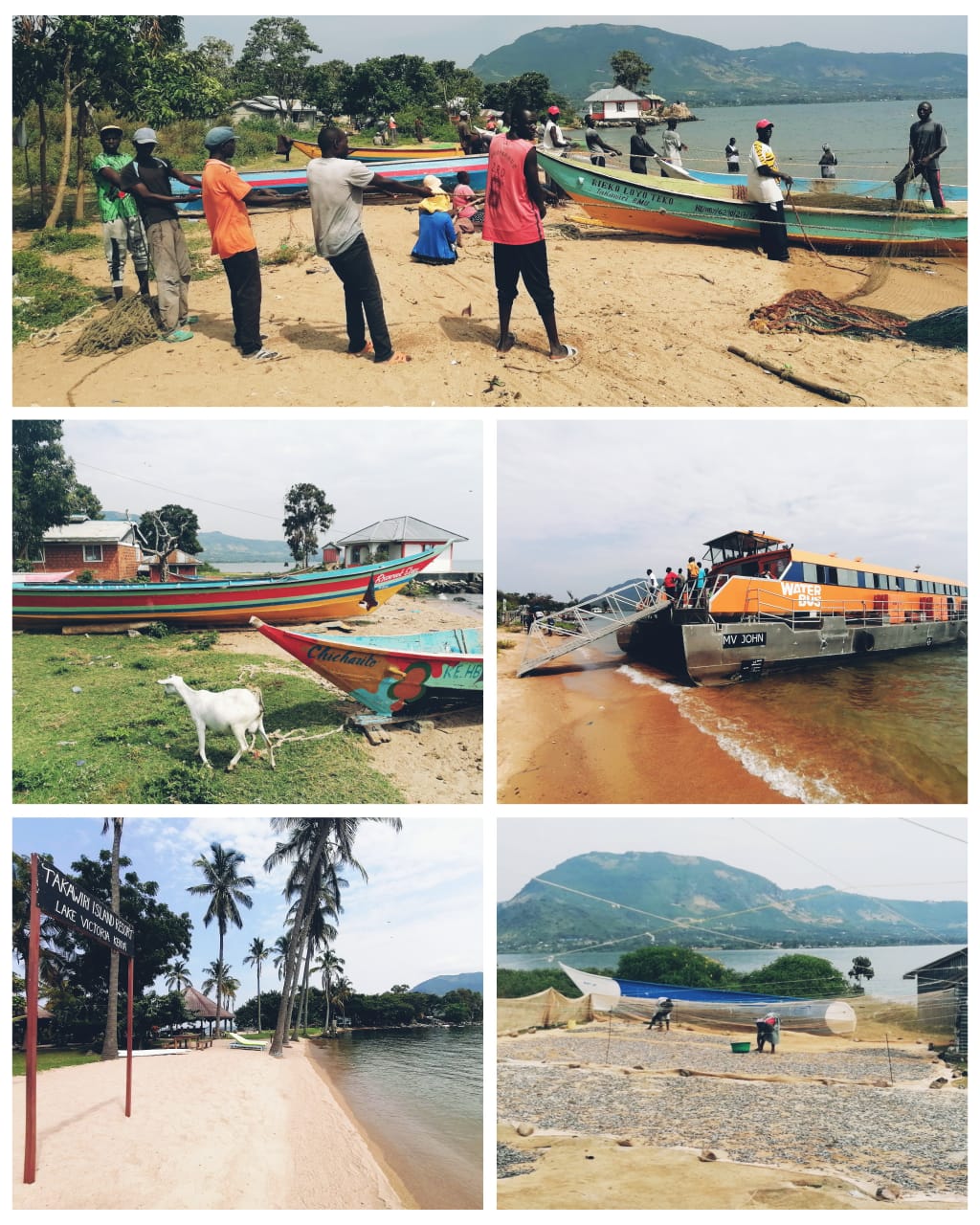
KENYA | LAKE VICTORIA, TAKAWIRI ISLAND: Island-hopping by waterbus. Over the years, Lake Victoria has claimed many lives due to poor public transport. In 2010, Scottish mechanical engineer Malcolm Ormiston launched the first 48-seater passenger ferry he had designed and built. Today, at least four of his catamarans carry between 1,000 and 1,500 people a day between the Kenyan islands of Lake Victoria.
We explored Takawiri Island today courtesy of Ormiston’s ferries. Back in the 1950s, the uninhabited island was colonised by a family fleeing Mau Mau violence on the mainland. Four generations later, the island is home to 2,000 people and unnumbered goats, cows and poultry. Although fishing has declined over the years, the black kites, cormorants and egrets still find plenty of fish in this vast inland ‘sea’.
At the sandy beach tip of the island, where black kites sunbathe in the sand, a Finnish widow runs the six-roomed Takawiri Island Resort, which she and her late husband started some 30 years ago. He was a fourth-generation Sikh descended from the Uganda Railway labourers of the late 19th century. Although she grew up in East Africa, she is looking to sell the property and retire to Finland.
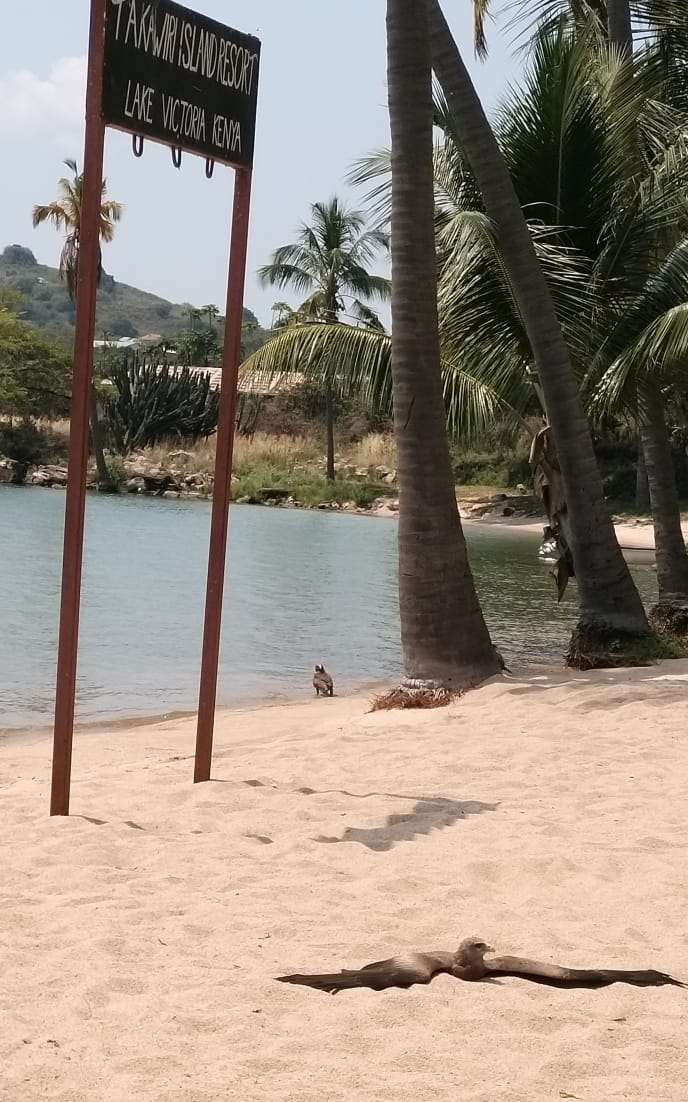
Day 93: (24 July 2025)
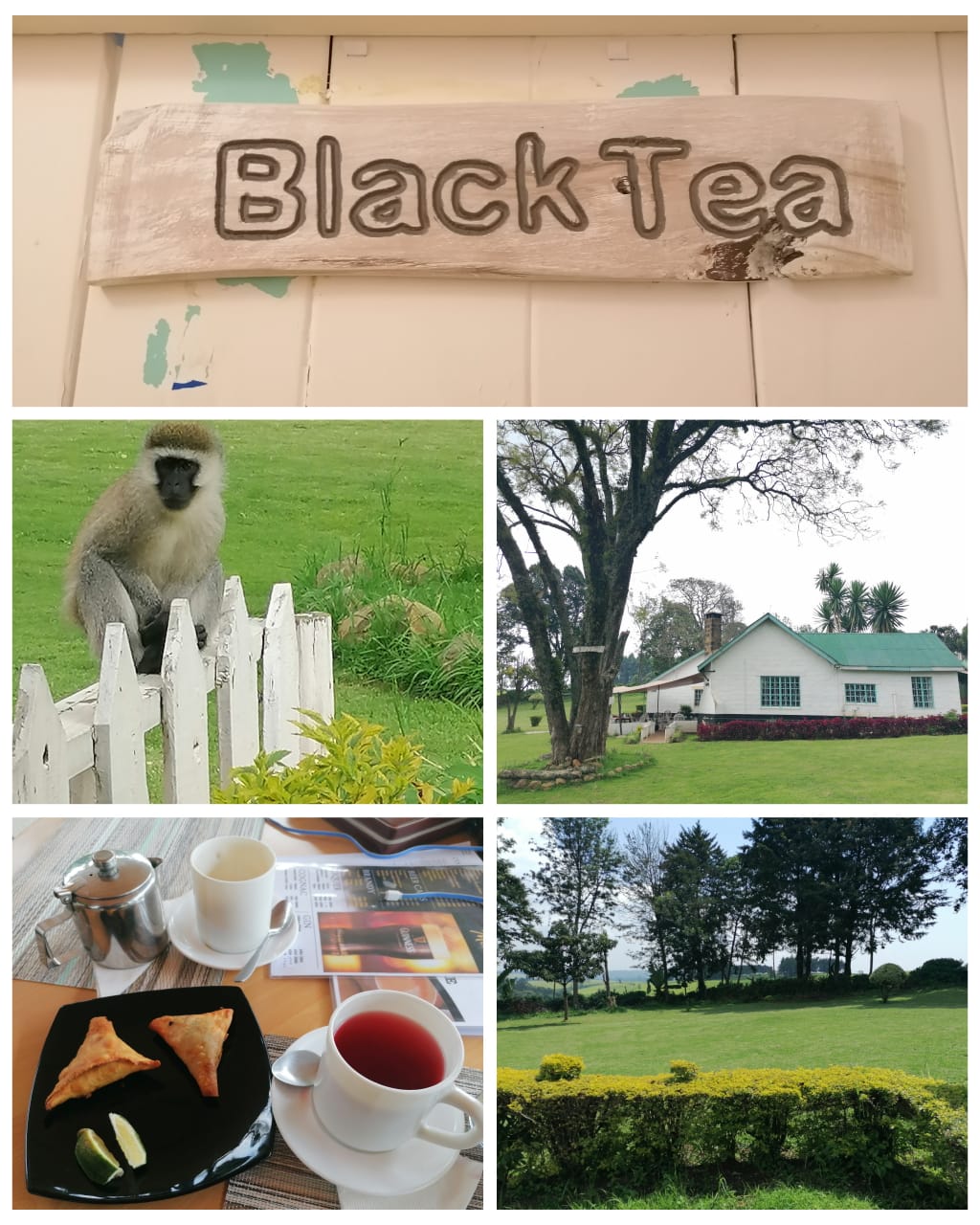
KENYA | KERICHO: From toasty Lake Victoria (1,135m) back up to the cool, rainy highlands and the undulating, lime-green, brush-cut, tea fields of Kericho (2,002m). We are staying in an old colonial-era farmhouse with vervet monkeys and blue flycatchers in the tree-ringed gardens. The Chagaik Estate Arboretum, founded by tea planter Tom Grumbley (1946-1975), is earmarked for a birding walk tomorrow morning. Tonight, fillet steak in front of the fire is on the cards.
Day 94: (25 July 2025)
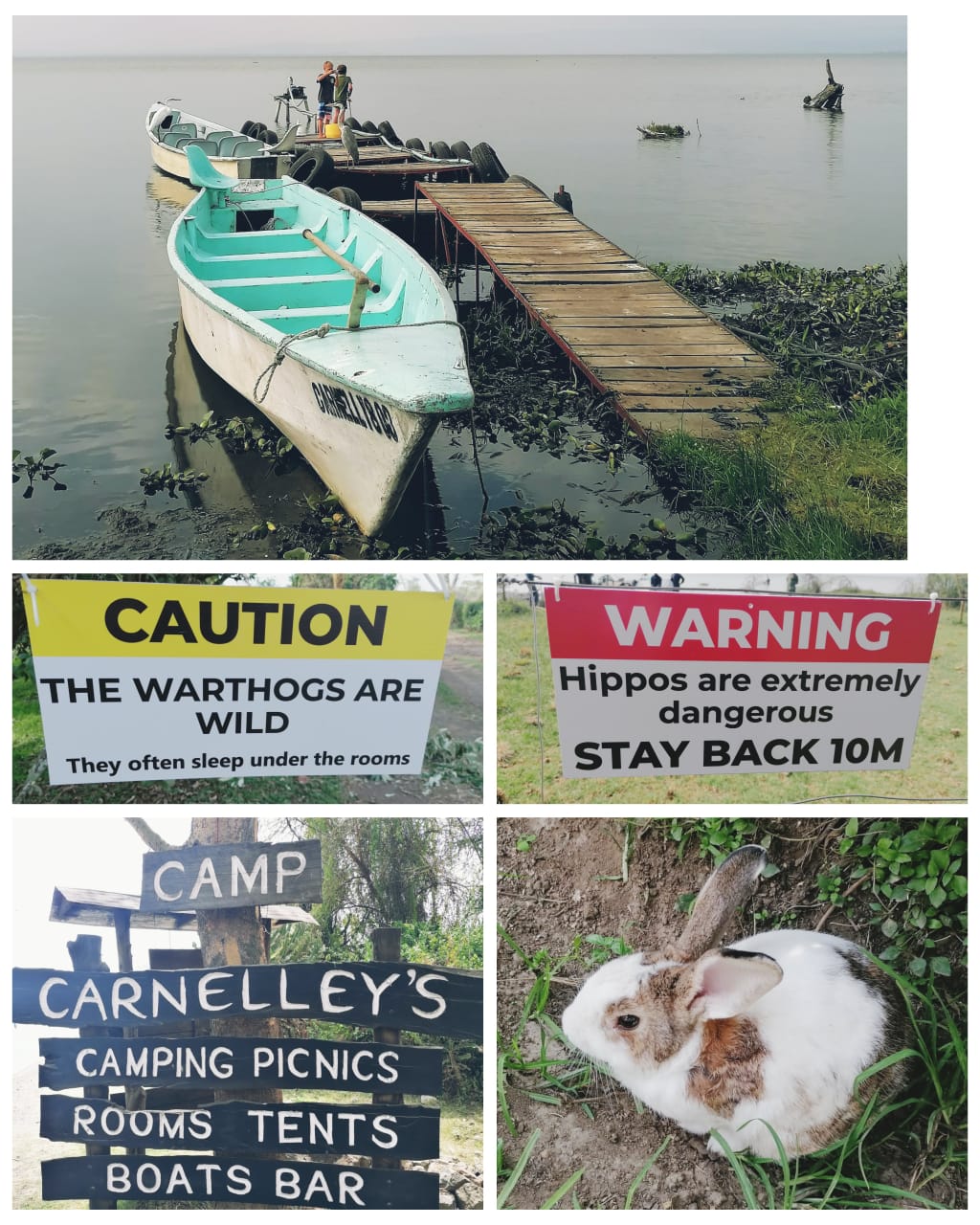
KENYA | LAKE NAIVASHA: From tea bushes to the bushveld, we headed south on the main Nairobi road, teeming with trucks, to Lake Naivasha (139km²) – a freshwater lake in the Great Rift Valley which harbours a healthy population of hippo. Fish eagles hunt from drowned trees and black-and-white colobus frequent the fever trees. European tourists on safari inhabit the bar.
Day 95: (26 July 2025)
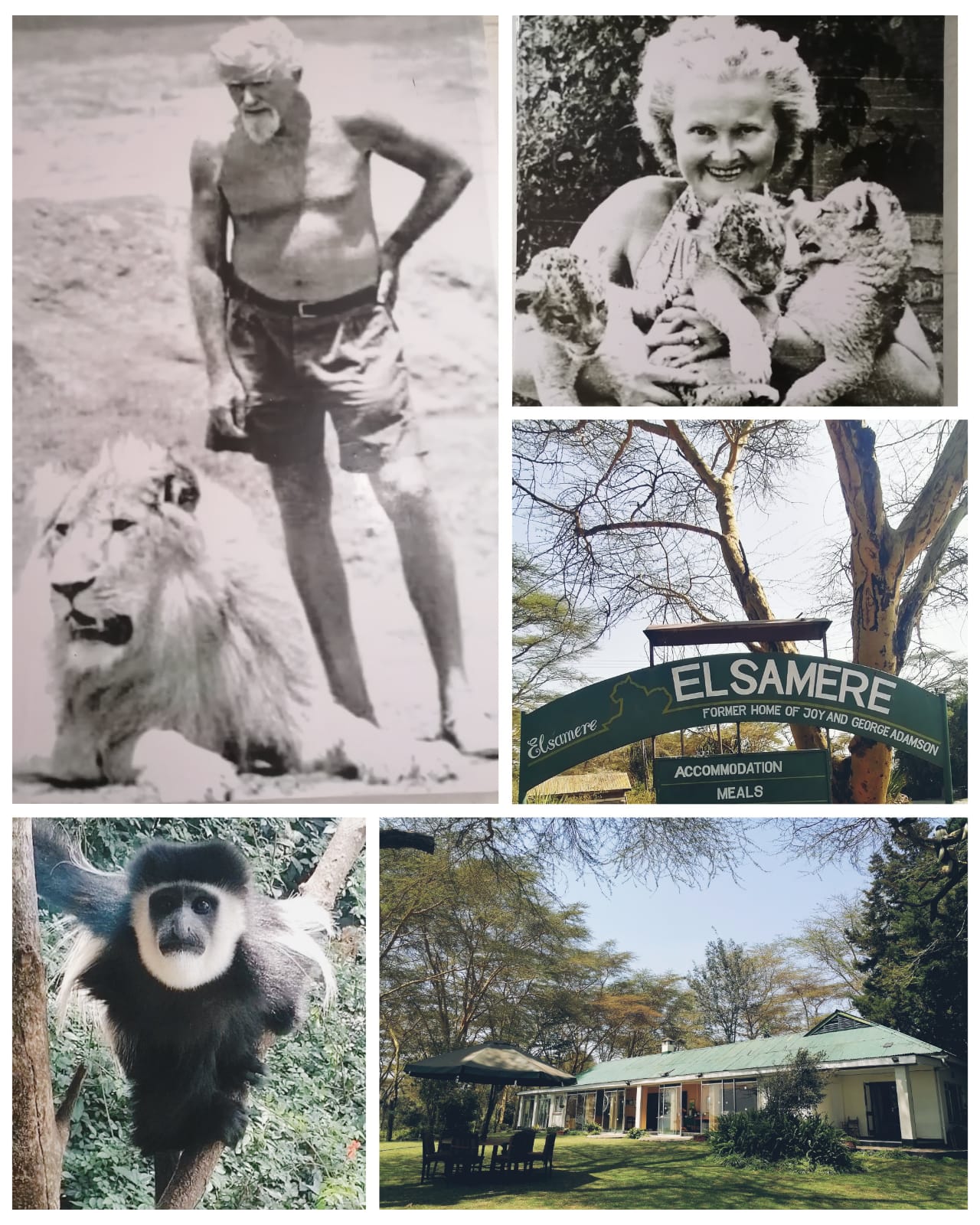
KENYA | LAKE NAIVASHA, ELSAMERE: We breakfasted with vervet monkeys, and then spent the day with black-and-white colobus, love birds, warthogs, woodpeckers and wood hoopoes. While fish eagles hunted from the yellow-barked acacia trees, we were serenaded by superb starlings as we enjoyed high tea in the gardens of Elsamere, the former home of Joy and George Adamson, named after the lion that Joy reared (see Day 77).
Harumphing hippos, spoonbills, herons and kingfishers accompanied an early dinner at a lakeside Chinese restaurant masquerading as a Bavarian holiday camp complete with log cabins.
Day 96: (27 July 2025)
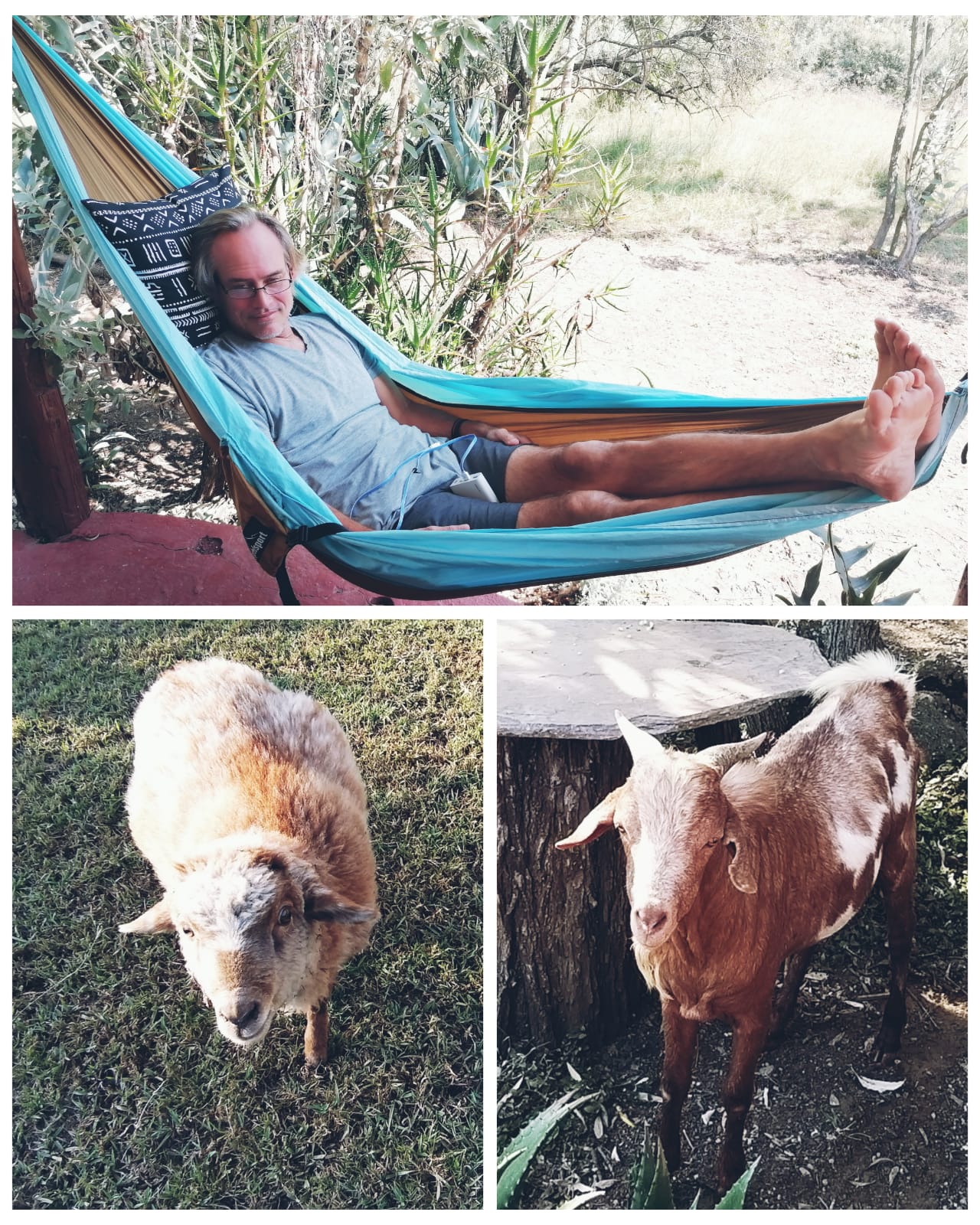
KENYA | LAKE NAIVASHA, BUSTANI COTTAGE: Some 96 kilometres north of Nairobi, Naivasha, with its lakes, hot springs, national parks and game-rich private conservancies, is a popular weekend getaway for local urbanites and foreign tourists seeking an accessible, undemanding safari experience.
However, as we continue to discover, both private and public custodians of what remains of Kenya’s natural heritage are all too often “fronts for collecting money” as our recently graduated volunteer guide at Elsamere put it. Commenting on Kenya Wildlife Service’s recruitment practices, he observed from personal experience, “They don’t take the best. There’s a lot of corruption.” As many of the National Parks are in Maasai areas, they score the tourism jobs, regardless of their competence or conservation ethos, by virtue of the policy that the community must benefit from conservation – similarly in Tanzania where it has recently been made mandatory that any tourist activity must have a guide.
Yesterday, at Elsamere, we spotted something hanging from a tree. It proved to be the dessicated corpse of a baboon that had been caught in a snare, from which it had escaped only to be snagged by the remnant rope in a tree branch. The Elsamere staff alerted the wildlife services. However, because it wasn’t a threat to any tourist, KWS declined to act. It took the baboon two days to die.
The private conservancies charge gatekeeping fees that are even more exorbitant than the national parks and heritage sites. Thus, we spent a quiet – and inexpensive – Sunday today sifting through the surrounding attractions we can afford. Here are some of the options we dismissed – accompanied by derisive laughter.
Private
● Crescent Island Game Sanctuary unguided walk: $33 (R594) p/p 🤣
● Oserengoni Wildlife Sanctuary night drive (2 hrs/2 pax): Negotiated down from an initial quote of $360 to $240 (R6,480 to R4,320) 🤪
Public
● Hells Gate National Park = $26 (R468) per person
● Olkaria Geothermal Spa (inside Hells Gate NP): $18 (R324) p/p + $26 (R468) p/p = $44 (R792) p/p 🤡 🥳 🤑
Day 97: (28 July 2025)
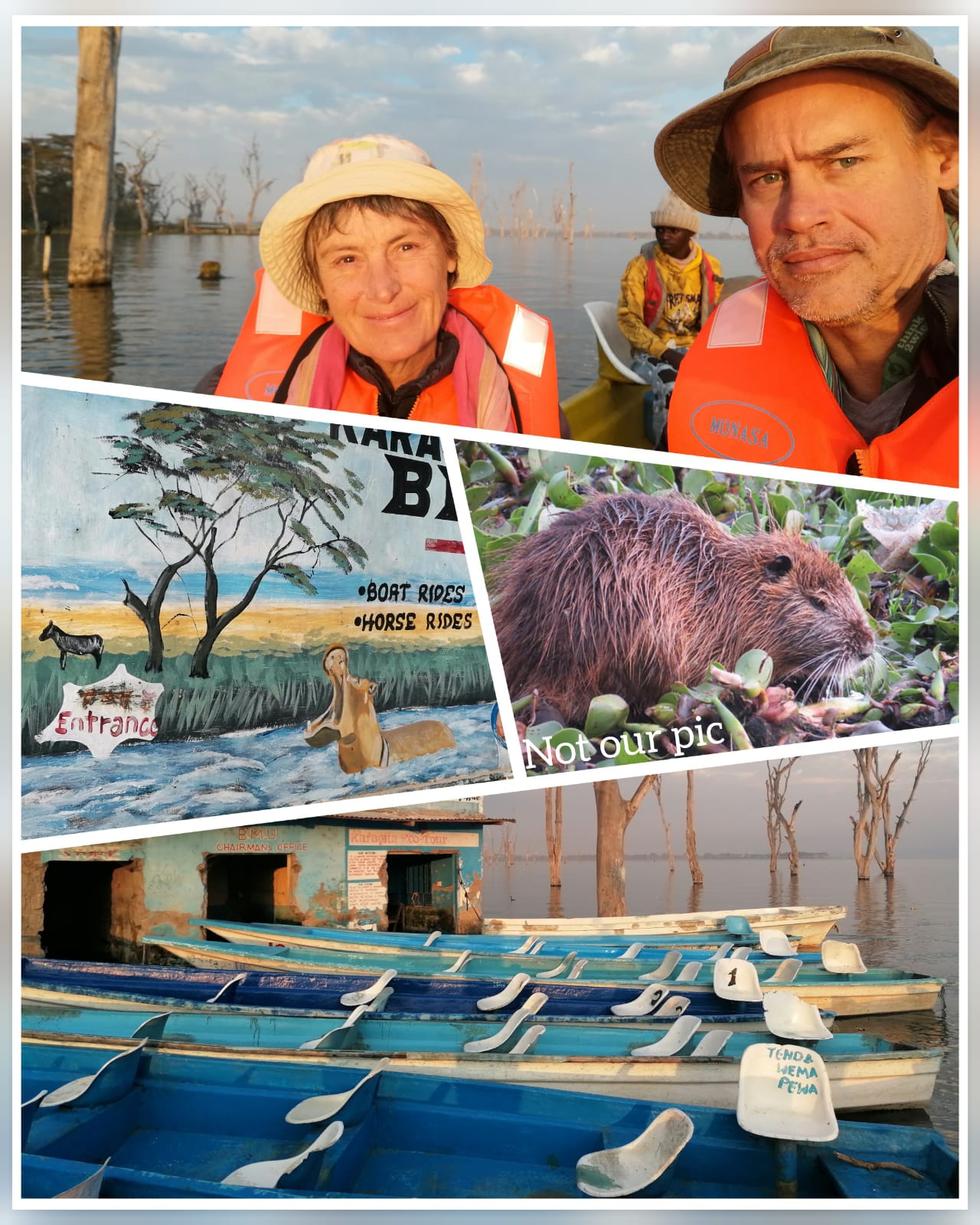
KENYA | LAKE NAIVASHA: Marabou and yellow-billed storks, pelicans and pied kingfishers, fish eagles and long-toed lapwings were the early birds this morning on our sunrise boat ride around Crescent Island and the smaller Lotus Island – home of the Naivasha Yacht Club and its hippo-dodging sailors.
Herds of wildebees, zebra, impala and waterbuck breakfasted on the grassy plains and hyacinth-edged shores, Masaai giraffe munched the acacias and three Kirk’s dik dik were as surprised by us as we were by them. However, the star attraction of today’s water safari was a coypu busily nibbling on the water weed. Originally introduced to Kenya from South America, likely for fur farming, feral populations of this semi-aquatic rodent have invaded the lake, which, like the other Rift Valley lakes, has risen significantly in the past year.
Day 98: (29 July 2025)
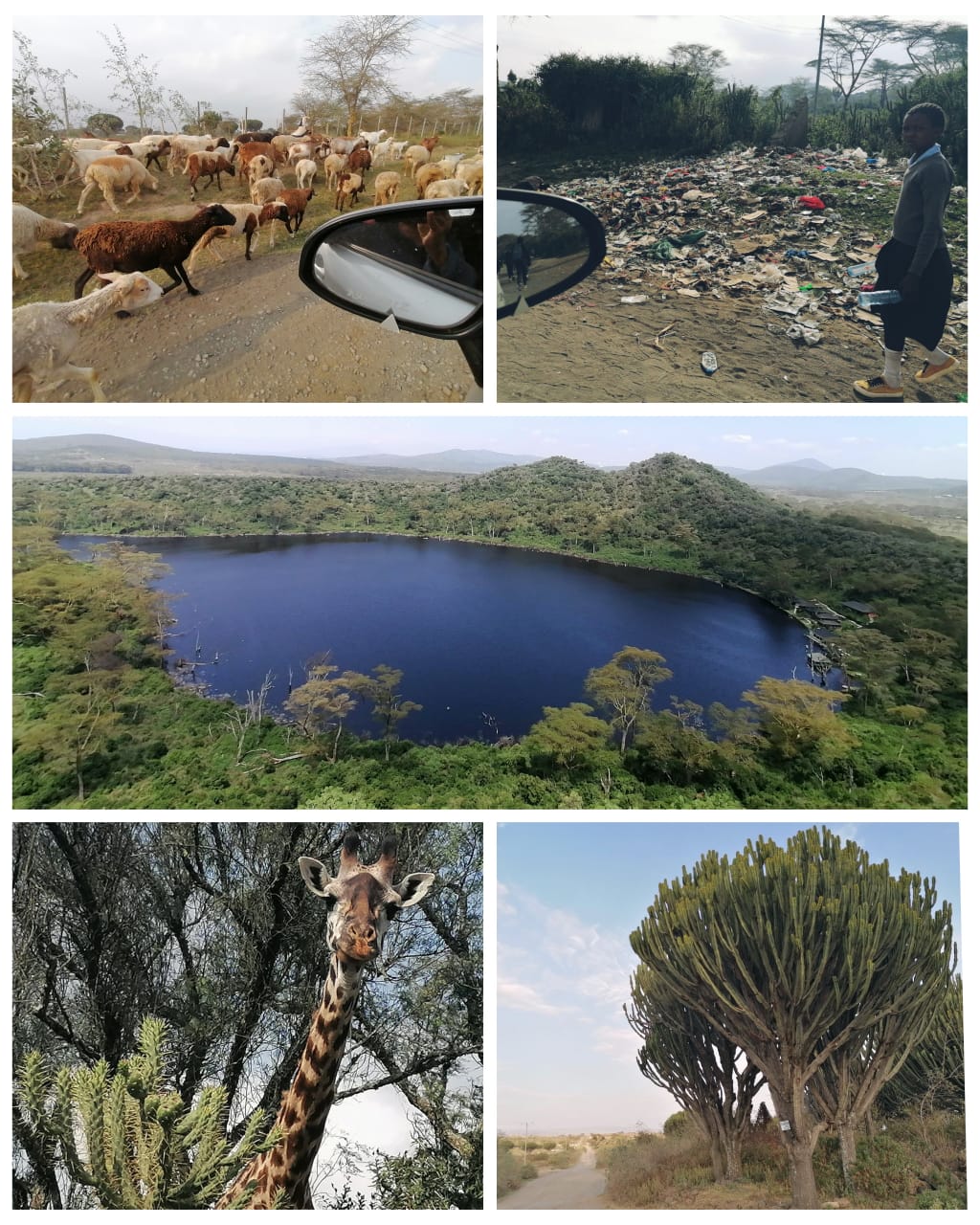
KENYA | LAKE NAIVASHA, CRATER LAKE GAME SANCTUARY: Day-tripping. The two faces of Kenya.
Day 99: (30 July 2025)
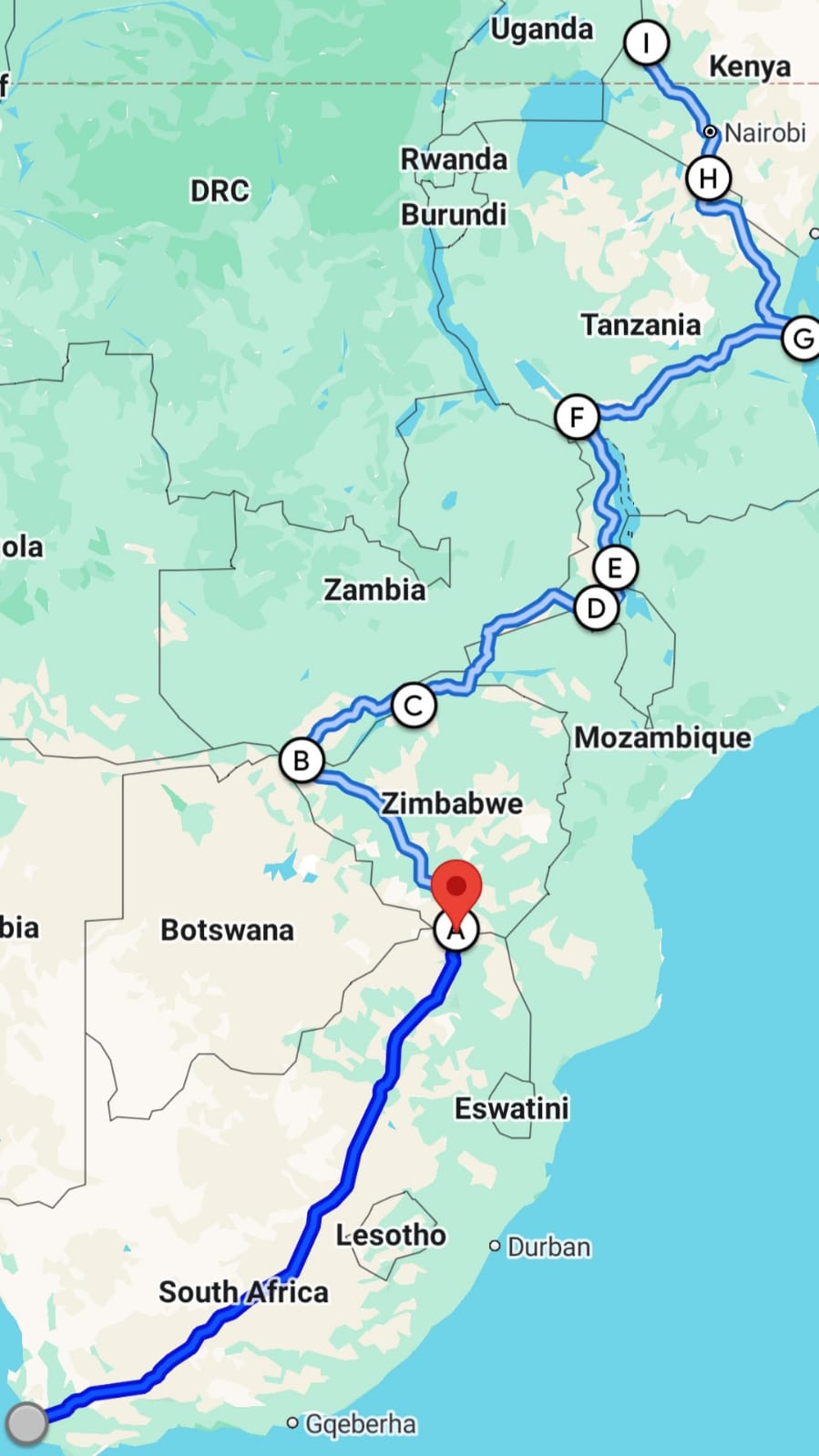
KENYA | NAIROBI: Over and out.
Over the past 100 days, we have travelled ~10,000 kilometres by plane, train, bus, minibus, motorcycle, tuk-tuk, ferry and water bus, from Cape Town to Kenya, via Zimbabwe, Zambia, Malawi and Tanzania, without paying for a single visa, at an average cost of $100 a day for the two of us.
However, our northward progress has been halted by the unpredictable security situation in Ethiopia where large parts of the country are reportedly no-go zones, putting onward travel to the Red Sea ports in Djibouti or Eritrea in doubt. While China has built a new railway line from Addis Ababa to Djibouti, the geopolitical tensions in the Red Sea create further uncertainty as to whether we would be able to find passage north to the Suez Canal. Kenya’s other neighbouring countries South Sudan and Somalia offer similar or inferior prospects of transit. Add to this the expense and bureaucracy that attaches to the requisite visas, we have decided to call it a day. Tomorrow we fly home to Cape Town. ✈️
💲 Travel Tally: Kenya
Average expenses (for 2) over 30 nights:
● Accommodation: $33 (R594)/day
● Food & drink: $31 (R558)/day
● Transport: $26 (R468)/day
● Car rental: $27 (R488)/day
● Petrol: $6 (R110)/day
● Activities: $23 (R414)/day
● Daily average: $117 (R2,106)/day
Thanks for travelling with L&L African Adventure Tours. Where to next? Watch this space. 😉